Category: Saints

  • The Heart to Have

    The Heart to Have

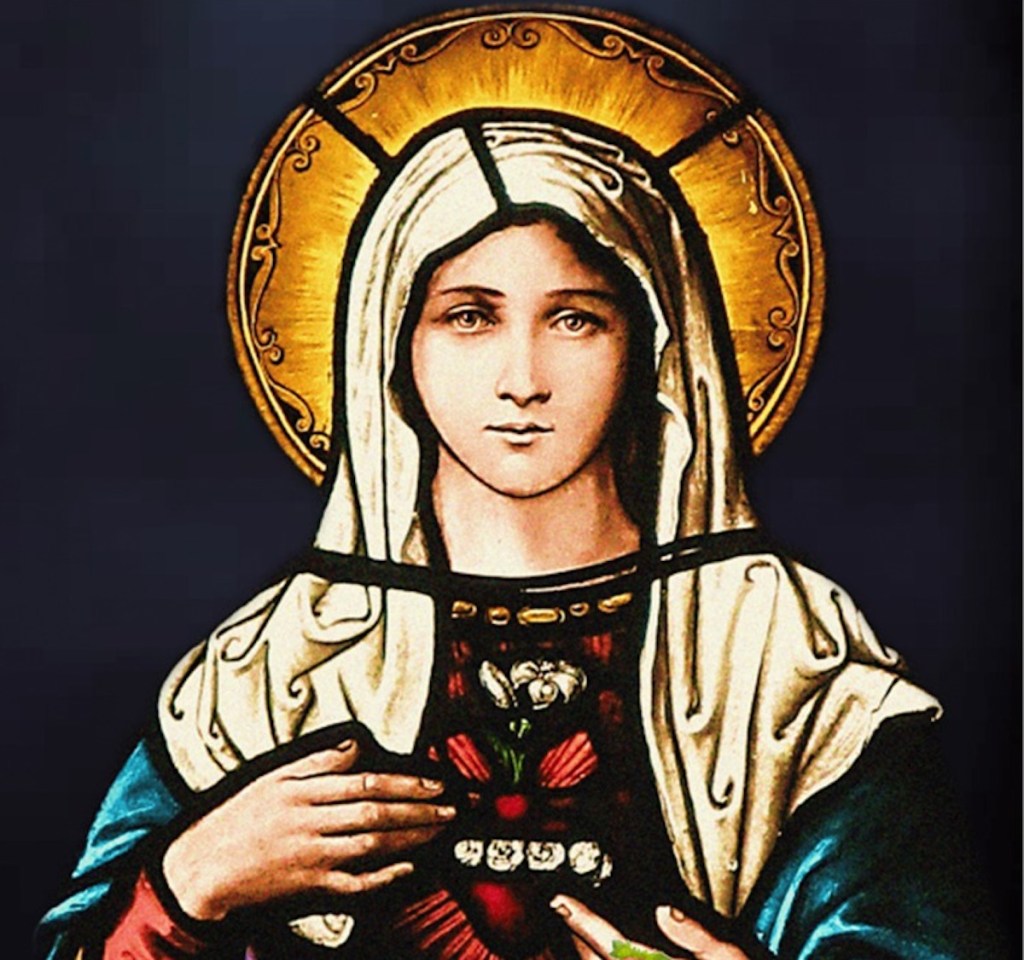
    Memorial of the Immaculate Heart of the Blessed Virgin Mary

    Isaiah 61:9-11; 1 Samuel 2:1; Luke 2:41-51

    When we speak of someone in terms of their heart, we mean more than just describing what they’re like. We want to understand what it is that makes them who they are; their essence, if you will. That’s hard to do with anyone, let alone a person who walked among us so long ago, let alone a woman so devoted to remaining in the background and exalting her son and Lord, Jesus Christ. Yet that is exactly what we want to do on this, the Memorial of the Immaculate Heart of the Blessed Virgin Mary.

    The gospels give us only a glimpse into Mary’s heart. The best comes from Luke, who actually mentions her heart two times. The first came the evening of our Lord’s birth; he notes that Mary kept all these things, reflecting on them in her heart (2:19). Today we hear the second; Luke tells us that, while returning to Nazareth after finding Jesus in the Temple, his mother kept all these things in her heart (2:51).

    If the words “kept” and “reflect” meant to Luke what they mean to us, he probably wouldn’t have bothered to say this. Most parents have memories of their children and events in their lives. Rather, in the original language, his words imply that in her heart, Mary is doing much more; she is actively pondering the events, searching out their meaning, struggling to interpret them. Of course, the mysteries she struggled with are supernatural; no one but God can understand them. But that isn’t the point; the point is that in her heart Mary possessed the humility, docility, and wisdom to surrender herself to them, and allow their meaning to work itself out over time in her own discipleship.

    That is what happened. As time passed, the fruit of Mary’s contemplation showed itself in her words and her actions. For example, at the wedding feast of Cana she offered that resolutely faithful advice: Do whatever he tells you (John 2:5). In the same gospel, she displayed the strength that many disciples lacked: Standing by the cross of Jesus (John 19:25). Finally, while awaiting the coming of the Holy Spirit, she was one in prayer with those to whom Christ made her mother (John 19:26; Acts 1:14). Open to discipleship from the very beginning, Mary made clear to everyone what her son said in his ministry: that hearing the word is only the first step; what is required is to embrace it with a generous and good heart, and bear fruit through perseverance (Luke 8:15).

    On a spiritual level, we may not think about the Blessed Mother as someone in need of growth. What could she who has already been perfected in grace need to learn? Didn’t she have all the faith she would ever need? Certainly, but as the Catechism reminds us, the relationship between faith and understanding is not a straight line but a circle; the stronger our faith, the greater our desire to know God and understand what He has revealed. In turn, the better we understand, the deeper our faith, which “‘opens the eyes of our hearts’ to a lively understanding of Revelation” (CCC §158). Again, Mary is a perfect model of this; whose faith was greater than hers, yet who demonstrated more than she a desire to know God and better understand what He has revealed? Or, rather, who He has revealed – for there is no greater revelation of God than His only Son, Jesus, and who understands a son better than his mother?

    This is the heart of Mary Immaculate, the heart she encourages us to have; not one who hears the word of God and understands it, but who hears the word of God and does it – surrendering to it, and allowing it to work through us for the good of ourselves and the world. Our Blessed Mother wasn’t spared from difficulties and suffering; we should expect no less. But, if we persevere, we should also expect no less than the same glorious triumph she now enjoys. Mary is the ultimate example of what all faithful hearts can expect. So, here and now, let us recommit ourselves to taking her advice by doing whatever He says, enduring whatever crosses we are given, and praying and working for unity with each other. This is the heart that, like Mary Immaculate, always and everywhere exults in the Lord, our Savior.

  • God’s Idea of Re-Gifting

    God’s Idea of Re-Gifting

    Memorial of St. Barnabas, Apostle

    Acts of the Apostles 11:21b-26; 13:1-3; Matthew 10:7-13

    At a Christmas party gift exchange, the woman next to me opened her gift and muttered, “Oh, no.” “What?” I asked. She whispered, “Two years ago, I got this from my niece. I didn’t want it, so I re-gifted it to my colleague over there. She must’ve forgotten I was the one who gave it to her, and re-gifted it to me.” That’s the first time I heard that term, “re-gifting,” but I hear it’s common: Someone gives us a gift, we open it, smile, thank them, bring it home, re-wrap it, and give it to someone else.

    Then, thinking about the first reading, it occurred to me: God gives us some gifts that he wants us to re-gift. These are called “charisms” – gifts of the Holy Spirit given to us but not meant for us; they’re meant to be given away so the Church can prosper.

    We see this “re-gifting” in the person of Barnabas, whose feast is today. We know little about him other than what Luke tells us. He first appears in Acts chapter 4, where he gives the proceeds of the sale of his property to the Church. Today we hear of him being sent to Antioch, going to Tarsus to find Paul, bringing him to Antioch, and working with Paul there and on his first missionary journey (Acts 13-14).

    In all this, Barnabas shows at least three charisms. First, generosity. He could have done many things with his property; even if he had to sell it, he didn’t have to give the money to the Church. But he did. Second, encouragement. In Antioch, Barnabas encouraged them all to remain faithful. As a result, Luke tells us, a large number of people was added to the Lord (Acts 11:23f). Third, teaching. Along with St. Paul, Barnabas spent a year there teaching people the faith. To great effect; they brought in so many Gentiles that the disciples in Antioch were the first to be called Christians (Acts 11:26).

    Of course, Barnabas isn’t alone; as St. Paul said, to each individual the manifestation of the Spirit is given for some benefit (1 Corinthians 12:7). So, that prompts us to ask what charisms we have. One place to start is with the gifts God gave us from birth. Perhaps we’re known as a welcoming person, one whose door is always open; or we love to teach, or to encourage others. Maybe we’ve always had a talent for bringing people together to get something done, or for being compassionate towards those who are alone or sick or suffering. Barnabas probably had several of these qualities. Still, having gifts isn’t enough; not all generous, encouraging, or bright people use their gifts to build up the Church. Going from gift to charism takes more; it takes the grace of the Holy Spirit.

    You know you have a charism if someone says to you, “When you welcome (or console) me, you make me feel like I’m the only person in the world,” or, “When you teach (or sing or create artwork), you help me see God in a whole new way,” or, “You have a way of encouraging me that makes me feel like I can move mountains,” or “Under your leadership, I feel like I really belong and can make a difference.” This is evidence that the grace of God has given our natural ability a supernatural boost. Charisms make us the instruments God uses to touch people beyond mere human capacity.

    Perhaps you’ve tried to use various gifts or talents but never heard this. Take heart; that doesn’t mean you have no charisms. Charisms don’t work for our glory or notoriety. Most likely, many people never said a word to Barnabas yet were edified or inspired to do what they saw him doing, whether that meant giving money, time, or talent to build up the Church. It’s also possible that you haven’t yet found the place or situation to put your gifts to work. Stay vigilant. When you find it, you will know; then it will be time to act. Again, look at Barnabas. He looked at the situation in Antioch and saw they badly needed encouragement, so he gave it. Not only that, he watched and listened enough to know that Paul was a man who, whatever people said about him, could have an impact on the Church. He seized the moment, found Paul, and brought him back. Look at the result! What would the Church be like if Barnabas had never done that?

    Perhaps you are being urged by the Holy Spirit right now; perhaps there is something you’ve wanted to do, or think you may be called to do. Don’t wait. Find a way. As Jesus said to the Twelve in today’s gospel, Without cost you have received; without cost, you are to give (Matthew 10:8). Or, re-give.

    St. Barnabas, pray for us.

  • Chosen

    Chosen

    Feast of St. Matthias, Apostle

    Acts 1:15-17, 20-26; John 15:9-17

    In the spring of my senior year, the high school play was a drama with a lead role that I really wanted. When tryouts came, I nailed it. I went home confident that I had that part in the bag.

    Only, I didn’t. Even worse, I got cast as what seemed to me like the play’s dullest character. At the first rehearsal my disappointment must have shown; the director took me aside and said, “I could have given you the lead, but it came too easy to you. The guy who got it needs the challenge. As for you, the part I gave you is going to make you work. Now, I want to see what you do with it. Show me you’re the actor you want to be.”

    It turned out that he was right about both of us. There was a depth to my part that I hadn’t seen, and it did make me work. Same for the guy in the lead role; he struggled but kept working. In the end, the director was happy with both of us, but honestly I think we were happier with ourselves. We got exactly what we needed, and the play was better because of it.

    I remembered that while meditating on the first reading. Two men were proposed to fill the role of the twelfth apostle; as we know, the lot fell upon Matthias (Acts 1:26). I asked myself how I would have reacted if I were Barsabbas. As with the play, I might have been disappointed. “I, too, was with the apostles from the beginning… why was I not chosen?”

    Of course, if I were Barsabbas, I would have known that Christ had already answered that when he said, It was not you who chose me, but I who chose you and appointed you to go and bear fruit that will remain (John 15:16).

    In that one sentence, our Lord said it all. It wasn’t that one man was chosen and the other was not; both were chosen, but each given different parts. Clearly, the office of twelfth apostle had been reserved for Matthias; to him and him alone went that honor, challenge, and responsibility, as well as every grace he would need. But that didn’t mean that God had nothing for Barsabbas to do. To the contrary, he too had been chosen, and given his own unique and important part to play. We have no idea what it was; like Matthias and so many others throughout history, his work remains a mystery. But also like them, the fruit of his labor remains to this day – we, the Church, now spread to every corner and people of the world.

    God’s plan for discipleship is no different today. We may think of evangelization, or preaching the gospel, as the proper work of professionals – people who are qualified by their training or education in the faith. But our Lord’s words in the gospel are a reminder that God doesn’t choose the qualified, He qualifies the chosen. And we are all chosen; whoever we are, whatever we do, whatever circumstances we find ourselves in, God has chosen us, called us by name, and qualified us with every gift and grace we need to bring the world to him and him to the world.

    Of course, we will all face challenges along the road. People may reject us, we may struggle with doubts or periods of discouragement, and we may even be jealous of those who have gifts and abilities that we do not. But I firmly believe that each challenge is God’s way of saying to us, “I could have made your way easier, but I want to see what you can do with what I gave you. Show me that you are the disciple I have called you from all eternity to be.” It means that we will work harder than ever before, but think how much better off we will be in the end, for then we will hear our Lord say, Well done, good and faithful servant… Come, share your Master’s joy (Matthew 25:21).

    Who wouldn’t want that part?

  • Being Who We Were Made to Be

    Being Who We Were Made to Be

    Solemnity of St. Joseph, husband of the Blessed Virgin Mary

    Matthew 1:16, 18-21, 24a

    A theologian once said that “great occasions do not make heroes or cowards; they simply unveil them to our eyes. Silently and imperceptibly, as we wake or sleep, we grow strong or weak; and at last some crisis shows what we have become.”1 When I read that, I wondered if he was thinking of St. Joseph. It fits him so beautifully.

    Joseph was certainly not a man accustomed to great occasions. The ordinary ones were enough: Learn a trade, get married, bring up a family. By the time we meet him in Matthew’s gospel, Joseph had already checked two of those boxes. It was the third that brought about the crisis.

    We know the basic story well: Learning that Mary is pregnant and unwilling to expose her to shame, Joseph intends to divorce her quietly. What we may not know are a couple of details. First, in that time and culture, “expose her to shame” meant the legal right to “make a show” or public mockery of her. That Joseph would not do this speaks of his love for Mary and sensitivity toward her. This brings us to the second point: his intention to divorce her quietly. Where we read “intention,” Matthew’s original word implies a decision made in angst, in the heat of a deep and inner passion. It might even go so far as to mean that Joseph was tempted to feelings of anger, shame, or indignation.

    Who can blame him? How would we feel? Joseph had plans for his life and had worked, maybe even suffered, to achieve them. Now, on the verge of actually realizing them, he found his plans shattered to pieces. Even more, Joseph loved Mary; he knew that divorce meant disgrace for her and the child, not to mention very dim prospects for their future. This was the heart of the crisis. He had to make a decision, to do something, but what could he do? Mary was pregnant, he was not the father, and the law was clear. His decision for a quiet divorce was the best he could think of. Even if it meant pain or distress for the woman he loved so much, the law came from God, who Joseph loved above all.

    This I think is the key. Remember the theologian’s words: “Silently and imperceptibly, as we wake or sleep, we grow strong or weak.” Joseph came to this crisis with a strong moral center; born into the faith of his fathers, he was raised in it, steeped in it, and guided by it. He wasn’t going to abandon it now or ever. No matter the cost to his own or to anyone’s honor, Joseph would honor his heavenly Father first.

    In its section on the 4th commandment, the Catechism lists two qualities of a respectful child: docility and obedience. As they apply to our role as children of God, docility is our readiness to follow God’s will rather than our own, and obedience is our willingness to do whatever God asks of us.

    Joseph had both of these gifts in abundance, and in time God would ask him to use them to their fullest measure. For now, though, what He asked was more than enough: First, that Joseph set aside his plan of being husband of Mary of Nazareth and instead be the husband of Mary, the Mother of God; second, that he set aside any plan he might have of raising his own children and instead raise the Son of God as his own.

    This is a lot to ask, but as we know, God is never outdone in generosity. In return for all Joseph was willing to do, God bestowed many honors on him: Joseph, called ‘son of David’ by God himself, would see the Son of God; Joseph, whose family line had held the God’s promise in their hearts for so long was now chosen to hold His fulfillment in his arms; and he, Joseph, was now the only one ever asked to give that Promise a name: Jesus, or “God Saves.” Ultimately, Joseph would be honored as the greatest saint of all time next to Mary, for as Blessed William Chaminade has reminded us, “To give life to someone is the greatest of all gifts. To save a life is the next. Who gave life to Jesus? It was Mary. Who saved his life? It was Joseph.”

    Let us pray that we become like St. Joseph; that every day, in the silence he modeled so well, we too grow stronger in our love for God, our faith in him, and our willingness to do whatever He asks. Then, like St. Joseph, when our own crises come, as they always do, we too can show God exactly what Joseph showed Him: The person He has called us from all eternity to be.

    St. Joseph, pray for us.

    1 The 19th-century Anglican bishop and theologian, Brooke Foss Westcott.

  • Of Prophets and Prophecy: The 6th Day of Christmas

    Of Prophets and Prophecy: The 6th Day of Christmas

    1 John 2:12-17; Luke 2:36-40

    When we hear the word “prophet,” we may think of men like Isaiah, Jeremiah, or Ezekiel, and “prophecy” as the word of God given to them concerning things that would happen in times to come. If so, Anna in today’s gospel is a good reminder that we have more thinking to do.

    First, she reminds us that prophets aren’t always men. Indeed, Anna is the first woman referred to in the New Testament as a prophet, but other women follow, namely Philip’s daughters (Acts 21:9) and the women of Acts 2:17-18 and 1 Corinthians 11:4-5. What’s more, she follows in the line of Old Testament prophetesses: Miriam, the sister of Moses and Aaron, Deborah, Huldah, and the mysterious woman in Isaiah (8:3), to name a few.

    These prophetesses, Anna included, also remind us that prophecy isn’t limited to oracles of future events. Miriam is noted for leading a beautiful song of thanksgiving for God’s deliverance of his people (Exodus 15:20), Deborah as one of the great Judges of Israel (Judges 4:4), and Huldah as the wise counselor who king Josiah relied on (2 Kings 22:14-20). Similarly, Anna speaks not of the future but of the here and now, giving thanks and proclaiming God’s long-awaited redemption.

    The Jewish scholar Abraham Heschel once said that the greatness of a prophet “lies not only in the ideas he expressed, but also in the moments he experienced. The prophet is a witness, and his words a testimony – to God’s power, to His justice and mercy.”1 What more sublime moment could any prophet experience than Anna’s encounter with the infant Christ? She, in whom the word of God remained (1 John 2:14) now gazed upon that Living Word; she who had long ago forsaken the world for love of the Father (1 John 2:15) now looked on Him who would offer the world His infinite love and mercy; and she who night and day devoted herself to the will of God (1 John 2:17) now adored Him who would see that same will done, to the Cross and far beyond.

    We don’t have Anna’s words; Luke says only that she gave thanks to God and spoke about the child to all who were awaiting the redemption of Jerusalem (2:38). But this is all we need to know, for as Heschel also said, “In speaking, the prophet reveals God. This is the marvel of the prophet’s work; in his words, the invisible God becomes audible. He does not prove or argue. The thought he has to convey is more than language can contain. Divine power bursts in the words.”2 Whatever Anna said on that glorious day in the Temple or any day thereafter, divine power burst from her words; nothing she said could contain the God-Man revealed to her. Still, her job was not to prove or argue; it was to reveal God to those who had not seen; to make Him audible and by so doing reach their hearts with His, in hopes of making them burn as hers surely must have.

    This is our task as well. By our baptism we too are anointed priest, prophet, and king and by His gift of the Holy Eucharist we have him here with us as surely as Anna did in the Temple. So, let us do as she did: Old or young, widowed or not, at every Mass let us come forward, receive him, give thanks to him, and then speak about him to all. Even after two thousand years, we have no better words than Anna did; nevertheless, we have all we need. We too have the testimony of our lives. We must make them speak.

    St. Anna the Prophetess, pray for us.

    1Abraham J. Heschel. The Prophets. New York: HarperCollins Publishers, p 27.

    2Ibid.

  • Sheep and Shepherd: St. Augustine of Canterbury

    Sheep and Shepherd: St. Augustine of Canterbury

    1 Thessalonians 2:2b-8; Matthew 9:35-38

    During a parish mission years ago the homilist asked the congregation, “Do we live the Christian life as sheep or shepherds?” At the risk of oversimplifying, his point was that being a true follower of Christ requires us to be both. Key moments from the life of St. Augustine of Canterbury beautifully illustrate that point.

    The first occurred on the French side of the English Channel in the late 6th century. Reality had taken hold; Augustine, the leader of a group of 40 Benedictines sent by Pope Gregory the Great to re-evangelize England, learned from the locals that across those choppy waters lived not only pagan but also hostile Germanic tribes. If they landed, they stood an excellent chance of being killed.

    So at that moment, was Augustine a sheep or shepherd? We might think “sheep” when we hear that he sent men back to the Pope to ask if the mission should be abandoned. Is he a coward? Shouldn’t he obey orders no matter what? Perhaps, but perhaps it’s prudent for a sheep to pause if he thinks he’s walking off a cliff. Better still, perhaps as the shepherd of 40 missionaries it would be foolhardy to blindly go forward if the pope did not know what Augustine now knew.

    Like the balance between sheep and shepherd, the virtues are also a balance, in this case a balance between extremes. For example, courage is the virtuous balance between cowardice on the one hand and foolhardiness on the other. Knowing the balance is one thing, finding it another. We need the grace of God to do this; to face down our fear of rejection, failure, inadequacy, or harm. St. Paul knew this; in the first reading he says, We drew courage through our God to speak to you the Gospel of God with much struggle (1 Thessalonians 2:2). Augustine was graced with courage in abundance, for when he received the reply that Gregory wished them to set sail, he immediately did so.

    His courage was rewarded. They landed in southeastern England, which was ruled by King Ethelbert, a pagan but married to a Catholic. After Augustine met with him, the king allowed them to preach the Gospel to his people. A year or so later, he himself was baptized and went on to become a saint in his own right. What’s more, when Ethelbert converted, thousands of his subjects came with him.

    But a second trial remained. Although England was largely pagan, small bastions of Catholicism remained in Wales and on the western shore. The ancient remnants of Irish missionaries, these Catholics were angry that the Roman Empire had left England and abandoned them. Although Gregory wanted them reunited, Augustine was unable to do so. Some accuse him of going against the Pope’s advice, or blame him for being tactless, arrogant, unwilling to compromise, and ignorant of their culture. Did he fail as both sheep and shepherd to them?

    I think it’s truer to say that like Christ, Augustine saw them as troubled and abandoned, like sheep without a shepherd (Matthew 9:36). When the Good Shepherd felt pity for such a flock, he ministered to them but did not change his teaching. Similarly, Augustine may have pitied or sympathized with the Celts, but in his role as shepherd he wasn’t going to give in on doctrinal points such as the date to celebrate Easter, which these groups demanded. No good shepherd can allow the flock to set the terms for following, even if it costs his reputation and means separation. In this, Augustine was ultimately vindicated; years after his death, the Celtic Catholics were united with Rome.

    The life of St. Augustine of Canterbury reminds us that the saints did not get where they are by being either a good sheep or a good shepherd; rather, they learned and they teach us how to be both.

    As sheep, we follow Christ wherever he leads and do whatever he asks. This tempts us to focus on the unknown: where is Christ leading us and what is he asking? But these are the wrong questions. It doesn’t matter. All that matters is our trust that the God who leads us won’t abandon us, and that we are praying for the grace to be faithful, to follow him no matter what, for he always leads the way to victory. Like the saints, we’re only human; as Augustine showed, even saints are sometimes afraid. But he also showed that he was a sheep who knew his Master’s voice, and when his vicar encouraged him to keep going, Augustine’s faithfulness emboldened him to follow Christ beyond his fear. His obedience was rewarded with many converts.

    Yet we are not only sheep, we are shepherds. This may sound odd because, as the Gospel acclamation reminds us, Christ is the Good Shepherd; what’s more, if he has vested anyone with a shepherd’s staff it is the Magisterium, the teaching authority of the Church he established. Nevertheless, by our baptism we are anointed to the prophetic role of teacher. At the end of Mass we hear “Go and announce the Gospel of the Lord;” whether by word or action, we are charged to preach the Gospel to the world. This is what Augustine did; to anyone who would listen, from kings to the lowliest peasant. No one is universally successful and Augustine lost some battles, but Christ won the war; eventually and in one of the great ironies that define the faith, England, saved by the continent, would in time send missionaries back to Europe to save it, like St. Boniface who became patron saint of Germany. None of this would have happened without the groundwork laid by St. Augustine of Canterbury, true sheep and true shepherd.

    St. Augustine of Canterbury, pray for us.

  • How Lows Become Highs: Memorial of Pope St. Martin I, Martyr

    How Lows Become Highs: Memorial of Pope St. Martin I, Martyr

    2 Timothy 2:8-13; 3:10-12

    In C.S. Lewis’s brilliant work The Screwtape Letters, the senior devil (Screwtape) teaches his apprentice what he calls the “Law of Undulation.” In a nutshell, this is the idea that people experience highs and lows in their relationship with God. The “highs” are those peak times when we feel especially close to God, while the “lows,” are the times when we feel dry, uninspired, and God seems far away. The “wise” demon waits out the highs and strikes during the lows.

    Of course, the genius of this is that we can all relate to it. Think back on times, perhaps a Mass or contemplative moment, when you felt a spiritual high. It felt as if God was all around you; a time of almost indescribable joy. Then think of those other times, the lows; you felt alone, your prayers dry, your faith stagnant.

    In a sense, this is part of what it means to be human. In friendship, marriage, and work, there are times we feel close to people or the job and times we don’t. It’s only natural that in our relationship with God we would experience the same thing. But as Lewis notes, sometimes those with evil intent manipulate this law to drive us away from God.

    Such was the case with Pope Martin I. His reign came at a tumultuous time; it was the 7th century, and for over 600 years people had struggled to understand the persons and natures of Christ. Was he only human? Only divine? A mixture? Did he have a human will, a divine will, or both? There were as many opinions as there were people.

    Then as now, some opinions mattered more than others, especially when it was the opinion of the highest civil power – the Emperor. Unfortunately, his opinion was heretical. Like many inside the Church, he believed that Jesus did not have a human will, or that if he did it was completely absorbed into his divine will like a drop of water in the ocean. Pope Martin disagreed, publicly and in council, holding the Church to the truth we profess to this day, that Christ had both a human and a divine will.

    Angered, the Emperor had the pope hauled to Constantinople and ordered to endorse the “official” position or face a charge of treason. When Martin refused to obey, he was imprisoned and starved for several weeks. Again he was ordered to obey, and again he refused. When it became clear that the pope would never agree, he was sentenced to death for treason. Stripped of most of his clothing, he was mercilessly whipped, then dragged in chains through the streets. The abuse he suffered was so horrific that even the residents of Constantinople, accustomed to violence, were disgusted. Eventually the sentence was commuted and Martin was exiled, where he was neglected and starved.

    When we think of the Holy Father’s situation, it seems ripe for the kind of spiritual low that demons would relish: Cut off from his flock; in prison; in chains; beaten; humiliated; vilified; starved; exiled; neglected. Who would blame him for turning inward, giving up, and spiraling down? Yet his letters written from prison and exile read like someone moving toward a spiritual high. The pope prayed not for himself but for his flock, especially the heretics, that they would repent and return to the one true faith. When he did write of himself, it wasn’t to bemoan his own suffering but to glorify God in it; he spoke of his abandonment to the will and mercy of God, and his hope that Christ would come soon to bring him home. Finally, after two years, Martin was delivered from the starvation and neglect of exile. He is the last pope (to date) to die a martyr.

    In the first reading St. Paul wrote to Timothy, If we have died with him we shall also live with him; if we persevere we shall also reign with him (2 Timothy 11-12). This reminds us not only of the glorious destiny of Pope St. Martin I, but of the need for us to pray for and practice the virtues of fortitude and perseverance. Both the spiritual highs and lows are gifts from God that are meant to be used. Although we want to hold onto the highs and treasure them, they provide the grace we need to look beyond ourselves and see how we might strengthen others, and to look within ourselves to see where we need strength, where God is working in our lives, and where he may be calling us. And if God feeds our virtues in the highs, he tests them in our lows. But again, as St. Martin shows, we don’t run from those times; rather, we persevere through them by focusing not on ourselves but on others and not by complaining about our suffering but by uniting it to the suffering of Christ for the sake of his body, the Church. To paraphrase St. Martin, throughout the highs and lows, remember that Christ is at hand, and hope in His mercy.

    Pope St. Martin I, pray for us.

  • The Invitation to Dare: Divine Mercy Sunday

    The Invitation to Dare: Divine Mercy Sunday

    Acts 4:32-35; 1 John 5:1-6; John 20:19-31

    The gospel according to John has been called the gospel of encounters. Each follows the same basic pattern: Jesus encounters someone, they test him, there is an exchange, and the encounter ends with those who tested Jesus finding that in reality they are the ones being tested: Will they believe or not? Of course, Jesus wants them to rise to the challenge but he never forces them; it’s their choice and a test of their faith.

    Between last Sunday and this, John gives us five encounters, each posing its own challenge to faith. First, the Beloved Disciple: Will he believe in the resurrection based only on the testimony of an empty tomb? No; he has to see the tomb himself and the burial cloths neatly arranged, perhaps as proof that the body of Jesus was not stolen. Then Mary Magdalene: Will she recognize the risen Lord if she sees him? No; she must hear his voice. Next, the Apostles: Will they believe if they see and hear? Only when Jesus shows them his hands and side. Then Thomas: Will he believe his brother Apostles, now eyewitnesses? No; he needs to touch the wounds of Christ. The fifth challenge is from the evangelist to us: Will we believe without being able to see, hear, or touch Jesus?

    We might be tempted to say no, for if the Beloved Disciple, Mary Magdalene, and the Apostles struggled with faith, what hope do we have? But that’s not the attitude of Christ; he calls us “blessed.” Why? Because his encounters with us are not about human failure but about the triumph of divine mercy. Jesus didn’t resent the Beloved Disciple going to the tomb; rather, he used it to inspire John to recall the words that made that trip unnecessary: Destroy this temple and in three days I will raise it up (John 2:19). He wasn’t disappointed that Mary Magdalene needed to hear him; he is the Good Shepherd whose sheep follow him because they recognize his voice (John 10:4). He wasn’t angry that the Apostles had to see his wounds; rather, he bid them peace and gave them authority to forgive sins, so that others may know the same peace and all might take to heart his words at the Last Supper: Do not let your hearts be troubled. You have faith in God; have faith also in me (John 14:1). He was perhaps kindest of all to Thomas, that from he who seemed weakest in faith came the greatest affirmation of Christ’s divinity in all the gospel: My Lord and my God (John 20:28). Finally, Jesus spoke encouragingly to us, calling us blessed because we have not seen and have believed (John 20:29).

    This is how God shows mercy: By encouraging rather than cajoling, inspiring rather than depressing, and building up rather than putting down (although justice sometimes demands the whip). For his goal is and always has been to raise us up to himself. God is love and as one spiritual writer has noted, “mercy is love bending over misery to relieve it, to redeem it, to raise it up to itself.”[1] Time and again God has shown that this is what he will do, even to the giving of his only Son, that in his infinite mercy, he might draw us closer and closer to himself.

    Today we have the opportunity to draw very close indeed, for on the Feast of Divine Mercy, Christ offers us a great gift: The renewal of baptismal grace; the complete forgiveness of sins and punishment. This grace is usually received only through baptism itself or a “perfect” sacramental confession – one made purely for the love for God.

    Of course, like all encounters with Christ, there is a challenge. We can only obtain this extraordinary grace if we worthily receive the Eucharist on the Feast of Divine Mercy or its vigil Mass. Since we are at that Mass now we’re off to a good start, but that’s not all; worthily means that we have made a good sacramental confession in the recent past (say, Lent), that we’re still in the state of grace, and that we trust in the infinite mercy of God. Also, our Lord revealed to St. Faustina that if we are to receive mercy, we must show mercy. We don’t have to do what the Christians did in the first reading – sell our homes and give the proceeds to the poor – but we do have to practice the works of mercy listed in the Catechism: Spiritual works such as teaching the faith, advising, consoling or comforting others, forgiving and bearing all wrongs patiently, and the corporal works such as feeding the hungry, sheltering the homeless, clothing the naked, visiting the sick and imprisoned, and respectfully burying the dead.

    Fr. Michael Gaitley, who has dedicated himself to spreading the Divine Mercy devotion, advises us to remember that we do these things out of love and gratitude to God, not to try and earn his mercy. Asked what the biggest misconception is about Divine Mercy, he said that many active Catholics have somehow gotten the idea that “God’s love must be earned by following all the rules, saying all the prayers, and giving money to the right causes… that the more perfect we are, the more worthy we are to draw close to Jesus. The reality is that Jesus invites us spiritually poor, weak, broken, and overburdened people to draw as close as we dare…”[2]

    Every encounter with Christ is an invitation to dare; to “become who we are.” It requires us to face who we are – poor, weak, and broken – but also to see ourselves as God sees us – eternally willed, infinitely precious, and worth any sacrifice. In this lies the wound to our pride, the admission that there is nothing we can do to earn our own salvation but also the healing truth that there is nothing we need to do, for God has already done it. All he asks is that we accept it and, on this feast of Divine Mercy, show our gratitude for it. The only question is, will we?

    1 Fr. Gabriel of St. Mary Magdalene, Divine Intimacy, #236, Section 1.

    2 Catholic Digest, April/May 2020, page 16

  • The Feast of the Presentation of the Lord

    The Feast of the Presentation of the Lord

    Malachi 3:1-4; Hebrews 2:14-18; Luke 2:22-40

    February 2nd is a day of celebrations. Many know it as Groundhog Day, the day when it seems the whole world watches the behavior of a groundhog in Punxsutawney, Pennsylvania. What many may not know is that this lighthearted little distraction began over a century ago as a Protestant attempt to take attention away from the Catholic celebration of Candlemas. By ancient tradition, February 2nd, the last day of Christmas, is the day on which candles to be used throughout the year are blessed at holy Mass.

    February 2nd is also reserved for a much different kind of celebration. At memorial services around the country, people will gather and candles will be lighted to honor four chaplains who in World War II served on board the USS Dorchester. On this night in 1943 the Dorchester was torpedoed by a German U-boat in the icy waters of the North Atlantic. Out of time, options, and life preservers, these four men – two Protestant ministers, a Jewish rabbi, and a Catholic priest – gave up their life jackets to four soldiers without one, locked their arms together in prayer, and went down with the ship.

    This is exactly the kind of heroic witness that goes to the heart of the greatest celebration on February 2nd – the Feast of the Presentation of the Lord. For, from the moment of their own consecrations, each of these men had, like Christ, committed himself to bringing the love and light of God to those around them. While none knew the fate that awaited him, each spent every day preparing for it; offering themselves to the Father that others may live. When the final moment came, each man came to it exactly as Simeon came to the Temple; in the Spirit, using the gifts only God can give, for the same reason that Christ came in the first place – that others may live.

    But their lives and deaths are more than just a good story; they point the way for us. We too are consecrated to the Lord. At our baptism, each of us received a lighted candle while our parents and Godparents were told, “This light is entrusted to you to be kept burning brightly. This child of yours has been enlightened by Christ. He (she) is to walk always as a child of the light.” The Feast of the Presentation is the perfect time to remember that moment and re-dedicate ourselves to it. As children we depended on others to teach us the faith and to help light its fire in our hearts; as adults we are charged to pass that faith on to others. In both ways, we are called to present ourselves to the Lord and to live out our consecration to Him.

    Begin conformed to Christ in this way will mean that we like him are to be signs of contradiction; teaching life to a culture of death, showing what happiness is to a world so frustrated in its pursuit of pleasure, and living the spiritual life as a model for those who see only the material. That will no doubt bring joy but also rejection and suffering. Jesus experienced this; as we heard in the letter to the Hebrews, he himself was tested through what he suffered. But the author doesn’t leave it there; he concludes by saying that he is able to help those who are being tested (Hebrews 2:18).

    This is the most hopeful note of all, for it means that whether those moments of testing sting like the ice water of the North Atlantic or burn like the refiner’s fire, Christ has not abandoned us; to the contrary, he walks with us, the light for our path and the Light of the world, constantly forming and conforming us in ways more and more like himself – as the prophet Malachi said, a sacrifice pleasing to the Lord.

    Processing…
    Success! You're on the list.
  • The Heart of the Matter: The 4th Sunday in Ordinary Time, Cycle B

    The Heart of the Matter: The 4th Sunday in Ordinary Time, Cycle B

    Deuteronomy 18:15-20; Psalm 95:8-9; Mark 1:21-28

    When you ask people about their favorite schoolteacher and what it was that made them so great, the answer often has less to do with what they taught than the kind of person they were. They cared about us, were compassionate to us, interested in us, challenged us, and so on. Whatever their qualities, the effect was the same – that teacher inspired us. They taught us much more than how to excel in a subject; through them we learned more about ourselves and how to make a difference in the world.

    Good teachers touch our heart, bad ones make us heartsick; they get reactions. So it was with Christ, the teacher. Last week, Mark told us of our Lord’s first class: He called people to repent, to turn their minds and hearts around. We then witnessed his mysterious, charismatic ability to draw people to himself, namely the first 4 disciples, just by asking them to follow him. It was a week full of dramatic moments and powerful, positive reactions.

    This week the drama continues but as we hear of Christ teaching in the synagogue, we see a totally different reaction. Twice Mark says that the people were astonished. While that might not seem much different, the original Greek word connotes fear; this is not a positive reaction as much as one full of anxiety and foreboding. We can feel the fear in the words of the demoniac: What have you to do with us, Jesus of Nazareth? Have you come to destroy us? I know who you are – the Holy One of God (Mark 1:24)!

    What do they fear? Is it what Moses spoke of in the first reading? Are they struck with fear at the presence of the Lord, like their ancient ancestors? Perhaps; Mark says they sensed his authority, and the demoniac certainly knew that Jesus was no ordinary rabbi. But I think a clue to another reason lies in today’s Psalm response: If today you hear his voice, harden not your hearts (Psalm 95:8f). The term “harden our hearts” essentially means “close our minds.” The person with the hardened heart hears God but does not listen, only wants certain things from God, says the right words but does little or nothing, and may even have stopped feeling the guilt of their own sin.

    Imagine the consternation inside such a person when confronted with Christ, the caring, compassionate teacher who challenges people, moves their hearts, draws them to himself, and inspires in them a longing for more. They can’t help but feel powerfully attracted to his message yet at the same time afraid of what that attraction will cost.

    So then, we come to the heart of the matter. Is the psalm talking about us? Are our hearts hardened? How do we know? Reflect again on a few of the symptoms:

    • Refusal to listen to God. Listening is not hearing; it comes from the Latin word meaning “to obey.” Do I hear but fail to obey what God tells me in Scripture and through the authority he has given his Church? Or, do I rely on my own authority?
    • Only want certain things from God. When I take an honest look at my prayer life, do I tend to talk to God more about what he can do for me than how I can conform my will to his?
    • Say the right words but do little or nothing. Have I said I would change, take full advantage of opportunities given me to do so, but then done little or nothing?
    • No longer bothered by sin. Have I persisted in sin so long now that it no longer bothers me at all?

    Every “yes” to these questions is as if we are saying to Christ, “What have you to do with me, Jesus of Nazareth?” We fear that he has come to destroy us, to condemn us to hell. He has that power; he is the Holy One of God! The longer we live this way, the more ingrained this fear becomes. We know things must change before the great reckoning, but we are so tempted to avoid it; that kind of change is going to hurt.

    We cannot allow fear to deafen us to the call of Christ, the infinitely compassionate teacher. Note his first word to the demoniac: Quiet. He knows that demons love noise and distraction, and we do, too. But he also knows that only in silence can we hear him and only in hearing resolve to obey his voice urging us to face ourselves as we are. It can be a painful moment but in it lies openness; that weakness that pleads for the strength of Christ. First, utter the simplest prayer – one word, the Name above all names: Jesus. As St. John of the Cross said, from all eternity the Father spoke only one word – the Eternal Word – Jesus, and he has no more to say. If that’s enough for God, it’s enough for us. Next, include a request: “Open my heart.” This is the gift of docility, a teachable spirit. No teacher, not even God, can move us if we resolve to keep our minds closed. With docility comes that inner clarity through which we see that Christ has come not to destroy us, but the sinfulness that has hardened our hearts. Finally, ask for mercy. This goes right to Sacred Heart of Christ.

    Do this often. It isn’t an overnight process; change of heart takes time. That’s OK; Jesus is a patient teacher and we have the rest of our lives to work on it. It is true that we know neither the day nor the hour of the “final exam” but we do know that unlike earthly teachers, Christ’s goal is not to touch our heart but to transform it; not to see that we excel in a subject but to see that we are the subject. Above all, he gives us his own Sacred Heart as the model of what a heart should be, one whose faith overcomes all fear, that can behold him and truly say, I know who you are – the Holy One of God!