Category: Saints

  • Embracing God’s Promise: The Feast of Our Lady of Lourdes

    Embracing God’s Promise: The Feast of Our Lady of Lourdes

    Genesis 1:20—2:4a

    As you heard, the reading from Genesis ended with the seventh day. Did you notice that, unlike the first six days, the author didn’t say, “Evening came and morning followed – the seventh day”? That’s his way of telling us that this day is different; it symbolizes a relationship with God that was never meant to end, when Heaven is united to Earth in perfect unity and peace. As we all know, it didn’t take long for sin to disrupt that union. Still, as God shows throughout the rest of the Bible, He is always willing to offer us healing and restore that peace.

    One way God continues to do that is through the Blessed Mother. We remember particularly today her appearances in France in1858, near the small town of Lourdes. Many who have visited there have experienced God’s healing power through her intercession. Not only that, Mary’s message of trust, compassion, and renewal is a wonderful reminder that God’s mercy is always available, that He’s always calling us into a more and more sacred union with Him – like that of the seventh day.

    Who doesn’t long for that kind of peace? What joy, what happiness! It may seem like a dream, especially to many of us, who find life burdensome and full of struggles. While it’s easy to get discouraged, remember something Mary said to Bernadette at Lourdes: “I cannot promise you happiness in this life; only in the next.” I think from that we can take at least two things:

    First, while we cannot run away from the problems and struggles in this life, we do have this life. Every day, every breath, is a gift of God to us. Why not set aside a few extra moments to thank Him for life, for the privilege of waking up, being able to be here, and most of all for the gift of His Only Son, our Lord, Jesus Christ? And, as we receive Christ, thank him for keeping the promise he made to the Eleven: I am with you always, until the end of the age (Matthew 28:20). He is always with us, always at work in our lives. Those few quiet, thankful moments never go unrewarded, and mean the most when coming from the hearts of those who suffer; God always finds ways to restore in us a measure of peace, like the healing water of Lourdes.

    Second, Our Lady reminded Bernadette about happiness in the life to come. Healing and rest are not only possible, they’re God’s promise to us! So, even when peace eludes us and life feels out of control, try to do what Mary did: Trust in God’s perfect plan and remember that He is in control. Our strength and comfort come from not from anything we can do, but from knowing that our eternal rest is secure in His love and that, if we unite our will to His and Our Lady has done, then, like her, we will one day be with God and know the unity and peace that only He can give.

    May the intercession of Our Lady of Lourdes guide us toward daily moments of rest and healing, helping us rediscover that perfect union of the seventh day – a union where every day holds the bright promise of God’s eternal, loving rest.

  • Risking Everything

    Risking Everything

    Memorial of St. Elizabeth Ann Seton

    John 1:35-42

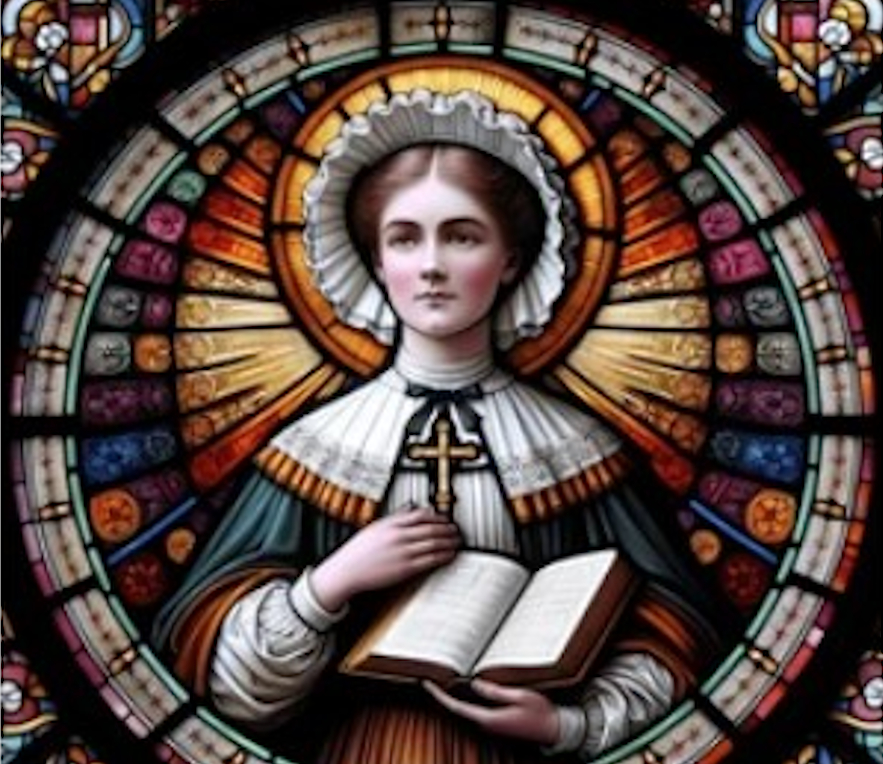
    Today’s gospel is the same one chosen to formally welcome those who wish to become full members of the Church, or seek a deeper understanding of it. We can see why; two disciples follow Christ, spend time with him, and are so affected by that encounter that they in turn become evangelizers and bring people to Christ. It’s also the perfect gospel to consider our saint of the day, Elizabeth Ann Seton; her life as an American, a woman, and a Catholic, shines a light on this story that helps us better understand the depth and complexity of the call of Christ, its cost, and its rewards.

    Born in New York City in 1774 into a wealthy Episcopalian family, Elizabeth was intelligent, devout, and beautiful; a prize for any young man of her time. In 1793, she wed a handsome young businessman, William Magee Seton, and in nine years was the mother of 5 children. Although she also had to care for William’s siblings, whose parents had both died, Elizabeth was a busy but happy homemaker.

    Unfortunately, disaster soon struck. William’s business began to fail, and, even worse, so did his health. Hoping warmer weather would help his tuberculosis, the Setons and their eldest daughter sailed to Northern Italy to stay with William’s business friends, the Filicchi family. This didn’t work. William died in December of 1803, leaving Elizabeth a widow with 5 young children and a failed business.

    This would hardly be the time we’d expect Christ to turn and say, “Come, and you will see,” but that’s exactly what happened. While caring for Elizabeth and her daughter, the Filicchis went about their lives, which included Catholicism. They never pressured Elizabeth, but did invite her to join them. Having been warned earlier about the dangers of the “smells and bells of Catholicism” by her spiritual director, Elizabeth observed guardedly at first. However, as time passed and she began to see the rhythm of devout Catholic life – including daily Mass, Eucharistic Adoration, and devotion to the Blessed Mother – she felt Christ calling her in a way she never had before. Coming across a copy of the Memorare, she was so moved by it that it became one of her favorite prayers. Finally, watching a procession on Corpus Christi, Elizabeth found herself on her knees with the Catholics as the Eucharist passed by. In her mind, she heard an Anglican pastor snickering: ‘Elizabeth, these silly peasants believe that piece of bread is really and truly Jesus Christ.’ Deep inside, she replied, ‘So do I.’

    When she returned to America, she was Anglican on the outside, but Catholic on the inside. Knowing it would cost her dearly to convert, she struggled with the decision, but finally, two years later, became a Catholic, taking Mary as her Confirmation name in honor of the Blessed Mother.

    Elizabeth was right; conversion made a hard life even harder. Her family and William’s shunned her, and the boarding house she had opened was lost when people found out she was Catholic. But, filled with the zeal those first disciples felt after staying with Christ, nothing could stop her. She moved her family to the one Catholic Diocese in the country, Baltimore, and opened a school for girls. Soon, Catholic women from around the country joined her. Over time, they formed a convent and Elizabeth founded the Sisters of Charity of St. Joseph, the first female religious order in America. Their mission was to teach girls, especially those who could not afford an education. Elizabeth was named first superior and given the title “Mother.” In 1813, she and 18 other sisters took vows of poverty, chastity, obedience, and service to the poor and in 1814, accepted their first mission, an orphanage in Philadelphia. By 1817, the sisters were working in New York.

    Sadly, even this success was tinged with sorrow. Two of Mother Seton’s daughters died from tuberculosis, and a short time later, Mother herself suffered from ill health. She died January 4, 1821, just 46 years old. Nevertheless, her legacy lives on. Elizabeth Ann Seton was beatified in 1959 and canonized in 1975, the first native-born American saint. Not only that, she is patron saint of Catholic schools, educators, teachers, people who have lost parents, people who have lost children, people who have been rejected for their faith, people with in-law problems, and all who travel at sea.

    The life of Mother Seton teaches us that it isn’t what happens to us but our response that matters. It’s easy to have faith when things are going well, but what about when they aren’t? Didn’t Elizabeth wonder where God was when her husband died, his business failed, her family shunned her, the boarding house closed, and her children died? Perhaps. Still, look how she responded. She may have gotten down, but she didn’t stay down; she got up, got busy, and found ways to serve. It is the same for us. When Christ calls us to come and see, he makes no guarantee that the road will be easy and there will be no suffering. Rather, he asks us to follow him whatever the road; not to run from suffering but to walk through it with him; to risk everything for love of Him. It is a tall order, but as St. Elizabeth Ann Seton showed so well, and as St. Teresa of Avila reminded us, those who risk everything for love of God will find that they have both lost everything and gained everything.

    St. Elizabeth Ann Seton, pray for us.

  • Can You Hear?

    Can You Hear?

    Memorial of St. Ambrose, Bishop and Doctor of the Church (Dec 7)

    Isaiah 30:19-21, 23-26; Matthew 9:35–10:1, 5a, 6-8

    In the first reading, Isaiah reminded us of two things: First, our Teacher will no longer hide himself; second, his voice shall sound in our ears. In both of these, I find echoes of the great St. Ambrose, who we remember today.

    Christ hardly hid himself from Ambrose; quite the contrary. Born just after Christianity became the religion of the Empire, raised in a wealthy Catholic family, Ambrose was highly intelligent, politically astute, and virtuous. As a young man, he became governor of a large part of northern Italy that included Milan. At that time, Christianity was embroiled in a battle between Arians, who believed that Jesus was not God, and Catholics, who did. When the Archbishop of Milan died, an argument broke out about whether an Arian or Catholic bishop should succeed him. Summoned to the cathedral to help settle the issue, he addressed the crowd. While he was speaking, a small voice cried, “Ambrose, bishop!” When the whole assembly took up the cry, Ambrose fled and hid in the house of a friend.

    Why would he do that? A couple of reasons. For one thing, Ambrose had never been baptized! Second, he was governor; his focus was on himself and his career. When he walked into that cathedral, he saw a crowd with an issue to settle, not troubled sheep without a shepherd, who needed him. But Christ did, and when that voice said, “Ambrose, bishop,” it was Christ sounding in his ears what we heard in the gospel: The harvest is abundant but the laborers are few… Without cost you have received; without cost you are to give (Matthew 9:37; 10:8).

    On one level, he was a good choice. Both the Arians and the Catholics liked and respected him; they knew him as a good man, a man with natural virtue. But that’s not enough; Christ needs good Christians, and that requires the supernatural virtues infused at baptism – faith, hope, and love – and the grace of the other sacraments, especially the Blessed Sacrament. After the emperor refused his request to find someone else, Ambrose submitted himself, undergoing one of the fastest and most complete conversions in history: From pagan to bishop in about 10 days!

    From then on, armed with those graces, bishop Ambrose lived a life of heroic virtue. For 23 years, he worked tirelessly to educate himself, his priests, and his people. A compassionate shepherd, his door was open to everyone, from pauper to emperor. A rigorous defender of the faith, he wiped out Arianism in Milan, facing down emperors to do it, and he excommunicated the Catholic emperor Theodosius, famously announcing that emperors are in the Church, not over it. A gifted speaker and writer, his teaching impressed and won over Augustine, who went on to become a great bishop and doctor of the Church himself. All this because Ambrose heard the voice of Christ calling him to a richer, deeper life, and responded to it, however reluctantly at first.

    It’s good to remember this lesson from the life of St. Ambrose, especially during Advent. In a world that advertises Christmas before Halloween is over, Christ is almost hidden by his own holiday and his voice drowned out by the noise, hustle and bustle of the season. Still, we are called to live in this world, and not just live in it, but bring Christ to it. That takes all the virtues, natural and supernatural, and the grace of the sacraments, especially Holy Communion. So, as we approach to receive our Lord at holy Mass this Advent, let us take time to savor and rejoice in Isaiah’s words, with your own eyes you shall see your Teacher, and listen carefully for Christ the Teacher sounding in our ears, ‘This is the way; walk in it’ (Isaiah 30:20, 21).

  • Meeting Perfection

    Meeting Perfection

    Feast of St. Andrew, Apostle

    Romans 10:9-18; Matthew 4:18-22

    Years ago, I trained alongside a deacon at a nursing home. Perfectionist that I am, I remember thinking that things felt all wrong. For one thing, we held our service in a room that was too busy; there must be a better place. For another, it was close to lunch; there must be a better time. Worst of all, as I tried to talk to the people, I realized that I wasn’t very good at it; maybe what I had to give wasn’t enough and I should stop trying.

    Today’s feast is exactly the right one for someone like me, for although St. Andrew appears in few places in Scripture, he has something very important to teach us about discipleship and seeking perfection. The lesson comes in three stories.

    The first we just heard. As Andrew was at work, going about his daily business, Jesus passed by and called him. Immediately, he and his brother got up and followed. The second was when the Apostles were trying to figure out how to feed a large multitude, and Andrew introduced Jesus to a boy with five barley loaves and two fish (John 6:9). In the final story, Andrew introduced some Greek-speaking people to Jesus, who mysteriously replied that the hour for him to be glorified had come (John 12:20-23).

    The perfectionist in me sees problems with each story. Jesus came to Andrew at work; wasn’t there a better place, like maybe the local synagogue? As for introducing those curious Greeks, this wasn’t long after Jesus raised Lazarus and the Jewish authorities were gunning for him. Surely, this was no time for introductions but for getting Jesus out of town. And wasn’t the kid with the loaves and fish the wrong person? Even Andrew wondered what good those were for so many (John 6:9).

    Well he may wonder, but as he came to learn, he didn’t need to have it all figured out. What he needed was faith; as St. Paul said, to believe in his heart that Jesus is Lord (Romans 10:9-10). Clearly, Andrew had faith in abundance! With faith in his heart, it didn’t matter where he met Christ, meeting him was enough; it didn’t matter when people asked to meet Jesus, asking was enough; it didn’t matter how many loaves and fish the boy had to give, giving was enough.

    As Andrew learned and these stories teach us, Christ isn’t looking for perfection; he is perfection. What he wants is our faith and effort. Given that, he will make the meeting place perfect, the time perfect, the gifts perfect, and will bring those who have faith in him to perfection; in St. Paul’s words, enriching all who call upon him (Romans 10:12).

    At the end of each Mass, we are told to go; as apostles, we are sent. In every situation of daily life that awaits us lie the same temptations I mentioned at the beginning: Wherever we are is the wrong place; whatever time, the wrong time; we, the wrong people. The example of St. Andrew reminds us that the opposite is true. For those who hold fast to faith in our hearts, there is no wrong place, no wrong time, and we are never the wrong people. God has chosen us, empowered us, and gives us many opportunities to make a difference for the better. Let us take advantage of every one of them.

    St. Andrew, pray for us.

  • Bending in the Wind

    Bending in the Wind

    Monday of the 19th Week in Ordinary Time (Memorial of St. Jane Frances de Chantal)

    Matthew 17:22-27

    In a desert out west, scientists built a biodome and planted some trees in it. At first, the trees grew normally; however, once they reached a certain height, they fell over and died. It turned out the scientists forgot one crucial element: wind. Bending in the wind puts stress on a tree’s root system, and it is that stress that causes the roots to grow deep and wide enough to support the weight and breadth of the tree.

    In today’s gospel, our Lord stresses his disciples by telling them a second time about his impending passion, death, and resurrection. Although they didn’t understand what he meant, Matthew tells us they grieved deeply. As we know, there will be plenty more times when their faith will be challenged, and, while they will fail a few times, the stress of those challenges will ultimately produce a faith strong enough to withstand anything.

    What was true of Christ’s disciples then has remained true throughout all of Christian history. We see it in the lives of the saints, one of whom we remember today: St. Jane Frances de Chantal. As a young woman, Jane was happily married, and had six children. She loved being a mother and taking charge of the household. Yet, it didn’t take long for the winds to blow. Her first three children died as infants; then, in the ninth year of her marriage, her husband died in an accident. This forced her to leave her home and move in with her disagreeable father-in-law and his even more disagreeable housekeeper. Although Jane kept a calm and even disposition, she prayed desperately for strength and for a good spiritual director.

    Her prayers were answered when she met Francis de Sales, who was preaching at a parish near her childhood home. Impressed with her, Francis agreed to become her spiritual director. It didn’t take him long to see that Jane was by nature a strong, forceful, even hard person, but always hardest on herself. He helped her see how God was working in her, even in the tragic, stressful events of her life; that the sweetness and mildness she maintained toward others was the fruit of prayer, suffering, and patience. Being less rigid and demanding of herself wasn’t weakness, but, like bending in the wind, strengthening the roots of her faith.

    Of course, St. Francis de Sales didn’t invent that idea; Jesus modeled it in the gospel. We see an example of it today. As the Son of God, he could have easily refused to pay a tax to enter His Father’s house. Why should he pay anything? For that matter, why should the Apostles (or any Christian), who would soon be permanently thrown out of the Temple? Yet, Jesus taught Peter that love meant going beyond the letter of the law to its heart; the Temple was a tribute to the Father’s glory, so, in his humility and love for the Father, His Son would gladly bend in the wind, keep silent, and pay the tax.

    In our own humility and love for God, each of us struggles to eliminate sin from our lives. Today, let us ask ourselves how that struggle is going. Have we been too easy on ourselves and avoided the challenge, afraid of failure? This is the tree never blown by the wind; how can the roots of faith grow? Or, like St. Jane, have we been too hard on ourselves, failing to forgive ourselves for being less than perfect? This is the tree that doesn’t bend in the wind; it breaks. Rather, let us seek that virtuous middle ground through the prayer, endurance, and patience shown by St. Jane Frances, and ask God to help us, too, to bend in the winds of life, not only that we don’t break, but that our faith is strengthened for whatever challenges lie ahead.

  • Embracing the Embrace

    Embracing the Embrace

    Solemnity of Sts. Peter and Paul, Apostles

    Most saints have a day set aside for them. For example, St. Elizabeth Ann Seton is honored on January 4th. The day is chosen because that’s when they entered eternal life, or, in the case of the Virgin Mary or John the Baptist, when it’s their birthday. Other saints are celebrated in pairs or groups, like Timothy and Titus, or Charles Lwanga and Companions. This is often because they were related, worked together, or were martyred together. Regardless, Mass in honor of them is usually a Memorial, or sometimes the higher rank of Feast.

    Sts. Peter and Paul stand apart in a few ways. First, today was chosen not to remember their martyrdom, but because June 29th is the traditional anniversary of the founding of Rome. Second, the Church accords this Mass the highest liturgical rank of Solemnity. Finally, their icon, or the traditional image used to teach about them, is unusual. Most icons feature symbols held by the saint, such as the cross for St. Francis or the infant Jesus for Mary; however, the icon of Sts. Peter and Paul depicts them embracing.

    I wondered why, so I looked around for answers. It seems that some people focus not on the embrace but on the distinctions or differences between the men: Peter symbolizing governance and Paul missionary work, or Peter the Church’s highest authority figure and Paul her greatest theologian. Others claimed that in the icon the two men appear to be looking past one another, inferring that Peter and Paul may not have seen see eye to eye.

    While there is truth in these perspectives, we must embrace the embrace. Even if the two figures do symbolize major aspects of the Church, like governance and missions or authority and theology, what does the embrace signify, if not that neither one can do without the other? The Church must be governed and there must be authority, but who will be governed or under authority unless the missions bring people in and theologians enlighten them about the mysteries of God? Paul understood that. Although he did have trouble with Peter, he still recognized his authority; he only preached the gospel after going to Jerusalem and meeting with Peter (Galatians 1:18). Even years later, Paul returned to Jerusalem, met with Peter, James, and John, and ensured they were in unity (Galatians 2:9). And it worked both ways; although Peter did say that Paul was hard to understand at times, he also referred to him as our beloved brother (2 Peter 3:15-16).

    So, as we remember them today, let us keep this embrace in mind, for Sts. Peter and Paul are patron saints of more than just the city of Rome; they are the patron saints of everyone who hears the word of God and tries to do it, who embraces not only those who agree with them but those who don’t, who embraces their own humanity and allows God to sanctify it, and who offer themselves completely, that the will of God be done.

    Sts. Peter and Paul, pray for us.

  • The Most Surpassing Gift

    The Most Surpassing Gift

    Memorial of St. Anthony of Padua, Priest and Doctor of the Church

    1 Kings 18:41-46; Psalm 65:10, 11, 12-13; Matthew 5:20-26

    Today is the Memorial of St. Anthony of Padua. Although time doesn’t permit us to look very deeply into his life, this man is such a great saint that even a summary can help us understand something important about God and ourselves.

    Born in Lisbon in 1195, Fernando Martins de Bulhões became an Augustinian priest near his home in Portugal, but spent most of his life as a Franciscan named Anthony. He wanted to be a missionary to the Muslims in Africa; he became a theologian. He wanted to be a martyr; he became a teacher. He wanted a quiet life of menial labor; he became a renowned preacher against heresy and the first theology instructor of the new Franciscan order. He wanted to die in Padua; he died on his way there.

    In the gospel, Jesus said that unless your righteousness surpasses that of the scribes and Pharisees, you will not enter into the Kingdom of heaven (Matthew 5:20). It isn’t that the scribes and Pharisees have no righteousness, it’s that ours must be surpassing. In life, there is good and there is better; we may be in good health, but we can be healthier. This also applies to the spiritual life; we may have a good understanding of the bible or the Church, but we can always learn more, and, in so doing, grow closer to God.

    Everything Anthony wanted was good. Being an Augustinian, a missionary, a martyr, living an ascetic life, serving in the lowest place, are all very good. Nevertheless, God had something better, something surpassing, in mind for him. All people, good and evil alike, are called to conversion. Everyone can grow in holiness.

    While growth in holiness sounds great, in practice it means that sometimes we will find ourselves in places we don’t expect, doing things we didn’t plan on doing. If we are ever tempted to see these as mistakes, deviations from the plan, the life of St. Anthony shows the opposite; they may be the plan. We may be exactly where God wants us.

    How do we know? By looking at the fruit of our labor. Again, consider St. Anthony. All his desires – to be an Augustinian, a martyr, a servant in a monastery – would have had wonderful effects, touching many lives for the better. For most of us, any of these would be a surpassing gift. But God had given Fernando a brilliant mind, capable not only of understanding deep theological concepts, but of being able to express them simply, clearly, and profoundly. These, along with his passion and humility, would sway the hearts of thousands otherwise lost to the heresy sweeping across western Europe. Thus, Anthony of Padua had gifts that could change the course of the Church herself forever.

    He couldn’t know that at the time, any more than we know how our choices will affect others. But therein lies his true greatness; like Elijah’s servant who kept looking for God in the storm, St. Anthony looked for God always and everywhere in the events of his life until he found Him, and then listened to and obeyed Him. We are called to do the same. Like that servant, all we may see at first is the “storm” – the illness, the suffering, the things we’d rather not do. But, if we’re vigilant, if we keep looking with the eyes of faith, God will give us the grace to see ourselves as the psalm does; that through these storms, our Lord prepares us to receive Him. There is pain in breaking into the soil to do that, but how else can the seed grow into a rich harvest? This is how God loves us, and love is His most surpassing gift; He gives it to us every day, at every Mass, in every Eucharist. As St. Anthony and all the saints show us, with the grace of this gift, there is nothing we cannot do.

    St. Anthony of Padua, pray for us.

  • Lessons our Mother Teaches

    Lessons our Mother Teaches

    Solemnity of the Blessed Virgin Mary, the Mother of God

    Numbers 6:22-27; Galatians 4:4-7; Luke 2:16-21

    January 1st is our annual rite of passages, time to look back on the old year, ahead to the new one, and make resolutions. This tradition probably started when Julius Caesar made January the first month; January is named after Janus, the god of passages who had two faces – one looking back at the past, the other forward to the future.

    As we see in the gospel today, Mary isn’t concerned with the past or future; she’s fully caught up in the present moment. We might look at her in this scene and see the face of a concerned, young mother who has little to offer her son – no place to call home, and nowhere to lay him but a manger. But we know better; hers is the face of a confident mother with total trust, perfect serenity, and ultimate fidelity to God; she knows that He blesses His people, lets His face shine on them, and is gracious to them (Numbers 6:24-26). He has brought her to this moment, and would never abandon her in it.

    Like any mother, Mary would know all the joys and sorrows of motherhood: The joy of teaching him to talk, to walk, to get along in the world, watching him grow into a young man, and the sorrow of picking him up when he fell, comforting him, and watching as he left home for the last time. But then there were the joys unique to being the Mother of God: the joy of watching his eyes light up as she told him the stories in the Scriptures he gave the world, and the terrible sorrow of watching his suffering, his death on the cross, and laying him in a tomb. Yet, having endured this and not lost faith would bring the greatest joy possible: Seeing her son raised from the dead, resplendent in his glorified body and ascending to his Father.

    The grace of God allowed Mary to experience all these things, not to understand them. She, too, must have her own journey of faith. As Luke is careful to point out, this included contemplation: she kept all these things, reflecting on them in her heart.

    Thus, Mary, the Mother of God, teaches us two important lessons. First, we must live in the present moment. Sometimes, we get stuck in the past, dwelling on our mistakes or trying to re-capture the glory of past accomplishments. Other times, we live in the future by worrying about what might or might not happen. Either way, we miss the present. Mary was full of grace, and grace is given to be used in the present moment. Second, the Blessed Mother teaches us that we don’t need to have all the answers, we just have to do our part. When she consented to be the mother of God, Mary wasn’t given details of the plan, she was given a baby. Her part was to be his mother; in her humility, she accepted that and put her heart and soul into it. Mary is the only one who was with Jesus at each crucial moment in his life, from his conception to his crucifixion to his ascension.

    In the divine plan, that kind of devotion never goes unrewarded. When her earthly life was complete, God exalted Mary by raising her to be with Him body and soul forever. This is the final lesson of Mary the Mother, but it is taught by Christ Jesus, her Son: Mary’s destiny is our destiny too. Everyone who follows her example of discipleship is destined to rise body and soul to that same heavenly glory. Mary was the first to enjoy it, but that was our Lord’s special gift to his Mother. The good news is that he loves us, too, so the same gift is waiting for us.

    If we have any resolution to make for this new year, let it be to do what Mother Mary has already so perfectly done: Hear the word of God and do it.

  • That Crucial Difference

    That Crucial Difference

    Memorial of St. Charles Borromeo, Bishop

    Romans 12:3-13; John 10:11-16

    Today, we heard St. Paul begin the second section of his letter to the Romans. In the first section, he explained the gospel; here, he explains how it should be lived. Hearing the word “should” brings to my mind that crucial difference between what we should do and what we actually do. We should live the gospel, but… do we?

    St. Paul first urges us to think “soberly” about ourselves; to take a good, hard look. What an exercise in humility! Just on the surface, we might think about how the doctor says we should look, and how we actually do look. That’s a crucial difference when it comes to our physical health. Thinking of our spiritual health, St. Paul then lists a series of gifts that we should be using, praying for, and doing enthusiastically out of love for Christ. But are we? These are crucial differences, too, for they speak to what St. Paul most wants to see: Authenticity, that we are living the way we should be: like Christ, with the love of shepherds who are willing to lay down their lives for their sheep.

    If anyone embodies such humility, authenticity, and love, it’s St. Charles Borromeo. His gifts were so many, lived so authentically, and their effect so great, that there isn’t time to go into it all. He was born into the kind of wealth and influence few families enjoy, but also, through the mercy of God, a piety even more rare. His was a family from whom nuns, priests, and Popes sprang. Made a cardinal at age 21 by his uncle, Pope Pius IV, Charles enjoyed an easy life at first, but was quickly redirected by the Pope, who made him his right-hand man. Pius acted not out of favoritism, but because he saw in Charles the gifts the Church so badly needed: He was intelligent, tactful, an able administrator, politically astute, fiercely loyal to the Church, a great communicator, a faithful priest and bishop, and a zealous reformer.

    Reform was perhaps the most monumental task given to Charles when the Council of Trent finally ended. This was the Council convoked to respond to the Protestant revolt. Implementing its reforms put his gifts to the test, for he met a lot of resistance, some of it so hostile that one person tried to kill him – a priest, no less! Most, however, simply couldn’t understand what the Church was doing, or why. In reply, Charles proposed that a catechism be created from the Council’s notes. He oversaw its writing and publication, and, to this day, we still have and use the Roman Catechism of St. Charles Borromeo.

    What can we learn from the life of this great saint? I can think of at least three things:

    1. Authenticity. St. Charles used his many gifts, not to get attention or because he should, but because he loved Christ. To him, all people, whether poor, ignorant, or hostile, were the face of Christ. Serving them was serving him. What about us? Do we use the gifts God has given us to serve our own needs, or do we see the face of Christ in others and serve them purely out of love for him?
    2. Reliance on the Holy Spirit. St. Charles traveled extensively and worked all hours; basically, poured his life into reform of the Church. He must have gotten weary, perhaps in darker moments even tempted to quit. But he didn’t; instead, he relied on the Holy Spirit to supply the fortitude and perseverance he needed, as St. Paul advised (Romans 12:11). Again, what about us? Do we ever get weary and tempted to quit? We should be asking the Spirit to supply what we need. Are we?
    3. Daily inner renewal. While fortitude and perseverance are vital, St. Paul also urges us to pray for zeal, which is the intensity of love. Imagine loving with the intensity of Christ! No trial or tribulation is too great; nothing can discourage us. This is the eagerness St. Charles spoke of when he said: “If we wish to make any progress in the service of God, we must begin every day of our life with new eagerness. We must keep ourselves in the presence of God as much as possible, and have no other view or end in all our actions but the divine honor.” Note, he tells us what we must do, not what we should do. That is the crucial difference whereby sinners become saints.

    St. Charles Borromeo, pray for us.


  • Body and Soul

    Body and Soul

    Solemnity of the Assumption of the Blessed Virgin Mary

    1 Corinthians 15:20-27; Luke 1:39-56

    Speaking of God the Father, St. John of the Cross once said that, “In giving us his Son, his only Word (for he possesses no other), he spoke everything to us at once in this sole Word – and he has no more to say…”1

    In a very real way, the same can be said of the Blessed Virgin Mary. Her entire life proclaimed the greatness of the Lord. Everything she is – the humble, lowly, servant – speaks of Jesus, and everything she did – from hearing the word, to conceiving Jesus, to mothering him, to watching him die, to praying for the coming of the Spirit, her Spouse – speaks of doing his will, and the will of the One who sent him.

    So intimately united to the Blessed Trinity, body and soul, from the beginning, how could Mary be any less united to Him, body or soul, when her own earthly life came to an end? And when St. Paul, inspired by the Holy Spirit, wrote those beautiful, hopeful words: just as in Adam all die, so too in Christ shall all be brought to life, but each one in proper order: Christ the firstfruits; then, at his coming, those who belong to Christ (1 Corinthians 15:22-23), who can we imagine belonging more to Christ than Mary, his devoted daughter and mother? That is how we picture Mary best: As forever belonging to Christ, and as a model for how we should picture ourselves. For, after Jesus, that is God’s greatest gift to us through the Blessed Mother: Her destiny is our destiny; where Mary has gone, we, too, can go. Her Son suffered, died, and rose again to see to it, for her sake, and for ours.

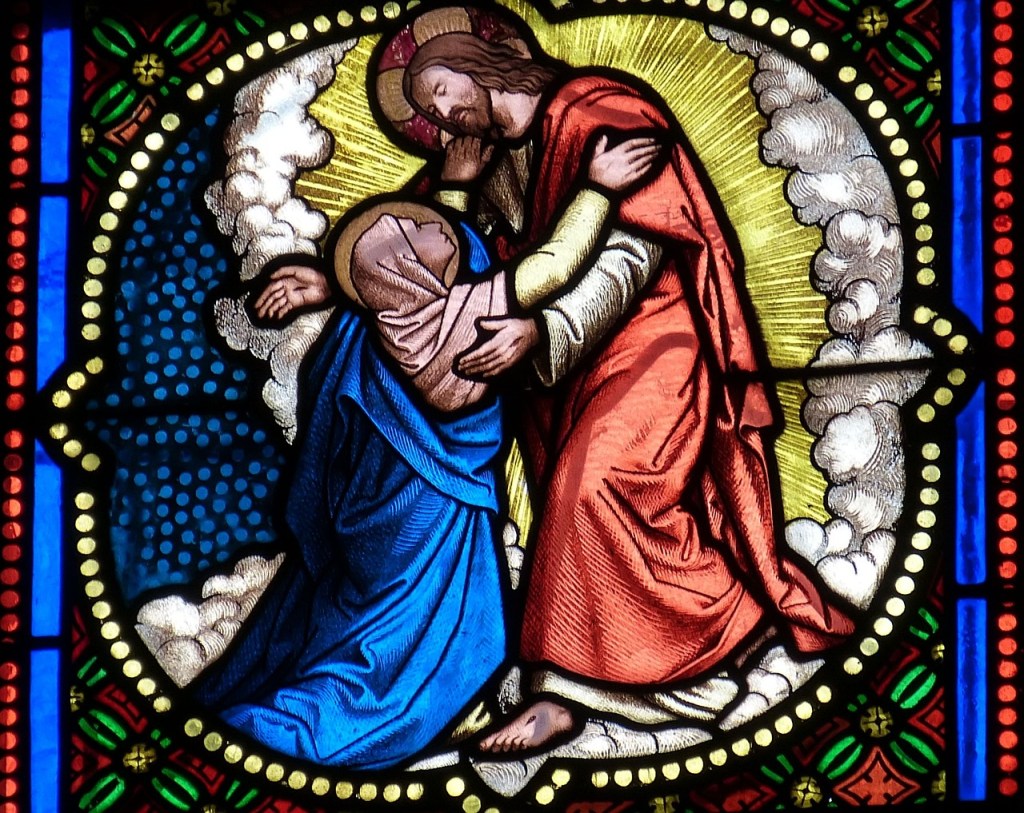
    With that in mind, and in our prayers, let us celebrate the Feast of the Assumption of the Blessed Virgin Mary for what it is: The great reunion when mother and son embrace body and soul once again in the eternal splendor of heaven. And let us today, as every day, continue to thank God for the gift of his mother, who he has made our mother, and who, to this day, hears the word of God and does it, that we may one day embrace our Lord, body and soul, in that same glory.

    Mary, assumed into heaven, pray for us.

    1St. John of the Cross, The Ascent of Mount Carmel 2, 22, 3-5 in The Collected Works of St. John of the Cross, translated by K. Kavanaugh OCD and O. Rodriguez OCD (Washington DC: Institute of Carmelite Studies, 1979), 179-180.