Exodus 1:8-14, 22; Matthew 10:34-11:1
In Charles Dickens’ masterpiece, A Christmas Carol, the garment of the Ghost of Christmas Present conceals two pathetic specters that appear as children. Of them, the ghost tells Scrooge: This boy is Ignorance. This girl is Want. Beware them both … but most of all beware this boy, for on his brow I see that written which is Doom, unless the writing be erased.
As the book of Exodus opens, we see how ignorance and want conspire to doom the people of Israel. As for ignorance, the new Pharaoh knew nothing of Joseph, the immigrant Hebrew whose foresight kept the Egyptians from starving during the great famine that swept through the land years before. As for want, Pharaoh wanted for his people two qualities he thought they lacked; the strength and resilience he saw in the Hebrews.
Pharaoh’s fear, based on ignorance of the Hebrews’ integrity and goodwill, and his want, based on his distrust of their prosperity, meant doom for the Hebrew family. Pharaoh believed that the way to destroy Hebrew society and at the same time assimilate their qualities was to re-define their families; whence his plan to drown the infant males. No baby boys, no husbands of the future; the Hebrew girls would grow up without prospects except in Egyptian households.
Even though the Pharaohs were long gone when the gospels were written, St. Matthew demonstrates that ignorance and want continued to plague Israel. Generally, the people expected a Messiah to establish peace as the world understood it: at the point of a sword. Moreover, they wanted the power and sovereignty to which they as the oppressed yet chosen people felt entitled.
But if we’ve learned anything about God, it’s that he takes our plans no matter how crooked and writes the straight lines of salvation. Pharaoh looked at the water of the Nile and saw the death of the Hebrew people; God looked at the same water and saw Moses who, as the chosen instrument of God, would bring Israel out of Egypt through a parted sea, deliver the law, and lead the people to the edge of the Promised Land.
Then in the gospel, where the disciples looked at Jesus and in their ignorance saw a Messiah who would restore the sovereignty they wanted, the Father saw the Word who would restore the righteousness they needed. Where they wanted a sword to strike human oppression, Christ brought the sword that struck the human heart, separating love of God from love of neighbor, even the love within a family. This is why he could say that anyone who loved family more than they loved him was not worthy to follow him. He wanted the commandments written on their hearts, but not ignorant of the fact that they came on two tablets; the first concerning love of God, the second, love of neighbor.
 Like Dickens’ specters, ignorance and want still haunt us today. Modern culture has forgotten God, and this ignorance moves it to see family, life and love as things that can re-defined. Our scriptures today remind us that no Pharaoh, no judge, no culture can re-define what they could never define to begin with. And where our society wants us to believe that we are lost until we find ourselves, let us remember that Scripture teaches us exactly the opposite; we are found when we lose ourselves for the sake of Christ.
 The abbot reminded the king and he reminds us that the church is not a place we run to that we may lose ourselves; it is the place we come to that we may find ourselves. Over the course of his life and reign Henry spent hours on his knees in front of the Tabernacle. He may have meant to empty himself of his problems but Christ had a different plan; He desired to fill him with the grace that would enable him to face and overcome his problems.
 One night, eight years into a 30-year sentence for the murder of a young girl who had refused his advances, Alessandro Serenelli fell asleep. Suddenly, where his prison cell had been he now saw a beautiful, sunny garden and a girl approaching. As she drew near, he recognized her as Marietta, the girl he had slain. Fearful and wanting to flee but unable to, he watched as she bent down, picked several lilies, and offered them to him. As he took them, they changed into flaming lights. He counted fourteen of them; one for each knife wound he had once inflicted on her. She then smiled at him and said, “Alessandro, as I have promised, your soul shall someday reach me in heaven.”
 This is the freedom that changes not only our own life but the lives of others as well. Consider how Elisha’s freedom to follow Elijah affected the lives of others. What would have become of all the people Elisha touched in his ministry had he refused the call and simply kept on plowing? In our own time, think about how the choices we make affect the lives of others. Where would the moral development of our children be if we chose to ignore what God has taught us? What would our relationships look like if we ignored St. Paul’s exhortation to serve one another through love (Galatians 5:13)? God’s call changes all of us no matter how we choose. If we accept it we grow closer to Him and bring others closer to Him as well; if we refuse or ignore it we distance ourselves and may well keep others from Him. The choice is ours.
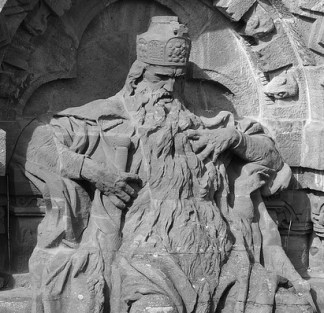 Although he was as willing to follow Jesus as the scribe in the gospel, Cyril did not lose his personality in the process. By all accounts, he was imposing, impetuous, impatient, perhaps even infuriating. He wasn’t always the perfect picture of sanctity or the epitome of virtue. Very few saints are. Sinners and saints fight the same battles, share the same temptations, and struggle with the same demons. They differ only in their response to them. The sinner looks to himself or to the world for strength; the saint looks to Christ alone. This is what Cyril knew and what St. Paul meant when he told the Corinthians:
 This may sound easy but we know it isn’t, for we too are twisted iron. Perhaps we can’t enter religious life to get twisted straight but we can enter into the silence of our thoughts and the privacy of the confessional to learn how to deal with the sins that are holding us back. Whatever they are, the example of St. Aloysius shows us that while change may be difficult or painful, it is possible.
 It took a long time – generations – but the Church in Europe triumphed even over the seemingly invincible Vikings. I say “seemingly” for we who hear the words of Christ in the gospel know that in reality the Vikings never had a chance. All they had were swords, brute strength, and a fierce warrior spirit; what is that against the gentle, persistent, indomitable power of God? Through the ministers of the Church, the Spirit of God flowed over that mighty Norman rock and carved it into a force that would defend and promote the faith they once mocked for yielding so easily.
 Although w
 No one can give what they do not possess. Father Anthony possessed great faith and great charity, but what transformed him from service in an Augustinian monastery to service as one of the greatest preachers and teachers of the faith was his love of Christ, shown in his constant willingness to discern and pursue the call of Christ in his life as well as his desire to keep Christ at the center of his life. As he once so eloquently said, “If you preach Jesus, he will melt hardened hearts; if you invoke him he will soften harsh temptations; if you think of him he will enlighten your mind; if you read of him he will satisfy your intellect.”
 Mark 10:45