Sirach 50:22-24; 1 Corinthians 1:3-9; Luke 17:11-19
I recently came across an article written by a psychologist who believes that developing an “attitude of gratitude” is important for our mental health. In her words, “Being able to appreciate what is important to us is a truly valuable way of stepping back from the stresses we are experiencing and re-framing our thoughts and attention, our feelings and behavior.”1
With all due respect, she should have checked Scripture first. If she had gone even as far as today’s readings she would have found much more insight.
The author of Sirach goes right to the heart of the matter when he reminds us to be grateful for the gift of life itself from conception onward. The grim realities of abortion and euthanasia are evidence of a culture where people do not understand the value of their own life let alone anyone else’s. The kind of social sickness that breeds such an attitude will be hard to heal but we have on call the Divine Physician who knows how to treat it. As we continue to pray for his intervention let us not forget our part; that is, showing thankfulness to God for the gift of all human life by doing whatever we can to support it, whether that means women in crisis pregnancies, people suffering from abuse or neglect, or those who are encouraged to end their lives. The world must come to see through Christ and his Church that every human life is infinitely valuable because it is made in God’s image and fashioned according to his will (Sirach 50:22).
God’s will, that we have life and have it abundantly now and in eternity, comes to the fore as St. Paul reminds us of the grace bestowed on us in Christ Jesus (1 Corinthians 1:4). While human life is certainly enough to be thankful for in and of itself, God has given us the opportunity to share in so much more: Eternal life through the gift of his only Son, our Lord Jesus Christ, with whom we have fellowship and of whom we partake at every Eucharist just for this purpose.
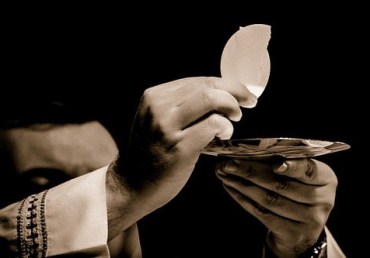 Still, a common problem is that we tend to take this fellowship for granted and forget gratitude. We fall into a routine of receiving Communion with little or no thought as to what – or rather Who – we are receiving. Like the nine lepers in today’s gospel passage, we are given what we ask for but then go back on our way with little regard either for the gift or what it cost the Giver. St. Paul goes on to warn about the grave danger of such ingratitude: That is why many among you are ill and infirm, and a considerable number are dying (1 Corinthians 11:30). The healthier, more grateful response is to first discern whether we are in the state of grace to receive Christ and, if not, to make ourselves a more worthy vessel. Like the leper who, once cleansed, remembered to be thankful, we thank God for what he has given us through the Church – the gifts of faith and the Sacraments through which he touches, heals, and sanctifies us.
Today is Thanksgiving Day here in the United States, a day set aside to show our gratitude. Wherever you are, I urge you to stop and think about all that God has given you. No matter who you are or how many problems you struggle with, there is reason to be grateful. First and foremost, be grateful for life; each breath is a gift from God given that we may live life to the full. Secondly let us be grateful for each other; each person is a gift from God, sent to make us holy. Finally, let us thank God for the gift of the Church, through which Christ comes to us in Word and Sacrament to be one with us and above all to make us one with him, now and in Eternity.
A very blessed and happy Thanksgiving.
 Eventually, Father was caught, imprisoned on a false charge and on the morning of November 23
 The two themes of fidelity and love are interwoven in the feast of the Presentation of the Blessed Virgin Mary. The presentation of oneself to God is an act of great faith and deep love. Whether Mary demonstrated her faith and love in a formal consecration to God in the Temple as described in the ancient non-biblical documents is irrelevant. Every day of Mary’s life was a presentation, a self-offering, an abandonment to the divine will made possible by the movement of grace within her. Long before he dwelled within her womb, indeed from the moment of her immaculate conception, our Lord dwelled within her soul and bestowed upon it the fullness of grace, his very life. By her response to that grace, Mary most truly defines what it means to be a Temple of the Holy Spirit.
 Persistence in prayer does not test God’s patience or change his mind; rather, it tests our faith and changes our attitude. Through his life and the Scriptures he has given the world, Jesus has told us that God loves each of us with a love beyond our understanding and knows our needs before we ask. That being so, God wants our prayer to consistently express the trust we have in him and his providence; that is the faith that Christ wants to find upon his return.
 No wonder. Internet scans, scrolls, and searches cannot bring the wisdom we need. As the first reading tells us, Wisdom is a spirit… Firm, secure, tranquil, all-powerful, all-seeing… the spotless mirror of the power of God, the image of his goodness (Wisdom 7:22, 23, 26). Wisdom is Christ, and his gift to us is wisdom as the fruit of the Spirit. A fruit born of the love of God, wisdom desires not only to be one with God but to see things as God sees them. Like any fruit, wisdom takes time to mature; its development a function of our life experience as seen through the lens of long-suffering that strengthens us to finish what we start, docility to listen as God speaks, and humility to remember that we are servants of God and each other.
 We who have inherited this faith must never forget these two lessons from the readings: First, the worth of the human body was not, is not, and never will be ours to decide. God has given us freedom, so we can define and re-define who is and who is not worthy to live, but in the end these are just words; our laws
 Finally, the parables teach us that the love of God works mysteriously through the process of conversion so that no matter how hard we search for Christ, it isn’t we who find him but he who finds us. Our life stories are a testament to the truth of the parables and Isaiah’s words that we have
 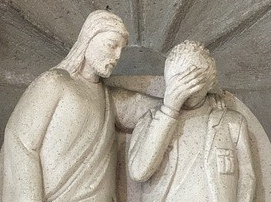 The psalmist today sings Save me O Lord in your mercy (Psalm 109:26). The readings are God’s answer to that prayer. In his infinite love and mercy he assures us that no matter how hypocritical we are, how much a Pharisee, or how much we deserve it, we are never alone. God is always true to his word and today his word is that there is nothing – neither death, nor life, nor angels, nor principalities, nor present things, nor future things, nor powers, nor height, nor depth, nor any other creature – that can separate us from the love of Jesus Christ our Lord (Romans 8:38-39).
 That is the image I think of now when I think of saints. Not images set in glass that glow with the sunlight, but people who now and forever glow with the radiance of the one true Light – Christ, the Morning Star who never sets.
 To win this combat and know the peace of Christ we need the armor of the virtues; prudence, to discern where our good lies; temperance, to know when we should move on; justice, to understand that the love we give our neighbor and God is the love we owe them; and fortitude, to constantly yield our will to that of Christ, for only his is the love that casts out all fear, not only restoring us to right relationship with the Father, but reconciling us with each other.
 Mark 10:45