Category: mercy

  • Power and Paradox

    Power and Paradox

    Wednesday of the 25th Week in Ordinary Time (Memorial of St. Pio of Pietrelcina, Priest)

    Proverbs 30:5-9; Luke 9:1-6

    In the book of Proverbs, we read, “Give me neither poverty nor riches; provide me only with the food I need.”

    The man we remember today, St. Pio of Pietrelcina, tried his best to live that out. He owned practically nothing, slept on a straw mattress, wore habits until they fell apart, and turned over all gifts and donations he received to his Franciscan superiors.

    It wasn’t that Father Pio loved poverty for its own sake. Rather, it reminded him, and he wanted it to remind the world, that all we really need is God.

    It worked. It was clear to all who knew him that Father Pio lived in profound union with God. His life struck that balance the author of Proverbs spoke of: not to have so much that he might forget God, or so little that he might be consumed by anxiety. All he asked of God was to have everything he needed to serve Him.

    And that prayer was certainly answered. Like the disciples in the gospel story, Christ gave him all the power and authority he needed to proclaim the Kingdom of God. Unlike them, however, Father Pio was not sent out to the world; rather, the world was sent to him.

    As word of his ministry spread, people began to come from all over to the little Italian village where he lived. They came to confess to him, seek his counsel, attend his Masses, and ask his prayers. 

    And, as they came, Father saw so great a need for medical care that he became the driving force behind the “Home for the Relief of Suffering,” a Catholic treatment center dedicated to providing medical and spiritual care, particularly for people who could not afford it.

    And this is the paradox: That a man who possessed almost nothing became the man to whom people could bring everything, from their worst sins and sickness to their greatest hopes and fears.

    That is the paradox of the Christian life. Especially in our society, we are tempted to want more: more power, more control, more money, more of whatever makes us feel secure.

    But the example of Christ teaches us something different: The less we cling to what we have, the more freely we allow God to work within us.

    Christ is not asking us to found care centers, sleep on straw mats, or spend hours forgiving sins. But he does ask us to become free enough to receive the gifts he gives us, and generous enough to use them for the benefit of others.

    So, let’s remember that prayer from Proverbs: “Give me neither poverty nor riches; provide me only with the food I need…”

    And pray for the grace to want only what God is pleased to give us, the eyes to recognize what those gifts are, and the generosity to use them for the building up of His Kingdom.

    St. Pio of Pietrelcina, pray for us.

    —
  • What Do They Say?

    What Do They Say?

    Thursday of the 24th Week in Ordinary Time

    1 Corinthians 15:1-11; Luke 7:36-50

    In the first reading, St. Paul tells the Corinthians to hold fast to the gospel he has preached to them. But he isn’t talking about just remembering it. He’s saying that the gospel must shape their lives, especially their relationships with others.

    Their words will teach people about Christ, but so will their actions.

    The Gospel gives us two striking examples of how our actions reveal the unspoken thoughts of our heart.

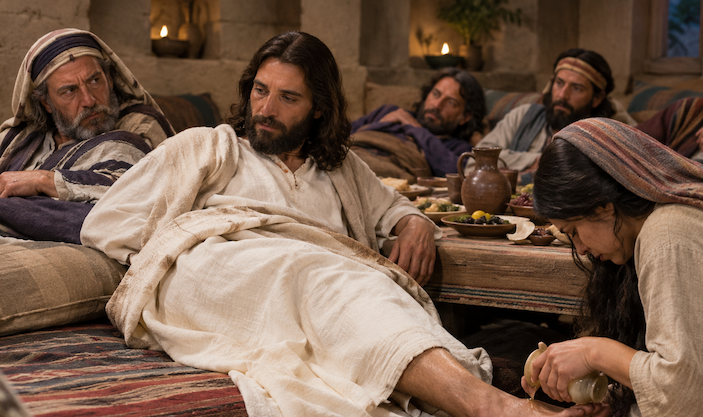
    First, consider Simon the Pharisee. Clearly a man of learning, no doubt well-spoken, and in a respectable religious position. But his actions on bringing Christ into his home… what do they say? He doesn’t give Jesus even the ordinary courtesies, things easy for him to provide; no water for his feet, no kiss of greeting, no oil.

    The woman, on the other hand, says nothing. No words about how sorry she is, or how much she loves Jesus. But her actions pour out the thoughts of her heart; washing his feet with her tears, drying them with her hair, kissing them repeatedly, and finally anointing them.

    And we know our Lord’s reaction to that. And to Simon.

    The question is, what will his reaction will be to us? 

    We use words to speak our love for God. We say our prayers, give all the proper responses at Mass. We might even use them to teach the faith to others. 

    But my actions – what do they say?

    • When someone hurts me, what do they say about whether I believe in forgiveness?
    • When someone needs my time, what do they say about whether I believe in charity?
    • When I’m inconvenienced, what do they say about whether I believe that my life belongs to God?
    • When no one is watching, what do they say about my character?

    The readings today are clear: Holding on to God’s word doesn’t mean merely remembering it, or even repeating it. Holding onto it means allowing it to become visible in our lives – despite the cost.

    As St. Anthony of Padua once said, “Let your words teach and your actions speak.”

    When all is said and done, people may well forget what we said. But let’s make sure they always remember what our lives told them about Christ.

  • The Pharisee, the Tax Collector, and Me

    The Pharisee, the Tax Collector, and Me

    Saturday of the 3rd Week in Lent

    Hosea 6:1-6; Luke 18:9-14

    As a young man, I went through a period in my spiritual life I can only describe as “restless.” Dissatisfied with Mass at my local parish, I began trying others. One parish had a Mass with really good music, another with homilies I liked, a third with a priest I found very prayerful. While that was all fine at first, over time I saw that these parishes had problems, too. Frustrated, I thought I’d better rethink the whole thing, so I asked myself why I went to Mass at all. “To receive Christ,” I said. “Well,” I replied, “if that’s true, then why are you focusing on the music, the homily, the priest, or the problems, when you should be focused on Christ?”

    I was reminded of my “parish shopping” experience as I read today’s Scriptures. My attitude was far too much like the Pharisee in our Lord’s parable. For him, the issues were about how much he fasted, rather than why he fasted to begin with; about what he gave from his purse rather than what came from his heart. For me, the issues were also the externals: music, homilies, the attitude of the presider. Beneath it all, we both missed what is most essential – the humility with which we approach Almighty God, and the gratitude we show for the infinite mercy He offers us.

    This attitude of humility can only come from the heart, which is what God tells us through the prophet Hosea He wants most. The outward religious practices have tremendous meaning and we are right to pay attention to them, but when they become an end in themselves, we rob them of their piety. Like the Israelites of Hosea’s time, we end up going through the motions of worship, while our behavior betrays hearts that are far from God. True worship isn’t about the external things as ends in themselves, but about allowing them to come from the heart; to reflect the joy of encountering and surrendering to our Lord, Jesus Christ.

    So, as we prepare to approach Jesus in the Blessed Sacrament, let us take a moment and allow the readings to challenge us. How are we, like the Pharisee, letting distractions come between us and a genuine encounter with Christ? Do we share in any way the Pharisee’s sense of pride and self-sufficiency? And let us pray for the grace to be more and more like the tax collector, who by recognizing his own need for mercy, allowed humility to take him where true worship is designed to bring all of us – ever closer to Almighty God.

    —

  • Like Rocks in a Pond

    Like Rocks in a Pond

    Monday of the 1st Week of Lent

    Leviticus 19:1-2, 11-18; Psalm 19:8, 9, 10, 15; 2 Corinthians 6:2b; Matthew 25:31-46

    Some time ago, a man heard this gospel and came to me, confused. He said, “Why are there two judgments?” What do you mean, I asked. “Well,” he went on, “St. Paul said after we die, we’re judged. But in the gospel, Jesus says he’s returning to judge everyone. Why two judgments?” It’s a good question, one answered by Fr. Joseph Ratzinger, long before he became Pope Benedict XVI. His answer is just as relevant for us today as we consider this same gospel passage. Let me give you an example.

    Imagine that every act we perform is a rock thrown into a pond. As you know, the ripples move out in circles from the impact; the larger the rock, the bigger the waves. Think of the many good things we can do that Jesus spoke of in the gospel as rocks that create waves affecting others for the better. We’ve probably all heard the inspiring stories of people whose lives were forever changed by one small act of kindness done to them, an act the giver may have thought of little import. But to the person it was life-changing, and because of that one kind act, that person went on to do things that affected many other lives for the good.

    On the other hand, Jesus also spoke of the evil that we do, or the good we fail to do. Those, too, create waves that affect others, and not for the better. Imagine how one small lie told about someone can affect others, biasing their judgment of the victim. Now imagine they pass that on to others, and just like that a person’s reputation is ruined, all from one small act that, at the time, may have seemed of little consequence.

    If we see our actions in this light, the answer to the question of two judgments becomes simple. At the moment of our death, our good and evil actions are still creating ripples in the pond. Only God knows their full effect, and judges us on it. But only when Christ comes again at the end of time can we (and everyone else) see the full effect of everything we’ve done or failed to do, bad or good.

    With this as background, consider the wisdom of the readings. Leviticus tells us that we become holy as God is holy only when we treat others justly, honestly, and fairly – especially the vulnerable. The Psalm reminds us that living God’s law in this way not only benefits others, it leads us to wisdom and joy. And there is an urgency to it; as the Gospel acclamation says, now is a very acceptable time. Living a holy life is not something to postpone; we never know when we’re going to “cast our last rock into the pond.” And of course, in the gospel our Lord makes clear the eternal importance of making every action a good one. To the degree that we show mercy, mercy shall be shown to us.

    The Church gives us these readings early in Lent so we can take the best possible advantage of the time given us. For good reason! Why wait? Now is the time to seek the forgiveness of God and others for the evil we’ve done and the good we’ve failed to do, and to find whatever ways we can to live as Christ has asked us. And now is a good time to thank him, who by his passion, death, and resurrection is the Rock whose waves have crashed open for us the gates of Heaven itself.

    —

  • On The Other Side

    On The Other Side

    Ash Wednesday

    Joel 2:2-17; 2 Corinthians 5:20 – 6:2; Matthew 6:1-6, 16-18

    An elderly monk and a young monk, walking down a road near a stream, came upon a beautiful woman standing by the water. She asked if they would help her cross to the other side. You see, she said, the stream is deep and I might drown. Looking down, the young monk muttered, “Sorry, we can’t.” The older monk sighed, picked her up, carried her across, waded back, then continued on his way. For a long time, his companion said nothing, but was clearly troubled. Finally, the older man asked, “Is something bothering you?” The other replied, “Why did you carry her across like that? What a terrible temptation!” Smiling, the elderly monk said, “Brother, I left her on the other side. You’re still carrying her. She’s getting heavy, isn’t she?”

    We’ve now entered that time of year the Church sets aside to ask what we need to leave “on the other side.” In other words, what burdens are we carrying? It could be many things: Maybe guilt, regret, anger, or frustration; maybe the burdens of stress due to illness or addiction. No matter what load weighs on our shoulders, even the strongest of us will eventually tire trying to carry it.

    The good news is that we don’t have to carry it at all. Like the elderly monk in the story, God will meet us in our struggle and help us lay our burden down. How? The readings break it down into three steps:

    First, we repent, or, as the prophet Joel says, return to God with our “whole heart.” Wholehearted repentance means not just telling God we’re sorry, or acting like we’re sorry, but really being sorry; that is, making an honest effort to change our behavior and our attitudes. In Confession, we call that having a firm purpose of amendment.

    Second, we reconcile. With whom? Anyone we’ve sinned against, which includes both God and other people. In fact, St. Paul urges us to be “ambassadors of reconciliation.” Even though we carry the burden of our sins and are tempted to hold onto them, God calls us to forsake our old ways, accept His gift of mercy, and be strengthened by His grace, that we may be more closely united to Him and to each other.

    Third, we renew ourselves in the practice of our faith by genuinely seeking God presence, not other peoples’ attention, by humbling ourselves before God rather than focusing on what we’re giving up, and by giving to others out of love, not for what can get out of it.

    May this Lent be for all of us the time we allow God to help us lay our burdens down. Through repentance, reconciliation, and a renewed commitment to living quietly and authentically before God, let’s leave our old selves on the other side and continue on our way with the lighter heart and open spirit He has in mind.

    —

  • A Divine Prescription for Healing

    A Divine Prescription for Healing

    Saturday of the 1st Week in Ordinary Time

    Hebrews 4:12-16; Mark 2:13-17

    When we’re sick and have to see the doctor, we have a pretty good idea what’s going to happen: We’ll give an account of our symptoms, get a physical exam, then treatment, which means surgery if necessary. It’s been that way probably for as long as there’s been medicine, so it’s interesting how the Author of the Letter to the Hebrews goes in reverse order: First comes the surgery with the two-edged sword, then the exam, then we render an account (Hebrews 4:12).

    Why? I think he’s trying to say that having Jesus minister to our sinfulness is completely unlike any other “doctor-patient” relationship because, unlike other doctors, he already knows everything about us, and his diagnosis and treatment are perfect. So the question really is, are we going to be a good patient and listen to him, accept his diagnosis, and do what’s necessary to be healed?

    If we need any reminders about what’s necessary, Jesus has made at least three things clear in this week’s gospel stories from Mark.

    First, we must show him our faith. We won’t be healed without it. It can be our own faith, as with the leper, or we can rely in part on the faith of those around us, as Simon’s mother-in-law, the demoniac, or the paralytic did. We can show our faith immediately, as Levi and the other Apostles did, or we can be more tentative; either way, we’re going to be tested and must pray for the perseverance to keep going. That’s what happened to the Apostles; they frequently struggled to understand much of what Jesus said and did, but, except for Judas, none of them gave up. That’s what Jesus wants us to do, too.

    Second, remember the medicine of mercy. We know how good it feels, and how healing it can be to forgive those who have hurt us, or to ask forgiveness of those we have hurt. In addition, there is the mercy of reaching out to other people who are hurting or in need. Recall in the gospel today the mercy of our Lord, who simply shared a meal with tax-collectors and sinners – people the Pharisees dismissed. Those who reach out in this way in imitation of Christ, who sympathizes with our weaknesses (Hebrews 4:15), are what Fr. Henri Nouwen called “wounded healers” – people who, recalling their own feelings of inadequacy, anger, sadness, grief, or loneliness, reach out in empathy to care for and bring a measure of healing to others who struggle with those same feelings. In so doing, wounded healers help heal themselves.


    Third, we must be willing to endure the pain of healing. Many of us have gone through physical therapy, so we know that pain is often a part of healing. But we also know this pain is different from the pain of illness, for it comes from strengthening areas that need to be exercised so we can be whole again. It’s the same in the spiritual life. For Apostles such as Levi, it may have been the pain of poverty, of leaving everything behind to follow Christ; for the Pharisees, the pain of humility, of realizing that the people they thought beneath them are loved by God as much as they are; and for the tax-collectors and sinners, the pain of justice, of reforming their lives and becoming the righteous people they were called to be. For us, it depends on the symptoms, but whatever they are, the Divine Physician has the remedy. Let us pray to have and show the faith by which he heals us, the humility to ask for and accept his healing, and the courage to persevere until the end.

    —

  • The Harvest is Coming

    The Harvest is Coming

    Saturday of the 16th Week in Ordinary Time

    Jeremiah 7:1-11; Psalm 84:2; James 1:21; Matthew 13:24-30

    Like all parables, the intriguing parable we hear today contains a twist or surprise that is designed by our Lord to make us think. The twist is that the sower decided to leave the weeds in the field. Very few gardeners or farmers, then or now, would expect that. Why not let the servants pull them, so the wheat can more easily flourish?

    I think there are a couple of reasons. First, as the wheat and the weed (here, darnel) begin to grow, they look very much alike; the servants could easily mistake one for the other. Second, as they mature, the roots get entangled; pulling one will almost certainly take the other along with it. Clearly, the sower doesn’t want to do anything that would risk losing even a single grain of wheat.

    This is like the infinite, merciful love of God for us. He has given us Christ, sent us into the world, made available all the graces we need, and is with us always. As Christ said earlier in this same gospel when he invited us to take his yoke upon our shoulders, he is even willing to bear most of the load.

    Even with all that, it’s still not easy. The sower knows that letting the wheat and weed grow together makes it harder for the wheat to grow. Then why do it? Because anything worth having is worth working for. In the spiritual life, virtues only develop when they have something to work against. How do we grow in courage without facing fear, or in patience without being pushed, or in charity without the temptation to be selfish? By allowing the presence of evil, God challenges goodness to become greatness.

    Of course, repentance is a process. It’s not going to happen overnight. Fortunately, as the parable also implies, God gives us time. But we must use it to full advantage. Recall how Jeremiah pictured the people standing in the Temple, unrepentant yet saying, “We are safe.” God’s response probably sounds familiar; Jesus will use it later against the Temple authorities: den of thieves (Jeremiah 7:11). The worst thing we can be is complacent, satisfied with where we are in our relationship with God and each other. There is always more to do. Thus, the parable invites us to see not only that we are wheat in the field of the world, but that the wheat and weeds exist inside each of us as well. How can the Church, God’s dwelling place, be lovely if His dwelling place within us is not?

    Finally, the parable reminds us that, while God is patient and merciful, He is also just. Both the wheat and weed faced a reckoning – the harvest – and the sower has definite plans for each: Burn or barn. For us, too, the harvest is coming, and God will make a similar decision about us. We know which one we want, so let’s not put it off; the time is now to do what the Gospel acclamation urged: Humbly welcome the word that has been planted in you and is able to save your souls (James 1:21).

    —

  • The Battle of Wills

    The Battle of Wills

    The Solemnity of the Most Holy Body and Blood of Christ (B)

    Exodus 24:3-8; Psalm 116:12; Hebrews 9:11-15; Mark 14:12-16, 22-26

    As a young parent, I learned the hard way that, when you want to get a 2 year-old to do something, you don’t begin any sentence with the words, “Do you want to…” It doesn’t take long to find out that when the child replies, “No,” it becomes a battle of wills, and one of the strongest forces on Earth is the will of a 2 year-old.

    Of course, it isn’t just kids; people of every age can be very determined to see their will is done. We see it in Scripture. For example, the two verses of Mark’s gospel just before today’s reading tell us of Judas’s will to hand Jesus over to the chief priests. But we also see that Jesus has anticipated this, and has a very strong will of his own. That’s why he gives such detailed instructions to the two disciples about following a man to find the upper room. He doesn’t want Judas to know that location yet, because he has plans for that meal and will not tolerate being arrested there.

    We see why in the second part of the gospel, for Jesus speaks the words we hear at the consecration. This also shows his will at work, for as the first reading showed, Jesus didn’t choose those words because he liked the way they sounded; he used them because they were patterned after the words spoken by Moses centuries before, when he sacrificed the bulls and sprinkled both the altar and the people with their blood.

    And our Lord’s will runs as deep as his blood, as we begin to see in the second reading. While the Old Testament sacrifice of animals was effective, it was never intended by God to be perfect. Why? Because, the animal , although innocent, was also an unwilling victim. For the perfect atonement of the sins of all mankind, the victim had to be not only innocent, but also totally willing to give up his life.

    This is the heart of today’s Solemnity: the triumph of Christ’s human will. Without his willingness to give up his life, there could be no crucifixion, no resurrection, no eternal redemption, and no Holy Communion. And this is the heart of his love for us, for love is an act of the will, and as he said so beautifully in John’s gospel, there is no greater love than to lay down your life for your friends.

    But Christ’s sacrifice does us no good unless we’re willing to love him in return, so the question for us is, as the psalmist sang, How shall I make a return to the LORD for all the good he has done for me (Psalm 116:12)? I can think of three ways:

    • Preparation. Christ made sure the upper room was prepared. How do we prepare ourselves for Mass? We can begin as we are getting ready at home and while we’re on our way; we can arrive early, take time to talk to God, to tell Him what’s in our heart and on our mind. It isn’t that God doesn’t already know, it’s that He wants us to share, to make an effort. That’s an act of our will.
    • Worthy reception of the Holy Eucharist. The grace of every Sacrament is freely available, but we have to be ready to receive it. Are we in a state of grace? Have we been to confession and gotten ourselves as ready as possible to receive the grace Christ offers? Then, when Communion begins, focus as exclusively as possible on receiving Christ. This is the moment when he comes directly into us, the moment he wills that we become what we receive. Are we willing to become like Christ?
    • Drawing closer to God in daily life. When we truly love someone, we don’t limit ourselves to spending an hour per week with them. Why should it be that way with God? Rather, we should be mindful of His presence with us every moment of every day, and ready to show the world that our will and God’s will are the same thing.

    These sound great, and are easy to say, but we all know how hard it is to go from words to the deeds that back them up. It’s the battle of wills inside us; the will to do what we want on one side, and the will to do what we ought on the other. We can’t win it alone, but we don’t have to; the grace of God is always available. All we have to do is ask for it, and resolve to use it. The more we do that, the more we show our Heavenly Father that we’re serious about winning the battle, about making real in our lives the meaning of His Son’s words in his prayer and, above all, in Gethsemane: Thy will be done.

    —

  • My Enemy, My Brother

    My Enemy, My Brother

    Saturday of the 2nd Week in Ordinary Time

    2 Samuel 1:1-4, 11-12, 19, 23-27

    In 1918, a woman abandoned her son at Father Flanagan’s Home for Boys in Omaha. Stricken with polio, the boy’s heavy leg braces made climbing stairs very difficult, if not impossible. Seeing this, some of the older boys began taking turns carrying him up the stairs. Stopping one of them afterward, Father asked, “Isn’t he heavy?” The boy replied, “He ain’t heavy. He’s my brother.” This became the motto for the home, which is open to this day, and where that attitude is still fostered and put into practice.

    If David carried anything having to do with Saul, it probably would’ve been resentment. Although the two started out well enough, Saul even having his daughter marry David, eventually jealousy, fear, and self-centeredness drove the king to hurt David, even to the point of trying to kill him. Given that, it probably wouldn’t surprise us if David was relieved, or even glad, that Saul died in battle. Yet, as we heard today, he mourns the loss; he even writes a lament for Saul, calling him ‘beloved,’ just like he does his own best friend and Saul’s son, Jonathan, who also died in the same battle.

    Some say that David’s remorse was all for show; crocodile tears, as my mother would have said. I understand that. David is a complex character, had a political streak, and probably acted with mixed motives many times. I may be naïve, but I don’t think this is one of them. At least twice, David had the opportunity to kill Saul and rightfully claim self-defense (1 Samuel 24, 26). Yet, he didn’t. Why not? Because Saul was the Lord’s anointed; he was king. David had humility enough to know his place as servant, Saul’s place as king, and, most importantly, God’s place as supreme judge (1 Samuel 24:16).

    In the coming years, David will learn even more about humility. Over the next several weekdays, we will see the him at his most noteworthy and his most notorious. It is perhaps the irony of David’s life that he will repeat so many of the errors of Saul’s ways; like him, David will suffer the effects of jealousy, fear, and self-centeredness; he will allow himself to seek (and obtain!) the death of another man; and he will ultimately be driven to his knees begging for mercy. Yet, unlike Saul, David isn’t too proud to seek it, finding that God looks not only for sorrow, but, also for a humble and contrite heart.

    But here, at the beginning of the book, God gives us an example of why He calls David a man after His own heart (1 Samuel 13:14), and in so doing teaches us two lessons. First, David’s grief over the death of Saul shows us that we have a choice; when we’ve been hurt, we can respond in kind, which leaves only bitterness and hatred, or we can respond with love, which leaves us at peace. It isn’t that we are expected to become fast friends with those who want to harm us, whether that be a terrorist far away or enemy close to home, but that we pray for them, that they may seek and find salvation. We do this because this is how God loves, and it is the love He wants us to have; that all people come to kneel before God and worship Him as one. Second, David’s grief teaches us that our responses are infectious; what we do, others see and may imitate. What did David’s followers do when they saw him grieve? They, too, grieved.

    Let us then pray for the gift of humility, that like David and the children at Boys Town, we may come to see God and each other through the lens of our own brokenness, and respond with praise and thanksgiving to God for His merciful love, and to each other with hearts made after His.

    —

  • No Retouching

    No Retouching

    Saturday of the 33rd Week in Ordinary Time

    1 Maccabees 6:1-13; Luke 20:27-40

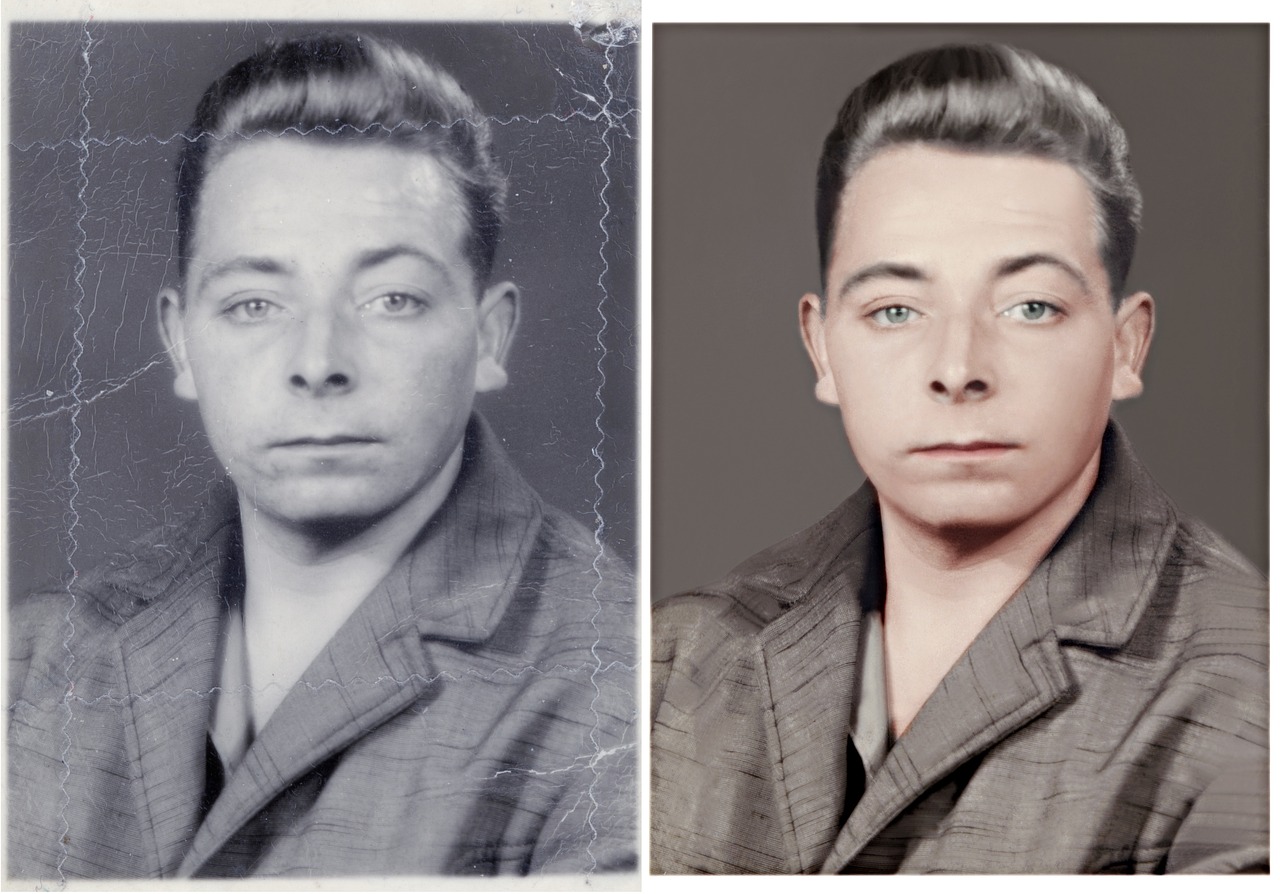
    I remember back when a photograph was just that: a photograph. Someone took your picture, and however you looked, that was it. Now, at the click of a button, a computer program whitens your teeth, removes blemishes, even takes off pounds. It has become routine for photographers to offer a variety of “retouching” services, so people can appear in ways they find more appealing.

    This is really nothing more than a modern variation on one of mankind’s oldest temptations; namely, finding a way to shine the best possible light on ourselves. As we know, pride will even drive some to unrealistic extremes. For example, we heard Antiochus Epiphanes on his deathbed, confessing that he had pictured himself as kindly and beloved. As we know from Maccabees, the facts paint a quite different picture; he was a cruel, despotic monarch. The gospel, while more subtle, is no less an indictment. The Sadducees saw themselves as the enlightened few who knew the real truth about God, like which books He inspired and which He didn’t. Thus, they scoffed at angels and life after death as the wishful dreams of the unenlightened. How ironic that their encounter with the Light of the World only left them in a deeper darkness.

    Giving in to the temptation to see what we want to see leaves us open to at least two problems: Either we overestimate ourselves, like Antiochus, or we underestimate others – even God – like the Sadducees. Why we do it is hard to say. Perhaps we’re driven by fear that our real selves aren’t good enough for God or others, and without some kind of deception we are doomed to rejection and failure. Of course, the opposite is true; we alienate people when we pretend to be who we are not, for eventually the truth will out, and God is never fooled and wants nothing more than for us to be who we were created to be. In either case, the only way out is coming to see ourselves as God sees us, and living as true to that image as we can.

    That requires self-examination and confession, but those lead to yet another temptation: avoidance. That is easy, but the more we do it, the more we get comfortable with it, and the more we risk falling into the sins against hope: despair or presumption. The frustration of dealing with habitual sins can tempt us to despair. We think, “Why bother going to confession any more? I’m only going to do it again. It’s futile.” But this underestimates God; the only person who cannot be forgiven is the person who refuses it. On the other hand, we might presume on God’s mercy, either by refusing to ask Him for help because we think we can fix our problems alone, or because we believe that, since God loves us unconditionally, He forgives us no matter what, so we don’t need to ask. Either way, we deceive ourselves; both despair and presumption fail to understand God’s merciful love for us.

    To get a better understanding of that, think of your children, your spouse, your parents, anyone you have really loved. Their weaknesses might hurt you, even deeply, but when did they ever prevent you from loving them? We don’t always accept their behavior, but we always accept them. In fact, we’re much more likely to show compassion, to suffer through their problems with them, than ever to abandon them. This is the kind of love our Lord wants us to have for each other, ourselves, and Him.

    Self-awareness leads not only to inner healing, but to “other-awareness” as well. As we come to acknowledge and openly accept our own weaknesses, we become more aware of and sensitive to the struggles of others, and we come to better appreciate the merciful love of God, who is with us through all of them, and whose grace strengthens us to work our way past them.

    That is the best image of ourselves, and it isn’t one that human hands can retouch, for it is the image and likeness of our Creator. Let us ask God to give us the humility to see ourselves and others in His image, and the courage to show it to the world.