Category: Spirituality

  • It is Good to Be Here

    It is Good to Be Here

    The Feast of the Transfiguration

    Daniel 7:9-10, 13-14; Luke 9:28b-36

    Of the three evangelists who write of it, Luke’s account of the Transfiguration stands out in at least two ways: Prayer and the true meaning of glory.

    First, Luke sets the scene with prayer. This isn’t surprising; prayer pervades his gospel. Only Luke shows Jesus praying at crucial moments – His baptism (3:21), choosing the Twelve (6:12), Peter’s confession of faith (9:18), the Transfiguration (9:28), before teaching the Apostles to pray (11:1), and his Crucifixion (23:34, 46). But it isn’t just the frequency of his prayer, it’s the power; as we heard today, it was transfiguring! This is a lesson for us. While we don’t expect prayer to transfigure us, we should expect it to transform us; indeed, the whole point of prayer is that our will, slowly but surely, be conformed to the will of God. To paraphrase St. Josemaria Escriva, the best prayer begins with, “If it pleases you, Lord…” and ends with, “… Thy Will be done.”

    Luke is also the only evangelist to tell us not only of the appearance of Moses and Elijah but of their conversation with Christ and, not coincidentally, that the Apostles missed the whole conversation; they had been overcome by sleep (9:32). I wish I could say that I’d never do that, but I can’t. Far too many times, I too have been “overcome by sleep” while praying. Herein lies another lesson for us. If we find ourselves often falling asleep during prayer, we should consider changing our routine; perhaps by praying earlier in the day or making sure we are getting enough rest. As Luke is going out of his way to show us, prayer was important to Jesus; as his disciples, it is for us, too. Far better to structure our day around prayer than to allow our day to dictate our prayer time.

    But Luke’s point goes even deeper. By missing the conversation, the Apostles missed a fuller understanding of what the glory of Christ meant. While a bright, fiery image of heavenly glory pervades the first reading, there is a darker side to the glory of Christ. It was foreshadowed way back at the Presentation, when Simeon spoke of Jesus, the “glory of Israel,” as a sign that will be contradicted (2:32,34). Now on the mountain, Moses and Elijah spoke of his exodus that he was going to accomplish in Jerusalem (9:31). And we know that Luke had an eye on the passion, death, and resurrection, for only he tells of Jesus on the road to Emmaus, saying: Was it not necessary that the Messiah should suffer these things and enter into his glory (24:26)? John would confirm this throughout his own gospel account, where at the start of his passion Jesus said, Now is the Son of Man glorified, and God is glorified in him (John 13:31).

    With that in mind, let us reconsider Peter saying, Master, it is good that we are here; let us make three tents… (Luke 9:33). The Transfiguration was a glorious “mountaintop moment” – something to capture and keep forever. God had spoken directly to them! Who wouldn’t want to hold onto that? We can relate; we all have mountaintop moments, times when God feels so close and it seems like He is speaking right to us. We want that wonderful feeling to never go away. However, we know that sooner or later, we will come down from the mountain, perhaps even into the valley. This fills us with dread, for it feels like a darkness where God is silent, far away, and all that glory a dim and distant memory.

    Luke’s story of the Transfiguration teaches us that the glory of God cannot be reduced to such images. Our Lord Jesus Christ was every bit as eloquent and glorious on the Cross as he was at the Transfiguration, and his glory is as bound to us in our most intimate suffering as it is in our most contented joy. In that light, mountaintop moments and times of spiritual dryness are not feast and famine, but opportunities to grow closer to God; to revel in his wonder or to persevere in hope. In each one, God is challenging us to grow stronger, to love more deeply, and most of all to be spiritually alive and awake in the present moment, for that is where we live, where God meets us, walks with us, and feeds us with His grace.

    Truly, it is good to be here.

  • Servant and Seed

    Servant and Seed

    Saturday of the 16th Week in Ordinary Time

    Jeremiah 7:1-11; Matthew 13:24-30

    The parable of the wheat and the weeds may leave us wondering. It certainly baffled the disciples. Next Tuesday we will hear them ask Jesus to explain it and, although he does, he leaves off two things: First, if wheat is always wheat and weeds are always weeds, is repentance even possible? Second, who do the slaves represent? Jesus identifies every other character, but never mentions the slaves. The parable has the answers but we must look more deeply into it to find them, which of course is why Christ told it to begin with.

    As for the wheat and weeds remaining the same, on the surface the parable does say that. But if that was our Lord’s point, it would contradict the first thing he said when he began his ministry: Repent (Matthew 4:17) and if Jesus is anything, he’s consistent. No; repentance isn’t only possible, it is central to the parable. The question is, who repents, and how?

    Enter the servants. Noticing the weeds, they offer to pull them, which seems like a good idea. But the master knows what the servants do not. For one thing, the weed, called darnel, looks a lot like wheat; even today it’s called wheat’s ‘evil twin.’ For another, the weed’s roots intertwine with wheat’s. Thus, by pulling the weeds in their ignorance and haste, the servants would actually cause what they most want to prevent. This is why the master advises the servants to let them grow together (Matthew 13:30).

    We see two things in this. First, it shows God’s love for his children, who he wants to live at all costs. Second, and equally important, it shows his love for his servants, who need to repent, or change their minds, from ignorance to knowledge and impetuousness to patience.

    Being patient doesn’t mean doing nothing; to the contrary, it sharpens their focus. The servants have one job – produce a fruitful harvest – not to judge what is wheat or weed. That will be done by others when God wills and at his direction alone.

    This is where we must take the parable to heart, for Christ is speaking to us. We are the servants. We look at the field – the Church, the world, and ourselves – and see the same thing they saw: wheat and weeds. Perhaps our reaction is like theirs; purge the evil quickly, that the good may thrive. But also like them, we may be ignorant and impetuous. Ask yourself: Have I ever been mistaken in my first impressions of people? Have I ever changed my opinion once I got to know them? Have I ever wanted others to be patient with me, despite the wrong things I have done or said?

    Even if we have made these kinds of mistakes, does that mean that we are never to judge our own actions or those of others and try to correct them? Certainly not; to be silent or impassive in the face of evil is exactly the kind of complacency our Lord condemns in the first reading. Earlier in this same gospel, Jesus urged us to be perfect as your heavenly Father is perfect (Matthew 5:48). But that is a perfection in love; therefore, our judgment and proclamation of the truth must be tempered by the same kind of mercy, compassion, and patience that God exalted in the first reading through the prophet Jeremiah, and that Christ himself has so perfectly shown us.

    This is why repentance is central to the parable. The effort we make to do these things, to be perfected in love, is the repentance, the change of mind, that our Master is calling for. It isn’t that we are either servants asked to produce a fruitful harvest or the wheat or weeds growing in the field. The parable teaches us that we are both servant and seed. For both, the watchwords are faithfulness, patience and perseverance; faith that God is working through us even when we cannot see it, patience with our own growth and that of others, and perseverance, that we may overcome every obstacle to become the good seed that makes the finest wheat, in the image of Christ, the Bread of Life.

  • Encountering God

    Encountering God

    Saturday of the 14th Week in Ordinary Time

    Isaiah 6:1-8; 1 Peter 4:14; Matthew 10:24-33

    My family and I had the good fortune of going on a pilgrimage to Italy. The churches we visited were, to say the least, breathtaking; each in its own way a masterpiece of art and architecture. It was easy to be overwhelmed by the splendor of it all.

    While exploring one of them, I happened to look toward the main altar. A small group of people were gathered in a roped-off space. I assumed it was a tour group waiting for a talk to begin. When I looked back later, I saw that in fact it was people attending Mass. I suddenly realized that, wandering through that majestic space, I got lost in the outward beauty but forgot the deeper one. I was encountering art; they were encountering God.

    As the first reading reminded us, the prophet Isaiah also encountered God, and its effect resounds to this day. Who can hear Holy, holy, holy is the LORD of hosts! All the earth is filled with his glory! and not think of the holy Mass? For the Mass, indeed every sacrament, is an encounter with the living God. Pope Francis made this clear when he wrote that Christ, the Incarnation, is Himself the “very method that the Holy Trinity has chosen to open to us the way of communion. Christian faith is either an encounter with Him alive, or it does not exist… We need to be present at that Supper, to be able to hear his voice, to eat his Body and to drink his Blood. We need Him. In the Eucharist and in all the sacraments we are guaranteed the possibility of encountering the Lord Jesus and of having the power of his Paschal Mystery reach us. The salvific power of the sacrifice of Jesus, his every word, his every gesture, glance, and feeling reaches us through the celebration of the sacraments.”1

    We heard in the Old Testament readings this week forebodings of this encounter. On the one hand, God said to Israel through Hosea, I will allure her; I will lead her into the desert and speak to her heart (2:16); it is time to seek the LORD (10:12); I drew them with human cords, with bands of love; I fostered them like one who raises an infant to his cheeks (11:4); and finally, Return, Israel, to the LORD, your God… Take with you words, and return to the LORD (14:2-3). But on the other hand, we also heard Him say that Israel made idols for themselves (8:4); their heart is false (10:2); and the more I called them, the farther they went from me (11:2).

    The pattern is clear: God seeks encounter, to share his love; we, to avoid. Why? Fear, mostly. It’s in our nature. God calls us to be holy – set apart – but we fear not fitting in. He calls us to speak truth in the open, but we are silent, fearing the challenge. He calls us to give ourselves completely to him, but we fear the loss of control. He calls us to the humility of service, but we fear giving up our pride. And where does this fear leave us?Empty, ashamed, hiding in the darkness of our sins, and afraid to open ourselves up to the all-seeing light of Christ.

    But his light is also the perfect love that drives out fear (1 John 4:18). That is why Jesus urges his disciples to become like their Master, that His love will transform us. Our encounter with the living God in every sacrament is meant to bear witness to the transformative power of His love. Why else would Jesus say, What I say to you in the darkness, speak in the light; what you hear whispered, proclaim on the housetops (Matthew 10:27)? Aren’t the most loving words the ones so often spoken in the darkness, or whispered in our ears? The perfect love that drives out fear is the heart of our encounter with God in the liturgy, the love that is meant to evoke in us the same sense of humble self-surrender that Isaiah felt when he cried out, I am a man of unclean lips (Isaiah 6:5).

    It was the loving and living word of God that cleansed him, the same one who comes to us and seeks to perfect in us the effect of that encounter: the Spirit of God who rests upon us (1 Peter 4:14), who moves us to speak in the light, to proclaim what God has whispered, and to say as Isaiah said, Here I am, send me!

    1https://www.vatican.va/content/francesco/en/apost_letters/documents/20220629-lettera-ap-desiderio-desideravi.html

  • The Heart to Have

    The Heart to Have

    Memorial of the Immaculate Heart of the Blessed Virgin Mary

    Isaiah 61:9-11; 1 Samuel 2:1; Luke 2:41-51

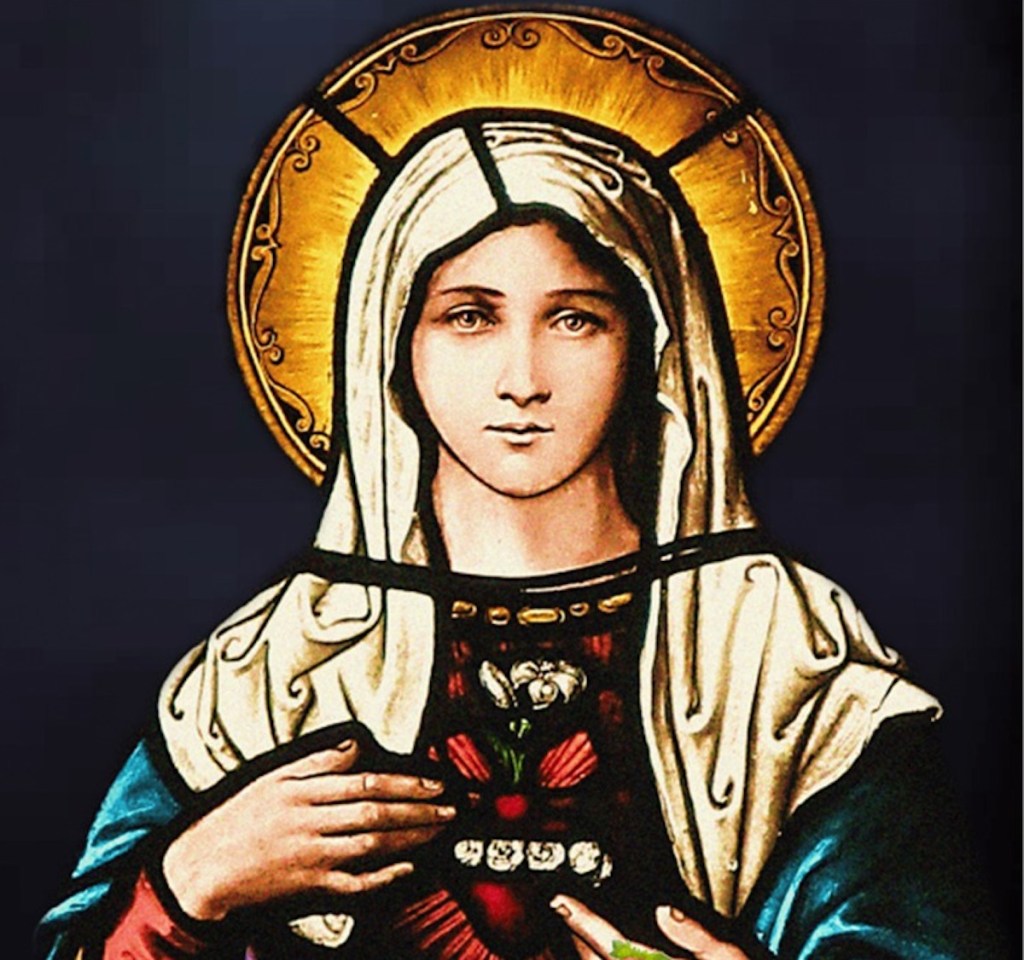
    When we speak of someone in terms of their heart, we mean more than just describing what they’re like. We want to understand what it is that makes them who they are; their essence, if you will. That’s hard to do with anyone, let alone a person who walked among us so long ago, let alone a woman so devoted to remaining in the background and exalting her son and Lord, Jesus Christ. Yet that is exactly what we want to do on this, the Memorial of the Immaculate Heart of the Blessed Virgin Mary.

    The gospels give us only a glimpse into Mary’s heart. The best comes from Luke, who actually mentions her heart two times. The first came the evening of our Lord’s birth; he notes that Mary kept all these things, reflecting on them in her heart (2:19). Today we hear the second; Luke tells us that, while returning to Nazareth after finding Jesus in the Temple, his mother kept all these things in her heart (2:51).

    If the words “kept” and “reflect” meant to Luke what they mean to us, he probably wouldn’t have bothered to say this. Most parents have memories of their children and events in their lives. Rather, in the original language, his words imply that in her heart, Mary is doing much more; she is actively pondering the events, searching out their meaning, struggling to interpret them. Of course, the mysteries she struggled with are supernatural; no one but God can understand them. But that isn’t the point; the point is that in her heart Mary possessed the humility, docility, and wisdom to surrender herself to them, and allow their meaning to work itself out over time in her own discipleship.

    That is what happened. As time passed, the fruit of Mary’s contemplation showed itself in her words and her actions. For example, at the wedding feast of Cana she offered that resolutely faithful advice: Do whatever he tells you (John 2:5). In the same gospel, she displayed the strength that many disciples lacked: Standing by the cross of Jesus (John 19:25). Finally, while awaiting the coming of the Holy Spirit, she was one in prayer with those to whom Christ made her mother (John 19:26; Acts 1:14). Open to discipleship from the very beginning, Mary made clear to everyone what her son said in his ministry: that hearing the word is only the first step; what is required is to embrace it with a generous and good heart, and bear fruit through perseverance (Luke 8:15).

    On a spiritual level, we may not think about the Blessed Mother as someone in need of growth. What could she who has already been perfected in grace need to learn? Didn’t she have all the faith she would ever need? Certainly, but as the Catechism reminds us, the relationship between faith and understanding is not a straight line but a circle; the stronger our faith, the greater our desire to know God and understand what He has revealed. In turn, the better we understand, the deeper our faith, which “‘opens the eyes of our hearts’ to a lively understanding of Revelation” (CCC §158). Again, Mary is a perfect model of this; whose faith was greater than hers, yet who demonstrated more than she a desire to know God and better understand what He has revealed? Or, rather, who He has revealed – for there is no greater revelation of God than His only Son, Jesus, and who understands a son better than his mother?

    This is the heart of Mary Immaculate, the heart she encourages us to have; not one who hears the word of God and understands it, but who hears the word of God and does it – surrendering to it, and allowing it to work through us for the good of ourselves and the world. Our Blessed Mother wasn’t spared from difficulties and suffering; we should expect no less. But, if we persevere, we should also expect no less than the same glorious triumph she now enjoys. Mary is the ultimate example of what all faithful hearts can expect. So, here and now, let us recommit ourselves to taking her advice by doing whatever He says, enduring whatever crosses we are given, and praying and working for unity with each other. This is the heart that, like Mary Immaculate, always and everywhere exults in the Lord, our Savior.

  • God Will Provide… Right?

    God Will Provide… Right?

    Saturday of the 11th Week in Ordinary Time

    Matthew 6:24-34

    At a parish potluck, many people showed up, but few brought food. I heard one of the volunteers say, “We were all asked to bring a dish to pass; so few did! I’m worried that we’re going to run out of food.” The woman serving next to her smiled and said, “Don’t worry, God will provide.” A few minutes later, the first said again, “I’m telling you, this is a problem. The food is running out!” Again, the other said, “God will provide.” A moment later, I heard the first one mutter, “Fine. Don’t listen to me. What do I know?” Sure enough, about ten minutes later, the food ran out. If I had looked, I’ll bet that I could have seen the words, “I told you so!” written all over that woman’s face.

    The truth is that, at the time, if you’d asked me, I would have told you that she was right all along. However, as I read today’s gospel, things look a little more complicated. Now, I think both women were right, and both were wrong.

    The first one was clearly right about the food running out. But at the same time the other was right to tell her not to worry. Our Lord said as much when he asked, Can any of you by worrying add a single moment to your life? Of course not! Worry does nothing but contribute to that all-too-human tendency to focus on ourselves: I’m worried; I’m telling you; listen to me; I know; I told you so. Maybe that’s why Jesus counsels us to look at the birds and learn from the way the wild flowers grow; he wants us to shift our focus outward, to look and see that God is in control, and understand how He provides.

    This is where the second woman had it wrong. When Jesus said that God feeds the birds, He didn’t mean that God delivers the food to the nest. No, the birds have to go out and get it. In the same way, God provides for us, but that doesn’t mean He will do everything we don’t. We have a part to play in our own salvation, and we have to play it. As St. Augustine once said, “God created us without us, but He will not save us without us.”

    So then, what must we do? On the surface, the answer is obvious: We must have faith. The question is, what does it take to have the faith our Lord is asking of us? I think Jesus tells us, if we read between the lines of the gospel reading.

    The first thing it takes is humility; specifically, the humility to abandon ourselves to the dominion and will of God. We all know how hard it can be to let go of our own ideas, our own perspective, our own desire for control, especially when it concerns our own destiny. It takes real humility to recognize our limitations; to acknowledge that we can’t see everything, know everything, or do everything. Only God can. When I find myself in that place, trying to control what only God can control, I find it very helpful to repeat over and over that simple but powerful aspiration, “Let go and let God.”

    Apart from humility, we must pray for the gifts of patience and fortitude. We might think that as we turn our lives over to God, things will get easier, but often that is not the case, as the book of Sirach reminds us: when you come to serve the Lord, prepare yourself for trials… Accept whatever happens to you; in periods of humiliation be patient (2:1,4). Again, we all know how hard it is to accept the painful or difficult things that happen, or to endure suffering or humiliation. At those times more than ever we must look to the cross and pray for the patience and fortitude of Christ, for in his cross we find not only the pain of his suffering and humiliation but also the joy of his victory over them, and his promise that, if we follow him, we too will overcome whatever life puts in our way.

    Joy is the final word, the fruit of the Spirit whose seed lies hidden in our Lord’s words today. For joy is happiness in pursuit of our good, and as he has just told us, nothing is better than complete abandonment to the God who is goodness itself: the Father, who leaves us nothing to worry about; the Son, who is the Food that never runs out, and the Holy Spirit, the Love that is written all over our hearts.

  • Master and Collaborator

    Master and Collaborator

    Friday of the 5th Week of Easter

    Acts 15:22-31; John 15:12-17

    When you train a person for a job, you know – you just know – that it won’t be long until they’re in over their head. New jobs mean many new things to learn, and that’s hard enough, but when you add having to deal with all the unexpected things that get thrown at you, it can be overwhelming.

    That’s pretty much what happened to the early Church not too long after Jesus ascended. As we’ve seen recently in Acts, although the Apostles did have some success at building up the Church, an issue got thrown at them unexpectedly that threatened to bring the whole thing down. Essentially, the question was, “To be a follower of Jesus, do you have to be a Jew?” For many early Jewish Christians, the answer was, “Of course. After all, Jesus was a Jew!” However, others, like Paul and his companions who ministered among the Gentiles, it was, “Of course not! Christ did away with all that!”

    Fortunately, Jesus built his Church on a foundation that, to this day, rests on three pillars. Two of them are his Word, one written (Sacred Scripture), the other unwritten (Sacred Tradition), and the third the Magisterium, or the authority to teach the world about God. In yesterday and today’s readings, we have gotten to see one way the Church uses these pillars.

    When they are confronted with such an explosive and potentially divisive issue as the one facing the Apostles, the Church leaders come together in what is called a Council. To date, there have been 21 “ecumenical”, or world-wide, Councils. This was the first – the Council of Jerusalem. Every Council takes the same form: They gather, debate, listen, pray, and decide. The process goes back and forth; debate can be sharp and deeply felt, and the issues may take days, months, years, even decades to work through. Finally, when decisions are reached, they are written down and published for the world to see.

    The letter from this first Council begins with one of the most monumental phrases in the New Testament, if not the entire Bible: It is the decision of the Holy Spirit and of us… (Acts 15:28). Every Council that has ever been called finds its basis in those words, for only they, gathered and working in unity, have been given by Christ the authority to speak for God, with the Holy Spirit not as their master but their collaborator.

    And, as we hear, it worked; Luke tells us that the people were delighted with the exhortation (Acts 15:31). Some Councils end this way; at Ephesus for example, some of the bishops were hoisted up by the people in a joyful, celebratory parade. Others, such as the First Vatican Council, ended much less ceremoniously. Regardless, each of the Council has done what it set out to do: Wrestle with the problems facing the Church, come to a decision in union with each other and in collaboration with the Holy Spirit, and teach it to the Church and the world.

    The secret to making this work was given by Christ in the gospel. It is love – the love of a Master who humbles himself to be a friend; who holds nothing back; who reveals everything to his friends; who not only chooses but empowers his friends to do as he has done – to hold love as the highest value, even to the point of giving our lives.

    The model given by Christ to the Church leaders is our model, too, for each of us as disciples must wrestle with the challenges, controversies, and questions of our time. But we don’t have to do it alone; as Catholics, we must see the Church as the place we come together to look for answers. It should be normal for us to do this; to talk about the faith, ask questions, perhaps debate, pray the Scriptures, listen, and above all to see God as both Master and collaborator. We may not come up with many solutions, but we will come to a deeper understanding and love of God, ourselves, and each other. The key is unity; to paraphrase Fr. Henri Nouwen, our best solutions are words and actions that do not divide but unite, that do not create conflict but unity, and that do not hurt but heal.

  • Chosen

    Chosen

    Feast of St. Matthias, Apostle

    Acts 1:15-17, 20-26; John 15:9-17

    In the spring of my senior year, the high school play was a drama with a lead role that I really wanted. When tryouts came, I nailed it. I went home confident that I had that part in the bag.

    Only, I didn’t. Even worse, I got cast as what seemed to me like the play’s dullest character. At the first rehearsal my disappointment must have shown; the director took me aside and said, “I could have given you the lead, but it came too easy to you. The guy who got it needs the challenge. As for you, the part I gave you is going to make you work. Now, I want to see what you do with it. Show me you’re the actor you want to be.”

    It turned out that he was right about both of us. There was a depth to my part that I hadn’t seen, and it did make me work. Same for the guy in the lead role; he struggled but kept working. In the end, the director was happy with both of us, but honestly I think we were happier with ourselves. We got exactly what we needed, and the play was better because of it.

    I remembered that while meditating on the first reading. Two men were proposed to fill the role of the twelfth apostle; as we know, the lot fell upon Matthias (Acts 1:26). I asked myself how I would have reacted if I were Barsabbas. As with the play, I might have been disappointed. “I, too, was with the apostles from the beginning… why was I not chosen?”

    Of course, if I were Barsabbas, I would have known that Christ had already answered that when he said, It was not you who chose me, but I who chose you and appointed you to go and bear fruit that will remain (John 15:16).

    In that one sentence, our Lord said it all. It wasn’t that one man was chosen and the other was not; both were chosen, but each given different parts. Clearly, the office of twelfth apostle had been reserved for Matthias; to him and him alone went that honor, challenge, and responsibility, as well as every grace he would need. But that didn’t mean that God had nothing for Barsabbas to do. To the contrary, he too had been chosen, and given his own unique and important part to play. We have no idea what it was; like Matthias and so many others throughout history, his work remains a mystery. But also like them, the fruit of his labor remains to this day – we, the Church, now spread to every corner and people of the world.

    God’s plan for discipleship is no different today. We may think of evangelization, or preaching the gospel, as the proper work of professionals – people who are qualified by their training or education in the faith. But our Lord’s words in the gospel are a reminder that God doesn’t choose the qualified, He qualifies the chosen. And we are all chosen; whoever we are, whatever we do, whatever circumstances we find ourselves in, God has chosen us, called us by name, and qualified us with every gift and grace we need to bring the world to him and him to the world.

    Of course, we will all face challenges along the road. People may reject us, we may struggle with doubts or periods of discouragement, and we may even be jealous of those who have gifts and abilities that we do not. But I firmly believe that each challenge is God’s way of saying to us, “I could have made your way easier, but I want to see what you can do with what I gave you. Show me that you are the disciple I have called you from all eternity to be.” It means that we will work harder than ever before, but think how much better off we will be in the end, for then we will hear our Lord say, Well done, good and faithful servant… Come, share your Master’s joy (Matthew 25:21).

    Who wouldn’t want that part?

  • The Heart of the Matter

    The Heart of the Matter

    Saturday of the 3rd Week of Lent

    Hosea 6:1-6; Luke 18:9-14

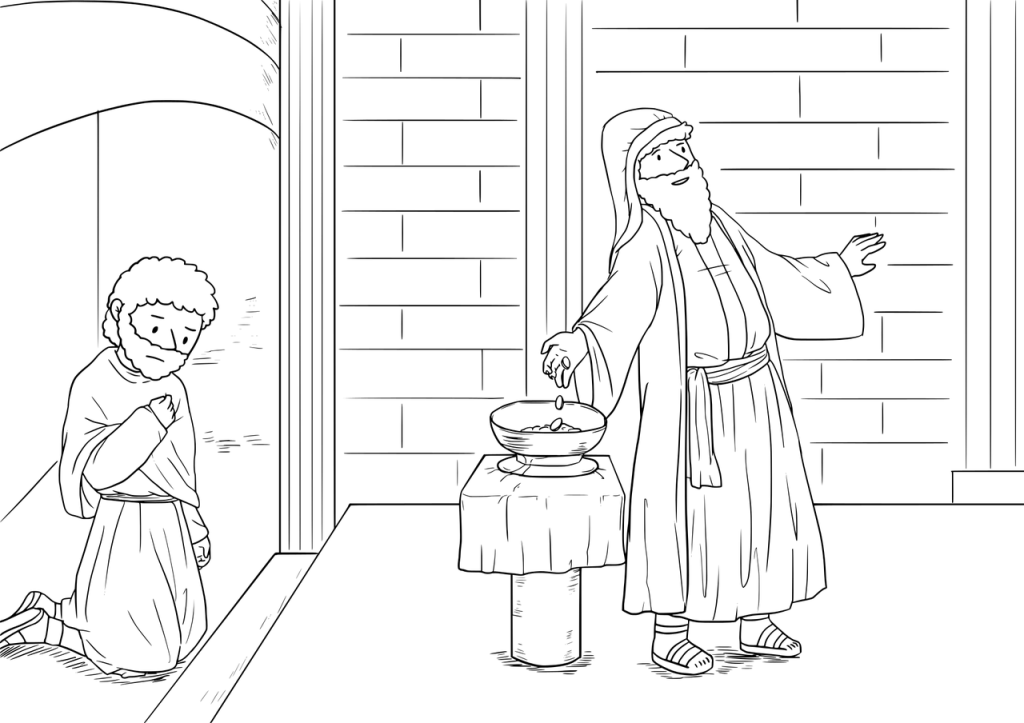
    When we hear the parable of the Pharisee and the tax collector, we are rightly drawn to the differences between them. However, I think time is well spent thinking not only about the differences but also the similarities, and what both have to teach us about ourselves and our prayer life, which is the reason Jesus taught this parable to begin with.

    The fact is, the two men have some important things in common. First, they’re both truthful. The Pharisee is telling the truth when he says he isn’t greedy, dishonest, or adulterous; so is the tax collector when he calls himself a sinner. Second, their actions are pious. The Pharisee tithes and fasts, while the tax collector stands at a distance, keeps his eyes lowered, and beats his breast as he prays. Third, both are men of deep conviction; they speak to God straight from the heart.

    Speaking to God from the heart is key, for Scripture teaches us that prayer is a work of the heart. The heart is where we live, our inner Temple, the place to which we withdraw (CCC 2563). At the same time, it is the place God knows best; he looks at the heart and knows its secrets (1 Samuel 16:7; Psalm 44:21). If we are righteous in God’s eyes, our prayers are fruitful (James 5:16); if not, our prayers are in vain (CCC 2562).

    This brings us back to the Pharisee. Although he seems to be speaking to God, his words betray a heart turned inward. Our Lord may be hinting as much when he says the man spoke this prayer to himself (18:11), but even if not, one thing is clear: God is the audience of his prayer, not the object. It’s tempting to think that we never do this, but my guess is that in the quiet of our own inner Temple, we can all recall times when we’ve focused a little too much on ourselves, have resisted what God is asking, acted as if the good things we’ve done we did on our own, or that in some way God likes us just a little bit more than he does some other people – especially people we don’t like.

    That’s the real problem. The Pharisee is right to say that he is not like the rest of humanity, but wrong because he’s comparing his behavior with what other people do, not with what God expects. The same is true for us; our standard is not other people, it is Christ. Given that, we can understand why God would say through Hosea, Your piety is like a morning cloud, like the dew that early passes away (6:5). Fasting, tithing, coming to the Temple: All are false piety if they don’t come from a truly humble heart.

    Humility, the foundation of all prayer, helps us to recognize our dependence on God and to appreciate our place in His plan. It is the virtuous balance between the extremes of pride on the one side and self-abjection on the other, which happens when we fail to recognize and use the gifts God has given us.

    As our Lord pointed out, humility was the great virtue of the tax collector. We know it from his posture and his words: Be merciful to me a sinner. What we do not know is what happened next. Did he live that humility out in his daily life by doing what the Baptist advised, Stop collecting more than what is prescribed (John 3:13)? While we must not push the parable beyond its limits, we must remember that humility not only orients us to God, but to each other as well. As with the Pharisee, it’s tempting think that we already live humbly in the world, but we must ask ourselves: Do we ever dwell on other peoples’ faults, gossip about them, seek their admiration, or return insult for insult?

    Like the Pharisee, this is the problem. True humility urges us to remember that God’s loving plan extends to all of humanity. We cannot live equitably with other people unless we treat them like equals, and we certainly cannot pray, no matter how humbly, “O God, be merciful to me a sinner,” if we refuse to be merciful to those who sin against us.

    Through the parable of the Pharisee and the tax collector, our Lord teaches us two lessons about prayer: First, the foundation of prayer is not our honesty, piety, or sincerity, but a contrite and humbled heart (Psalm 51:19). Second, the fruit of righteous prayer is a life of virtue most perfectly found in the life of Jesus, who took the form of a slave, humbled himself, becoming obedient to death, even death on a cross (Philippians 2:7-9). Indeed, no man so humbled was ever so greatly exalted.

  • Being Who We Were Made to Be

    Being Who We Were Made to Be

    Solemnity of St. Joseph, husband of the Blessed Virgin Mary

    Matthew 1:16, 18-21, 24a

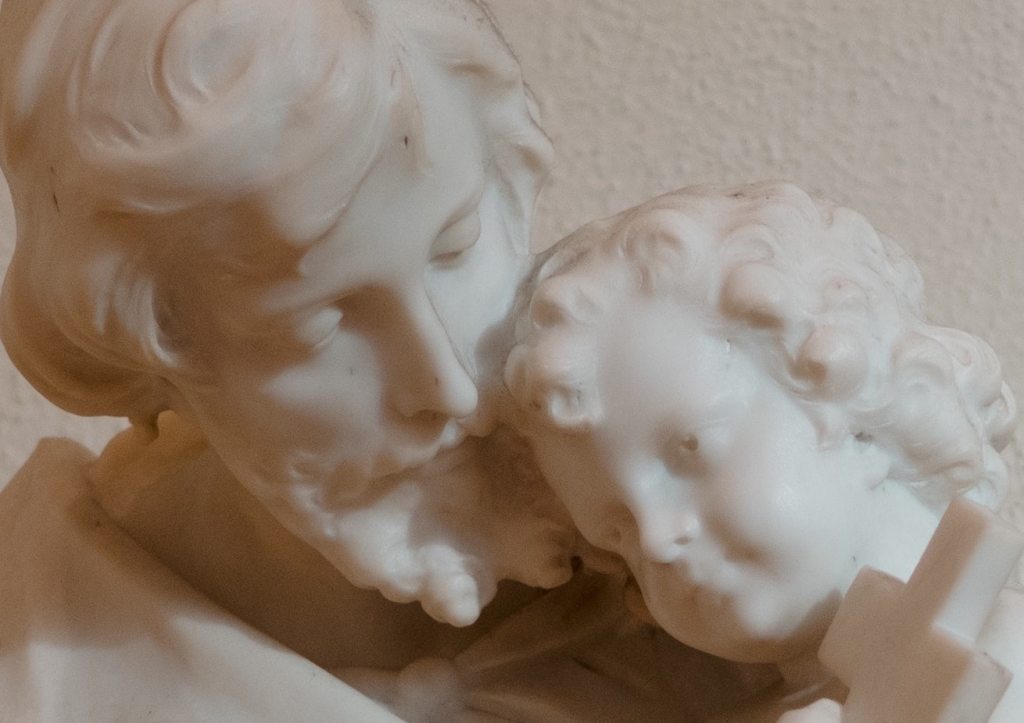
    A theologian once said that “great occasions do not make heroes or cowards; they simply unveil them to our eyes. Silently and imperceptibly, as we wake or sleep, we grow strong or weak; and at last some crisis shows what we have become.”1 When I read that, I wondered if he was thinking of St. Joseph. It fits him so beautifully.

    Joseph was certainly not a man accustomed to great occasions. The ordinary ones were enough: Learn a trade, get married, bring up a family. By the time we meet him in Matthew’s gospel, Joseph had already checked two of those boxes. It was the third that brought about the crisis.

    We know the basic story well: Learning that Mary is pregnant and unwilling to expose her to shame, Joseph intends to divorce her quietly. What we may not know are a couple of details. First, in that time and culture, “expose her to shame” meant the legal right to “make a show” or public mockery of her. That Joseph would not do this speaks of his love for Mary and sensitivity toward her. This brings us to the second point: his intention to divorce her quietly. Where we read “intention,” Matthew’s original word implies a decision made in angst, in the heat of a deep and inner passion. It might even go so far as to mean that Joseph was tempted to feelings of anger, shame, or indignation.

    Who can blame him? How would we feel? Joseph had plans for his life and had worked, maybe even suffered, to achieve them. Now, on the verge of actually realizing them, he found his plans shattered to pieces. Even more, Joseph loved Mary; he knew that divorce meant disgrace for her and the child, not to mention very dim prospects for their future. This was the heart of the crisis. He had to make a decision, to do something, but what could he do? Mary was pregnant, he was not the father, and the law was clear. His decision for a quiet divorce was the best he could think of. Even if it meant pain or distress for the woman he loved so much, the law came from God, who Joseph loved above all.

    This I think is the key. Remember the theologian’s words: “Silently and imperceptibly, as we wake or sleep, we grow strong or weak.” Joseph came to this crisis with a strong moral center; born into the faith of his fathers, he was raised in it, steeped in it, and guided by it. He wasn’t going to abandon it now or ever. No matter the cost to his own or to anyone’s honor, Joseph would honor his heavenly Father first.

    In its section on the 4th commandment, the Catechism lists two qualities of a respectful child: docility and obedience. As they apply to our role as children of God, docility is our readiness to follow God’s will rather than our own, and obedience is our willingness to do whatever God asks of us.

    Joseph had both of these gifts in abundance, and in time God would ask him to use them to their fullest measure. For now, though, what He asked was more than enough: First, that Joseph set aside his plan of being husband of Mary of Nazareth and instead be the husband of Mary, the Mother of God; second, that he set aside any plan he might have of raising his own children and instead raise the Son of God as his own.

    This is a lot to ask, but as we know, God is never outdone in generosity. In return for all Joseph was willing to do, God bestowed many honors on him: Joseph, called ‘son of David’ by God himself, would see the Son of God; Joseph, whose family line had held the God’s promise in their hearts for so long was now chosen to hold His fulfillment in his arms; and he, Joseph, was now the only one ever asked to give that Promise a name: Jesus, or “God Saves.” Ultimately, Joseph would be honored as the greatest saint of all time next to Mary, for as Blessed William Chaminade has reminded us, “To give life to someone is the greatest of all gifts. To save a life is the next. Who gave life to Jesus? It was Mary. Who saved his life? It was Joseph.”

    Let us pray that we become like St. Joseph; that every day, in the silence he modeled so well, we too grow stronger in our love for God, our faith in him, and our willingness to do whatever He asks. Then, like St. Joseph, when our own crises come, as they always do, we too can show God exactly what Joseph showed Him: The person He has called us from all eternity to be.

    St. Joseph, pray for us.

    1 The 19th-century Anglican bishop and theologian, Brooke Foss Westcott.

  • To See and Understand

    To See and Understand

    Saturday of the 6th Week in Ordinary Time

    Mark 9:2-13

    As we read the gospel of Mark, we might catch ourselves wondering about the Apostles. They never seem to get it! No matter what they see Jesus do – healing after healing, miracle after miracle – they end up asking the same question: “Who is this?”

    Although Mark probably intended us to wonder, and for good reason, we shouldn’t take it too far. We have the benefit of hindsight, not to mention an evangelist who tells us everything we need to know in his first line: the gospel of Jesus Christ, the Son of God (Mark 1:1). The Apostles had to figure it out as it was happening. They did have some success; Mark tells us that Peter recognized Jesus as the Messiah (8:29). However, he also says that they didn’t understand the cross (8:32; 9:32; 10:35ff). That’s probably because they pictured the Messiah as the son of David, not the Son of God; a conquering king, not a suffering servant; someone who would free them from emperors and tyrants, not from sin and death.

    So, the question really isn’t why the Apostles never got it. They did, as Mark well knew, especially if his gospel came from Peter himself. The question is what moved a man like Peter to go from a terrified disciple asking if he should set up tents on a mountain to a faithful shepherd of the Church who, nearing his martyrdom, wrote with such conviction of that same unforgettable, mystical experience (2 Peter 1:16-18).

    I think the answer lies in the gifts given to him by the Holy Spirit, particularly the gift of understanding. It has been called a “penetrating” or “permanent” intuition of divine truth,1 and it certainly was for St. Peter; who could intuit any truth greater than Jesus, who is the way, the truth, and the life? Indeed, given his experience – seeing Moses, Elijah, and the glorified Christ, and hearing the voice of the Father – Peter must have devoted many hours to contemplating what the Transfiguration of our Lord meant for him and for the Church.

    So should we, for the gift of understanding is given to us, too. It works in many ways. First, it helps us find the hidden meanings of Scripture. Certainly it was used by the Apostles and Fathers of the Church as they read and discovered the many Old Testament references to Christ. The pages of our bibles have much of the fruits of their labor. I urge you to find the notes and footnotes for today’s gospel passage (two are Exodus and 1 Kings) and see how they inform and enrich your understanding of the Transfiguration. Second, the gift of understanding helps us see the relationships between symbols and what they point to. One example is the cloud that surrounded the Apostles on the mountain; that is a symbol of the Lord’s presence, just as it was in the time of Moses. Third, the gift of understanding shows us how God works in our own lives. Think of your own “mountaintop” experiences or consolations; the times during Mass or other prayer when you felt especially close to God, or moved by his presence and power. Finally, the gift of understanding strengthens our appreciation for the Sacraments. For example, when the bread and wine are consecrated, we are led to a deeper, more profound awareness of Jesus Christ, most truly present. It is as St. Thomas Aquinas once said: “When the eye of the spirit is purified by the gift of understanding, one can in a certain way see God.”

    Let us pray today and every day for an increase in the gift of understanding, that we may more and more clearly see the face of God in Scripture, the Church, the Sacraments, and perhaps most especially in our own lives.

    1 Aumann, Fr. Jordan, OP. The Gift of Understanding. Available online at http://www.domcentral.org/study/aumann/st/st10.htm#tgou.

    https://catholicstraightanswers.com/gifts-understanding-wisdom/