Acts 4:8-12; Luke 9:57-62
What is it that people will run into a burning building to save, apart from their loved ones? Scrapbooks, photographs, keepsakes, and family heirlooms. Over time these personal items acquire an almost sacred aspect; losing them is like losing a part of ourselves.
Today’s saint, Bernardine of Siena, looked out on the landscape of 15th century Italy and saw something much worse than buildings on fire. He looked into the smoldering ashes of the peoples’ spiritual lives and saw the deadly smoke of fires that rage in the human heart: avarice, selfishness, and sloth. The people burned with desire for worldly possessions, were inflamed with hatred for each other, and had all but abandoned any semblance of religious piety. Even many in the clergy had become lax and neglectful in their practice of the faith.
These were the parts of themselves that Father Bernardine wanted to see lost in the flames of desire for Christ. Burning with love for them and for his Savior, he traveled across the Italian peninsula laying spiritual siege to every town he could. Father would stay as many days as he thought necessary, said Mass every morning in the town square, and preached tirelessly about the vices he detected in that place. Even though Father was known to have a weak, hoarse voice, when preaching a change came over him; filled with the Holy Spirit, his voice was sonorous, clear, and powerful. In a short time, he became famous his eloquence, forcefulness, wittiness, and piety.
 What’s more, Father’s homilies worked like a match to dry kindling – almost literally. Their consciences convicted, the people built bonfires and threw into the blaze any vain or worldly things they owned that kept them away from God. These fires become known as the “bonfires of the vanities” in every town that welcomed the humble yet fiery preacher, Father Bernardine of Siena.
Vanity was not unknown in the time of Jesus any more than it was in 15th century Italy or is now, for that matter. In the gospel we hear people tell Jesus why they can’t follow him; something is holding them back. This reluctance is redolent of the sinfulness in our own lives. Like the people of Christ’s time, there are earthly ties that bind; we may feel ourselves willing but unable to let go of that keepsake, the sin we just cannot seem to break. Nevertheless, Christ has made it clear; following him requires that we allow the reigns of this world to loosen and fall from around us. Let us ask the intercession of St. Bernardine of Siena, who inspired the people of Italy to throw what bound them into the fire, that the Holy Spirit may embolden us to do likewise; to cast every sinful part of ourselves in that eternal bonfire of the vanities: the flames of His infinite, merciful love.
 With this in mind, we can say that Matthias freely chose to follow Christ who first chose him, called him from his mother’s womb, and gave him the name, “Apostle.” That Matthias was chosen for that office by lot was nothing more or less than confirmation that the journey begun from shore had now moved out into the deeper water that he had already been called to and prepared for.
 Recall Christ’s words: The hour is coming when everyone who kills you will think he is offering worship to God. It is a sad fact that we in the Church are often our own worst enemy. The Arian leadership resolved that what they could not win in Council, they would take by subterfuge. Athanasius, newly elected Patriarch of Alexandria and much loved by his people, was a primary target. The Arians boldly went after him, seeking nothing less than his disgrace and death. They fabricated scandals, perjured themselves and, aided by Arian-leaning or pagan emperors, forced Athanasius into five exiles spanning seventeen years.
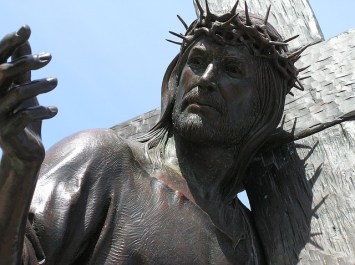 This is the ultimate lesson of Good Friday. Christ’s triumph over self-will and self-reliance did not enable him to merely sympathize with our suffering or feel our pain but to be perfectly in himself the source of eternal salvation for all who obey him (Hebrews 5:9).

 Think for a moment how we as servants of God are so blessed (upheld). What mercy He pours upon us. He has chosen to give us the grace to do His will and is so pleased when we cooperate with Him. And what a gift: God gives His Spirit – His very life – so that we may try to give to Him what we owe Him.
 Jesus Christ, not Sacred Scripture, is the highest and greatest revelation of God to the world. Next is the Church, because Jesus instituted her and gave her the authority to teach in his name. This teaching authority is called the Magisterium; it safeguards the teaching which we call Sacred Tradition and in communion with the Holy Spirit has given us the Bible, which is the third source of revelation. Thus s
 Mark 10:45