Category: Reflection

  • Holy Families, Not Perfect Ones

    Holy Families, Not Perfect Ones

    Sirach 3:2-6, 12-14; Colossians 3:12-21; Matthew 2:13-15, 19-23

    The Scriptures for the Feast of the Holy Family speak honestly about family life; not as perfect, but as a place where faith is tested and love is learned.

    Sirach tells us, “Take care of your father when he is old… even if his mind fails, be considerate of him.” He does not limit this call to ideal relationships. It is a summons to faithful love, even when family bonds are complicated or strained.

    That passage reminds me of a time when, as a teenager, I traveled with my father to New York to be with his own father, who was alone and dying of cancer. I didn’t know the details, but I knew there had been difficulties between them. Yet during those few days, I didn’t see that. All I saw was a patient, gentle, attentive son. No speeches, no attempts to fix the past… just the silence of Dad’s presence, care, and compassion.

    Those images have never left me. More importantly, they helped me see Dad in a new and illuminating light. Just like he had struggles with his father, I had struggles with him. Despite all that, watching him live out that kind of reverent love went a long way toward healing our relationship. That mattered, because Dad died young. Had I waited, that healing might never have come.

    St. Paul urges us to “put on compassion, kindness, humility, gentleness, and patience.” In the Gospel, Joseph does just that: he silently rises, protects those entrusted to him, and trusts God with his family’s future. Watching Dad live that way has challenged me to do the same.

    And it’s about challenge, after all. While the Feast of the Holy Family rightly draws our eyes to Jesus, Mary, and Joseph, it’s not about comparing the Holy Family’s perfection to ours. Rather, the Feast invites us to challenge ourselves; that the love in our family be stronger than our resentment, our presence stronger than our history, and our faith strong enough to act — quietly, faithfully, and one day at a time— so that God’s love and peace may work through us to bring healing and wholeness.

  • The Eyes Have It

    The Eyes Have It

    The Passion of Our Lord, Jesus Christ, According to Luke.

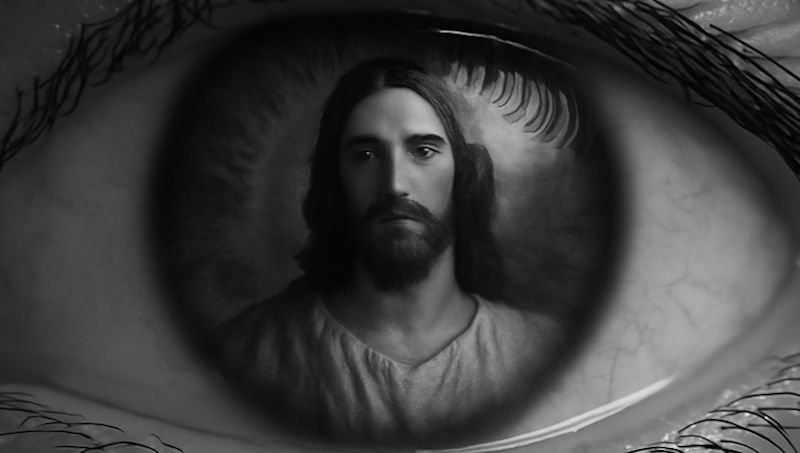
    Of all the scenes in Luke’s passion narrative, one in particular strikes very deep. After Peter denies Jesus for the final time, Luke says that the cock crowed, and the Lord turned and looked at Peter (Luke 22:61-62).

    No words. Just eye contact.

    Luke is counting on us knowing from our own experience that the most emotionally powerful times in life often render words unnecessary. But then, the eyes are most eloquent! As St. Jerome once said, “Eyes without speaking confess the secrets of the heart.” Think how often we use them to say, “I love you,” or “I’m sorry,” or “I’m so proud of you,” for example.

    We have no idea what our Lord’s eyes were saying to Peter in that moment, but we know what Peter took away: he went out and began to weep bitterly (Luke 22:62). Imagine being the Apostle in that moment! Or, imagine being ourselves, committing some sin, then realizing that Jesus has been there all along, looking at us.

    What would our eyes be saying then?

    Those are the eyes we bring to Confession, where sometimes we, too, weep. But then, those are also the eyes we bring to Holy Communion or to Adoration, where Christ is as present as He was in the high priest’s courtyard – Body, Blood, Soul, and Divinity. If we weep then, let it be in the joyful hope that Christ is saying to us what He said to the Apostles in John’s gospel before he died: As the Father loves me, so I also love you. Remain in my love  (John 15:9).

  • Savoring Scripture: Engaging with the Word of God

    Savoring Scripture: Engaging with the Word of God

    St. Jerome once said that if we believe that Christ is contained in both the Eucharist and the Bible, we should give them equal reverence. When a consecrated host falls on the floor, we carefully pick it up and thoroughly clean the area so nothing is lost. But if we don’t listen to the Word of God, it’s like allowing Christ to remain on the floor; that encounter is lost forever. With that in mind, on the Feast of St. Jerome in 2019, Pope Francis declared the 3rd Sunday in Ordinary Time as Word of God Sunday. His goal was to enable the Church to “experience anew how the risen Lord opens up for us the treasury of his word and… proclaim its unfathomable riches before the world.”1

    Two basic problems challenge our experience reading the Bible. First, over-familiarity; we know a passage so well that we “tune it out,” assuming we know everything we need to. Second, ignorance; a passage is difficult (think, “St. Paul”) so we let it go, intending to, but never getting back to it. Instead, our goal should be to experience the Word of God the way some people experience fine wine – or, if you’re like me, fine Belgian chocolate – by savoring it. For example, rather than taking on all of today’s first reading, let’s “savor” just two verses: Ezra read plainly from the book of the law of God, interpreting it so that all could understand… ‘Today is holy to the LORD your God. Do not be sad, and do not weep’— for all the people were weeping as they heard the words of the law (Nehemiah 8:8-9).

    Step 1: Understanding. Nehemiah may be unfamiliar, but look it up and you’ll see that this book and its twin, Ezra, were written to tell us what happened when the Jews exiled in Babylon were allowed to return to Jerusalem, rebuild the Temple, and recover their way of life. To set the scene, we’re at the point when everyone is at the Temple celebrating the Feast of Booths (also known as Tabernacles). This may be the first time doing so for some of them in over 70 years.

    Step 2: Put yourself in the story. Imagine you were very young, maybe 6 or 7 at the time of the exile, and for decades, all you had were memories of home. Now, here you are, standing where you and your family stood years ago, doing what they did. Or, imagine you’re one of the Jews not sent into exile; you were left behind with a ruined Temple and no priests. Now, the Temple and city walls have been rebuilt, the priests and people have returned, and the Law is heard again. Maybe God is finally making His people whole! Each person will have their own story, but for so many of them, young and old, this is a profound and emotional moment. And this is just one way to look at these verses; there are many more.

    Step 3: Relevance. So, what does all this have to do with us? A lot! For one thing, it’s a moment to stop and reflect on all those who passed on the faith to us: Parents, teachers, friends – without them, we wouldn’t be here. They are God’s gift to us. For another thing, it prompts us to ask, to whom are we God’s gift? How do we pass on the faith? Can we do more? Also, this is a reminder that every verse of Scripture has a depth, beauty, and power that are just waiting to be revealed.

    Step 4: Prayer. We end our time with the Word of God in prayer, like: “Lord God, thank you for the gift of faith; for all the people you put in my life who passed it on at whatever cost to themselves. Give me the grace to pass on the faith and to proclaim it by the example of my life, that Your Name may be more greatly known, honored, and loved, in my own life and in the lives of all those I meet.”

    There are over 31,000 verses in the Bible. It’s overwhelming to imagine savoring each of them this way. But we don’t have to. What matters isn’t that we do everything, but that we do something. So, try this: Regularly, or every day if you can, choose a verse or two that jump out at you in the day’s Bible readings (at https://bible.usccb.org/), or from your Bible, and go through the steps above. The Word of God, Jesus Christ, is waiting for you there. Savor every encounter.

    1https://www.vatican.va/content/francesco/en/motu_proprio/documents/papa-francesco-motu-proprio-20190930_aperuit-illis.html

  • Mother and Queen

    Mother and Queen

    The Queenship of Mary (August 22)

    When my son was very little, he asked my wife to turn her head so he could inspect the back of it. He was convinced she had an extra set of eyes back there somewhere.

    I sympathize. It was the same with my own mom; she always seemed to know what was going on with me. Even after I grew up and would call home, just one “Hello” out of my mouth and she would say, “OK, Richard, what’s wrong?”

    Who knows a boy better than his mother?

    I’m a father myself, and I can sense some things in my children, but nothing like their mother. Call it women’s intuition, call it what you will, I think there’s a certain grace poured upon a mother that binds her to her child like no other. Maybe it’s because a mother’s womb is our exclusive home for the first 9 months of our lives; Mom is all we know and all we can know. Everything we need for life comes through her and depends on her.

    Consider that in the context of Christ and his mother. Who has ever known Christ better than she, and who would love her more than he?

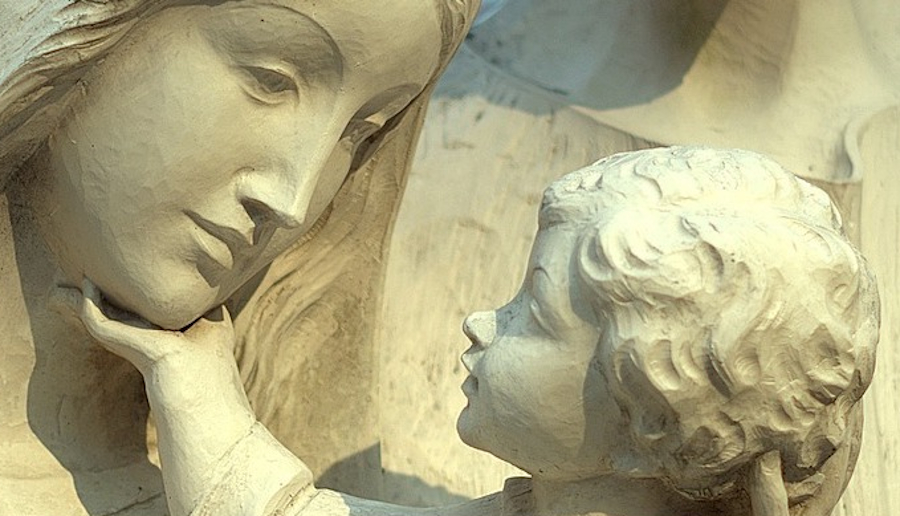
    Ask yourself: How would he, who wrote the commandments, including, “Honor your father and mother,” honor his mother? She who was his exclusive home for the first 9 months of life, who cradled him in her arms, fed him, dressed him, taught him to walk, helped him learn the Scriptures he gave the world, sang to him, shared a home with him for 30 years, and ultimately laid him in the tomb – all the while pondering these mysteries in her heart and loving him as only a mother can.

    The answer can only be that he would honor her perfectly.

    As the First Book of Kings shows, the king’s mother was queen; the only person for whom he would stand when she entered the room. In Heaven, the King of kings would do no less, and giving her to us from the Cross asks that we do no less.

    Mary, our Mother and Queen, pray for us.

  • Letting Go

    Letting Go

    Good Friday
    Hebrews 5:7-9

    From the time we first became Christians, we have learned that the standard for our behavior is not those around us but Christ. Given that, it might be easy to give up and say that we can never reach that standard of perfection.

    That’s true. Left to ourselves, we can’t.

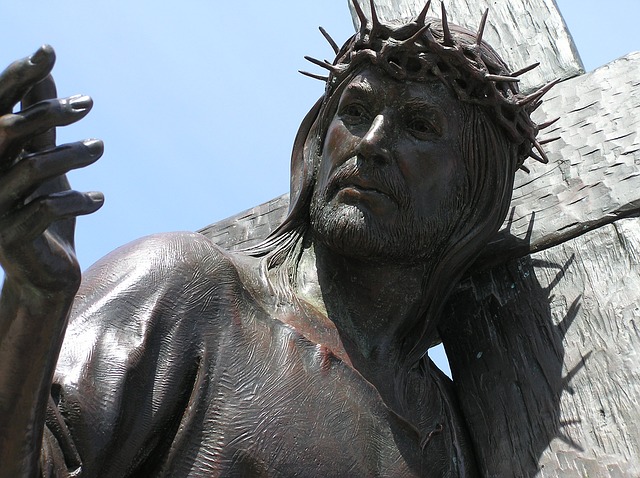
    But as the author of The Letter to the Hebrews reminds us, we aren’t left to ourselves. In his infinite mercy, Jesus sympathizes with our weakness. Even though he himself never fell to the many temptations that weighed on him like a cross and surrounded him like a crown of thorns, he knows what it’s like to carry them, to bear their weight and feel their pain, but also to endure and overcome them.

    Fully man, Christ knows what it means to feel the kind of pain that leaves us without words; able only to offer prayers and supplications with loud cries and tears to the one who was able to save him (Hebrews 5:7). Enduring that kind of torment, he must also have felt the natural reaction of the human body to fight against and relieve the pain – on this day, to come down from the cross – yet Son though he was, he learned obedience from what he suffered (Hebrews 5:8).

    But Jesus also taught us through his obedience unto death that glory waits on the other side of suffering; that being made perfect is not a matter of doing all things on our own, but the opposite: Letting go of control and uniting ourselves more and more to the will of the One who is our true strength.

    This is the ultimate lesson of Good Friday. Christ’s triumph over self-will and self-reliance did not enable him to merely sympathize with our suffering or feel our pain but to be perfectly in himself the source of eternal salvation for all who obey him (Hebrews 5:9).

    We adore you O Christ and we praise you, because by your holy cross you have redeemed the world.

  • Unforgettable

    Unforgettable

    Friday of the 5th Week of Easter

    Acts 15:22-31; John 15:12-17

    “We hold these truths to be self-evident…”
    “Four score and seven years ago…”
    “I have a dream…”

    Every one of us recognizes these phrases, but what is it about them that makes them so unforgettable? Is it their eloquence, or the passion that drove men to speak them? No, it’s what they’re speaking about; powerful truths like liberty, justice, and equality, that resonate in the heart of every person, across time.

    Today, another phrase, just as powerful and resonant, appears. We don’t know who wrote it, or who spoke it for the first time; all we have are the words, It is the decision of the Holy Spirit and of us… (Acts 15:28). Where’s the power or resonance in that? Think for a moment. Before this, when men spoke for God, as in the prophets, we heard things like, “The word of the Lord came to the prophet…” But not here; these are men, gathered together, praying, talking, arguing, trying to resolve a difficult and divisive issue. This phrase dares to say that, as they did so, God didn’t decide for them, he decided with them. Who are they to make such a claim?

    Jesus told us in the gospel exactly who they are: Men, chosen by him, appointed to go and bear fruit. Vested with his authority, given the keys of the Kingdom, and gathered in his name, these men also received his promise, the Holy Spirit, who would lead them into all truth (John 16:13). Note: Lead them, not tell them.

    History bears witness to this. Every time the Church has been confronted with issues that threaten her unity, such as this one, her leaders have met in what is called a Council. To date, there have been 21 of these “ecumenical”, or worldwide, Councils, each taking the same form: Bishops gather, debate, pray, and decide. Emotions can run high, words can get sharp, and the issues can take days or even decades to work through. Still, and every time, decisions are reached, written down, and published for the world to see.

    And, as we hear, the process works. Luke tells us that the people were delighted with the exhortation (Acts 15:31). Some Councils have ended this way. At Ephesus for example, bishops were hoisted up by the people in a joyful parade. At the end of others, like Vatican I, some bishops have run for their lives. Regardless, each Council has done what it set out to do, always in union with the Holy Spirit and collaboration with each other.

    The secret to making it work was given by Christ in the gospel in another unforgettable phrase: Love one another (John 15:17). It is love – the love of a Master who humbles himself to be a friend; who holds nothing back; who reveals everything to his friends; who not only chooses but also empowers them to do as he has done: to hold love for one another as the highest value, even to the giving of their own lives.

    The readings today remind us that we have a lot to be thankful for. First, that God has given us the Church, to which we can turn for answers, confident that God himself leads her into all truth. Second, that God has given us the Holy Spirit in many ways, not least of which is what the Second Vatican Council called the “sense of the faithful” – that inner voice that helps us discern what is truly of God. Finally, that God has given us himself, for God is love, and it is his love that binds us together. Like the bishops, we face problems with the world and sometimes with each other. But, if we keep in mind that we always gather in his name, and pray to be led by the Holy Spirit as he leads the Church, then even though we may not come up with many solutions, we will come to a deeper understanding and love of God, ourselves, and each other. The key is unity; to paraphrase Fr. Henri Nouwen, our best solutions are words and actions that do not divide but unite, that do not create conflict but unity, and that do not hurt but heal.


  • Time for an “Awe-full” Advent

    As part of a school Christmas pageant, some first-graders reenacted the nativity story. Mary and Joseph, weary after their journey, sat by the manger and closed their eyes. The lights went out. When they came back on, Joseph woke up, looked in the manger and said, “Mary, wake up! Wake up! Look who you had!”

    As we all know, children get so excited at this time of year. Every sight, sound, and smell of the season is a wonder, and they are so full of anticipation that time seems to stand still; every day from Thanksgiving to Christmas seems like an eternity.

    But we also know that as we grow older the same time seems to fly. So many things occupy our minds; there are gifts to buy, parties to plan, places to go, people to see. Before we know it, Christmas is upon us and the only wonder that remains is where the time has gone.

    St. Gregory the Great once said that we make idols of our concepts, but wisdom is born of wonder. Every hint of wonder, every shred of joy in that little voice who cried, “Wake up! Look who you had!” is a reminder that any concept of Advent is an idol if it does not lead us more deeply to the wonder of Christ, who is Wisdom.

    It’s true that we are not children, time cannot stand still, and there are things during Advent that must be done. But it’s also true that Christ confers his Kingdom on those who trust like children, that time is what we make of it, and that our busyness is nothing but spiritual slumber when we yield to the temptation to put things before people, even ourself, and above all before our love of God, who loved us so much that he would take our flesh only to lay it down that we might live.

    Wake up! Wake up! Look who you have!

  • Minute Meditation: Thank God

    1 Thessalonians 1:1-5, 8b-10

    In the first reading today, St. Paul says,

    We give thanks to God always for all of you,
    remembering you in our prayers,
    unceasingly calling to mind your work of faith and labor of love
    and endurance in hope of our Lord Jesus Christ,
    before our God and Father,
    knowing, brothers and sisters loved by God, how you were chosen.
    For our Gospel did not come to you in word alone,
    but also in power and in the Holy Spirit and with much conviction.

    I don’t. Thank God, I mean. At least, not enough.

    I know the ACTS of prayer – Adoration, Contrition, Thanksgiving, and Supplication – but tend to get stuck on the letter “S,” asking God for things. Of course I need to ask, but if that’s all I do then I risk treating God as little more than a divine vending machine. I also want to show God that I adore him, am sincerely sorry for my sins, and am grateful for all he has given.

    Which is where you come in. For as St. Paul reminded me this morning, God has given me you: People practicing the faith in your daily life, working to love all you meet, and enduring in great hope of the promises of Jesus Christ. I do thank God for you.

    But I can’t properly do that unless I also thank God for how you were chosen. Being self-centered and self-conscious, I get in the habit of behaving as if it all depends on me, that I must be eloquent enough, loving enough, patient enough. Those things are important but your faith doesn’t depend on them. No; as St. Paul reminded us, the Gospel comes to us not in word alone, but also in power and in the Holy Spirit and with much conviction. There is a power to the process far beyond any of us, working in ways we cannot understand, reaching us in depths no human being can go, touching and moving us in ways that nothing and no one else can.

    If that’s not worthy of thanksgiving, then what is?

  • The Paradox of Love: Friday of the 19th Week in Ordinary Time

    Joshua 24:1-13; Psalm 136:1; Matthew 19:3-12

    Today’s readings remind me of that famous scene in the musical Fiddler on the Roof when Tevye asks Golde, his wife of 25 years, do you love me? She replies, “Do I love you? For 25 years I’ve washed your clothes, cooked your meals, cleaned your house, given you children, milked the cow, after 25 years, why talk about love right now?” He repeats, do you love me? “I’m your wife.” I know… But do you love me? She thinks out loud, “Do I love him? For 25 years I’ve lived with him, fought him, starved with him, 25 years my bed is his, if that’s not love, what is?” Then you love me? Finally, she replies, “I suppose I do…”

    Why does this scene remind me of the readings? Because today Scripture focuses on what love is in its essence, and that scene highlights three key aspects of it.

    First, love is a verb. We love not in what we say but in what we do. Through Joshua, God speaks to people who, from the time of Abraham, through the oppression in Egypt, the fleeing, struggling, and starving in the desert, might well have asked, “God, do you love us?” Today we hear God reply: “Do I love you? Remember all the things I’ve done for you, and look what lies before you: You’ve made it to the Promised Land!”

    That reply echoes through the ages to today, to every one of us. We each have our own struggles, physical and spiritual. Through all of them, God isn’t sitting silently in the background; he is in every moment, working in ways beyond our understanding. His work may be unknown to us this moment, this month, or this year, but like the Promised Land, its fruit lies waiting. We must never mistake silence for inaction or indifference; God is eternally vigilant, eternally loving, always acting for our good.

    This brings up the second point: Love is timeless. How fitting that we hear Psalm 136 today, especially the antiphon, His mercy endures forever. The Hebrew word translated as “mercy” is hesed, which includes mercy but implies action, things we do when we are motivated by love and loyalty to someone else. In the scene from Fiddler on the Roof, remember that Golde replied, “After 25 years, why talk about love right now?” To her, the amount of time was not the point; she had committed her life to her marriage.

    Jesus speaks of this kind of commitment in the gospel when he quotes the passage from Genesis that a man is joined to his wife, and the two shall become one flesh (Genesis 2:24). Again to go back to the ancient language, the word for “joined” literally means, “glued.” Imagine gluing two pieces of paper, allowing them to dry, then trying to tear them apart. We know what will happen; the kind of pain and suffering that only such tearing can bring.

    This leads us to a third aspect of love, which in the words of venerable Fulton Sheen is that love is the soul of sacrifice. Recall how Golde replied when Tevye asked if she loved him: all the sacrifices she had made, the things she had endured, for him. But not just for him, for herself as well. Only those willing to make the greatest sacrifice for love’s sake can know the deepest joys that love brings. When it comes to love, joy and sacrifice can never be separated; in married life, in ministry, in whatever kind of service we are called, only those who are most fully open, who risk the greatest vulnerability, can know the deepest, most fulfilling joy: to know and to be known, to accept and be accepted; to love and to be loved.

    As in all things, the best model for all these aspects of love is our Lord, Jesus Christ. Who performed greater works of love than he? Whose love is more timeless? Who is the soul of sacrifice more than he who was willing to empty himself into his own creation to show us that those who risk the ultimate sacrifice of themselves are given the ultimate joy of resurrection to eternal life? Only Christ could most perfectly show us all this, the great paradox of love: that giving is receiving; that most fully knowing means to be most fully known; and that only by dying to ourselves can we reach the promised land of eternal life.

  • I Will Make You Great: Friday of the 14th Week in Ordinary Time

    Genesis 46:1-7, 28-30

    An important part of getting to know someone is finding out about their background – their childhood, family, whatever details they’d like to share. It gives us a fuller, richer picture of the person, puts what they say and do in context, and helps us come to a better understanding and appreciation of them.

    Of course, we’re much more limited when it comes to getting to know people in the bible, but that doesn’t mean there is nothing to learn. Sometimes, important details lie hidden between the lines, and knowing them helps us not only to learn more about that person but also more about us and God. This is true for one of the most important, indeed foundational, biblical characters we have heard about this week – Jacob, the son of Isaac and grandson of Abraham.

    As we study the chapters of Genesis that tell us about his life, one thing is clear: Jacob came from a dysfunctional family. It began from the twin brothers’ birth. The name Jacob means “to supplant” or “replace,” and that is what he did, first duping Esau out of his inheritance, then tricking his father into giving him the blessing intended for his slightly older brother. But their parents, Isaac and Rebecca, are the real problem; they play favorites, Rebecca going so far as to help her favorite (Jacob) steal from his brother and get away, while Isaac sat idly by as his favorite (Esau) plotted murder against Jacob. Not what anyone would call a healthy family dynamic.

    Sadly the problem followed Jacob into adulthood, for he too played favorites. We heard this week how his favoritism of Joseph led to such envy in Jacob’s other sons that like their uncle Esau they too plotted to kill their brother – and nearly succeeded.

    Yet we also saw that things don’t always work out the way we think they will. Where in Jacob’s family revenge would be expected, by the grace of God Joseph took a different tack; just yesterday we heard him say to his brothers, It was really for the sake of saving lives that God sent me here ahead of you (Genesis 45:5).

    And therein lies the lesson: With God’s help, the unchangeable can change. Like Jacob, we are born with problems, born into problems, problems plague us all our lives. They may be dysfunctional relationships, addictions, abuse, the list is endless. Whatever they are we feel powerless to change them, and on our own we probably are. But the story of Jacob teaches us that we are not alone, that no matter what the problems are God has ways of dealing with them that we do not, and that as St. Paul once said, all things work for good for those who love God, who are called according to his purpose (Romans 8:28).

    Although Jacob may have taken too much pride in himself and his own schemes over the years, he never forgot God’s purpose and to humble himself before it. In today’s reading we find him doing exactly that at Beersheba. He’s been there before; recall on Monday Scripture told of him fleeing from Esau as a frightened young man. Then, God spoke to him in a dream and, although the words are slightly different, the main points are exactly the same today: I am God… do not be afraid… I will make you great… I will be with you… I will bring you home. Through all that had happened to him from that first moment on – the joys, the sorrows, the love, the loss, the bliss, and the agony – Jacob was never alone. God was right there with him, doing what he said he would do.

    So let us resolve to respond as Jacob did. Scripture tells us that he took everything he owned and everyone in his family with him to Egypt (Genesis 46:6-7). That is, he was totally committed to whatever God wanted him to do. This takes great faith but that is ours for the asking. Jacob asked for it at Beersheba; we have the present moment, here in His presence. And let us remember too that God is never outdone in generosity. For his act of faith, Jacob was rewarded not only with the joy of holding his long-lost son in his arms once again but also, through the great prosperity and growth that Israel, the nation named after him, would come to enjoy, he could rest secure in the knowledge that God’s plan is far above any of human schemes and His merciful love infinitely bigger than any of our problems.

    The best news of all is that to those who commit themselves to Him as Jacob did hear the same words that Jacob heard. Keep them with you today and everyday. Here they are again: I am God… do not be afraid… I will make you great… I will be with you… I will bring you home.