Category: Homily

  • Standing on the Shoulders of Giants

    Standing on the Shoulders of Giants

    Memorial of Sts. John de Brébeuf and Isaac Jogues, Priests, and Companions, Martyrs

    Ephesians 1:15-23; Luke 12:8-12

    An hour or so from Paris stands the glorious cathedral, Our Lady of Chartres. Among its many stunning windows, four are of particular note: One each dedicated to Matthew, Mark, Luke, and John. Why so noteworthy? Because in each window the evangelist appears, not alone, but held up by one of the prophets; in other words, the gospels give us a deeper view of Christ because the evangelists “stood on the shoulders of giants.”

    If I were to design a stained glass window dedicated to the North American martyrs, Sts. John de Brébeuf, Isaac Jogues, and their companions, I’d do the same thing. There isn’t time to go into everything these Jesuit priests did in bringing Christ to the indigenous peoples of Ontario and the surrounding area, but suffice it to say that at least one of them, St. John de Brébeuf, was a giant in his own way.

    First, Father was a big man, over 6 feet tall, broad-shouldered, and strong. This would come in handy doing the daily work of living among the people. Second, Father had a big heart; he was gentle, humble, and peaceable. Third, he was a sensitive, thoughtful planner. Before evangelizing the Huron people, Father slowly got to know them. He studied their language, their customs and beliefs, their entire way of life. It took him two years, but he learned their language well enough to write a phrase book, translate the Catechism and some bible passages, and compose a hymn for them to sing.

    But even with all that effort, evangelization was difficult. The Huron resisted. Father baptized very few, all of them dying. What’s more, he and the other “Black Robes” were blamed for any catastrophe, illness, or bad luck. His life was often in peril. This must have been discouraging at times, but if so, he never let on. Father loved Christ and knew, as St. Paul said, the hope that belongs to his call (Ephesians 1:18): God had a plan, and he had a part; he simply had to persevere. That’s what he did. As the years passed and few came into the faith, he continued to master the Huron language and culture, and trained the incoming missionaries in it, so they could minister in ways and words the Hurons could understand and relate to.

    When Fr. Jogues arrived, a new idea came with him. Going out one by one and living among the Hurons was good, but why not also invite the Hurons to live among Catholics, so they could see how Catholics live? Grounded in the Huron language and ways, thanks to the years of work by Fr. de Brébeuf, Jogues founded a small town, “St. Mary Among the Hurons,” in the heart of Huron land. It was small at first, perhaps 20 people, but they lived, worked, and prayed together. Faith, family, and community life were centered on Christ. Before long, the Hurons got interested and the faith began to grow. By the time Frs. Jogues and de Brébeuf were martyred, 7000 Hurons had been baptized. And, ironically, from the tribe of their Mohawk killers soon came the first native saint, Kateri Tekakwitha.

    What does this have to do with us? Well, sadly, almost 400 years after this, we find ourselves in a society in some ways as pagan as the one the Jesuits came to on mission. Like them, we cannot stand idly by, for we, too, are missionaries, called as Christ said in the gospel, to acknowledge him before others. The word “Mass” comes from “mission”; we are told to go and announce the gospel of the Lord.

    But go do… what? There we have help, for the Holy Spirit has stood us on the shoulders of giants. As we look at what these martyrs did, we see that they didn’t impose the faith, they proposed it; they invited, but they didn’t compel. St. John de Brébeuf taught us that the first step is learning the language and ways of the culture, so we can meet people where they are. Our culture is full of examples: Celebrities, pop stars, television shows; all these are what the people know well. Use them as examples; celebrate their good aspects, challenge the bad, but always tie them to the faith. And St. Isaac Jogues taught us not to worry about what to say, but to live as Christ has taught us; if we do that, our lives are the most eloquent witness we can give. Nothing draws people to Christ more than being treated with dignity; welcoming, valuing, and listening to them.

    Can it get discouraging? Yes. Will we be rejected? Often. But like today’s martyrs, remember the hope that belongs to his call. Our mission isn’t to make people become what they aren’t, but to show them who they already are: Beloved sons and daughters of God, who see Him best by standing with us on the shoulders of His only Son, our Lord and theirs, Jesus Christ.

    Sts. John de Brébeuf, Isaac Jogues, and Companions, pray for us.

  • Learning to Unlearn

    Learning to Unlearn

    Saturday of the 19th Week in Ordinary Time

    Ezekiel 18:1-10, 13b, 30-32; Matthew 19:13-15

    It really isn’t surprising to hear Jesus say, Let the children come to me. I think he loved being around little kids. If you have toddlers or have been around them much, you can see why. When you come home, they run to greet you, hold onto your leg, want to be held, tell you about their day, and listen as you tell them stories. Everything is a wonder. They trust implicitly, believe readily, depend on you for everything, and allow themselves to be taken care of. They are so completely innocent.

    How refreshing, and how unlike the adults he so often deals with; people with agendas, who have trouble trusting him or his message, who fear him, or who challenge him at every turn. We might think, “Well, that’s the way it is. Kids grow up, things happen, and innocence gets lost.” We may not like it, but we learn to accept it as the way things are.

    The thing is, though, that Jesus doesn’t accept it, and couldn’t make it any clearer when he said,the Kingdom of heaven belongs to such as these. Note, not belongs to these, but belongs to such as these. He includes everyone, provided that the things we’ve learned – that trust and belief must be earned, that we’re dependent only on ourselves, and that we need no one else to look after us – somehow get “unlearned.”

    How do we unlearn? In three steps.

    First, as God told us through Ezekiel: Turn and be converted (Ezekiel 18:30). In other words, recognize that we’ve sinned and have to do something about it.

    If that sounds a lot like Confession, it is, but specifically, one of the hardest parts of it, which is step two: Making and keeping a firm purpose of amendment. As good and necessary as it is to confess our sins, if we don’t earnestly resolve to amend our lives, it’s all for nothing. Making this promise to God is hard enough, because it’s a blow to our pride, but keeping it is even harder. Why? Because our most persistent sins are often habitual; they develop slowly, over the course of years, and can be very stubborn. Even though we’re patient, failing to overcome such a sin is very frustrating. What can we do?

    That brings us to step three: Form new, good habits to replace the old. It’s not enough to say to ourselves, “I just won’t do that sin anymore.” That leaves a hole that something is going to end up filling. It’s better to plan ahead, to have something good to replace the sin with. For example, let’s say that when I meet with my friends, I gossip about people. I’ve tried avoiding my friends, but that hurts them and me. So, I meet them and end up gossiping again. It’s better to form a new habit: Before we meet, I will ask God for the grace to stop and apply the “THINK” principle: Say only what is True, Helpful, Inspiring, Necessary, and Kind. If what I want to say lacks even one of those, then I won’t say it. Or, let’s assume I’m persistently angry with someone. I’ve tried forgiving them and moving on, but can’t get over it. Why not try sincerely praying every day for that person; not that they get what they deserve, but that they will come to know and love God as much as possible? I’ve found that it’s not easy to stay angry at someone I’m sincerely praying for. These are just two examples. Take some time today and ask God, or ask Father in the Confessional next time, to suggest some new strategies to overcome a sin you’re struggling with.

    So, as we prepare now to receive Christ in Holy Communion or a blessing, let us ask him to help us unlearn all those things that prevent us from becoming such as those little ones to whom the Kingdom of Heaven belongs.

  • Bending in the Wind

    Bending in the Wind

    Monday of the 19th Week in Ordinary Time (Memorial of St. Jane Frances de Chantal)

    Matthew 17:22-27

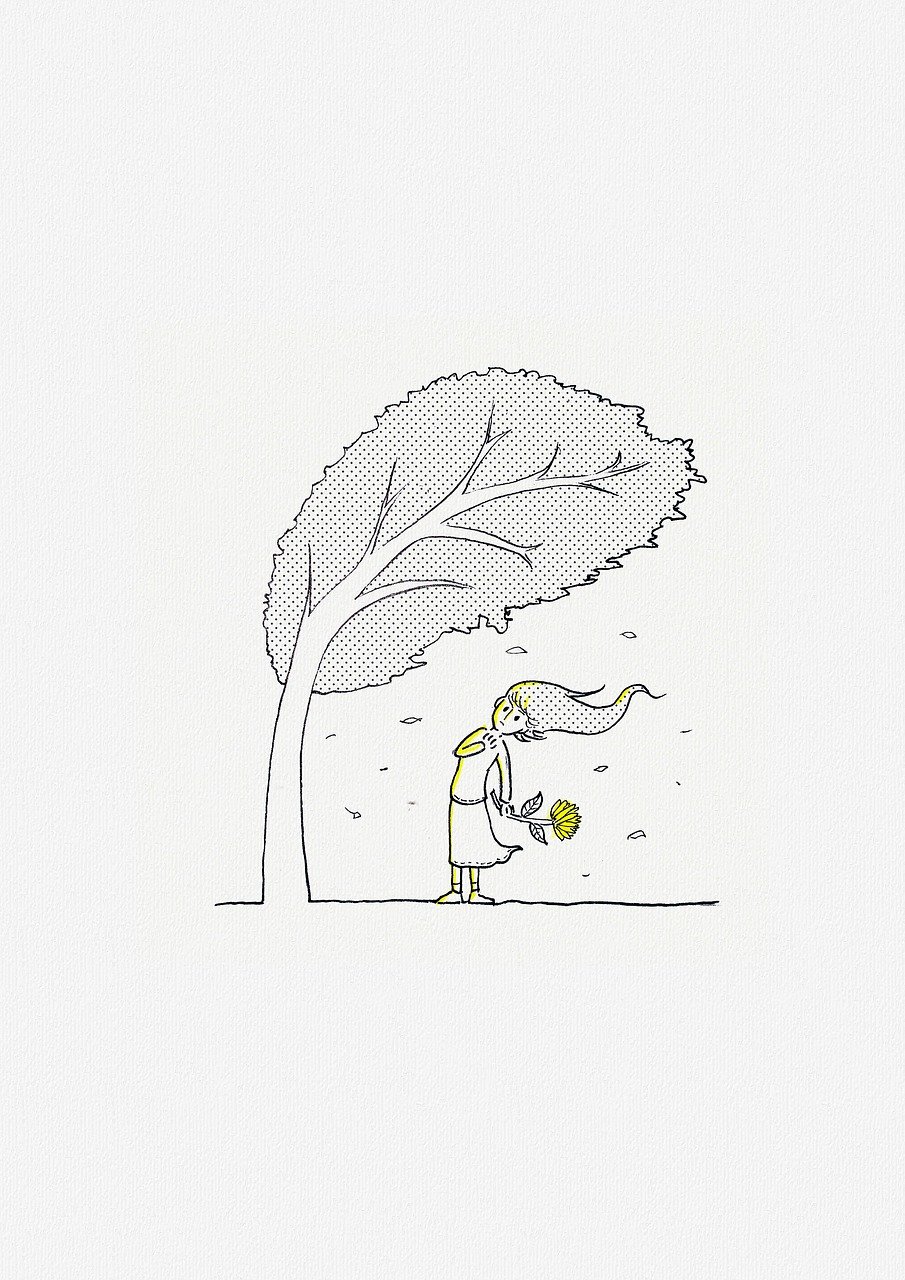
    In a desert out west, scientists built a biodome and planted some trees in it. At first, the trees grew normally; however, once they reached a certain height, they fell over and died. It turned out the scientists forgot one crucial element: wind. Bending in the wind puts stress on a tree’s root system, and it is that stress that causes the roots to grow deep and wide enough to support the weight and breadth of the tree.

    In today’s gospel, our Lord stresses his disciples by telling them a second time about his impending passion, death, and resurrection. Although they didn’t understand what he meant, Matthew tells us they grieved deeply. As we know, there will be plenty more times when their faith will be challenged, and, while they will fail a few times, the stress of those challenges will ultimately produce a faith strong enough to withstand anything.

    What was true of Christ’s disciples then has remained true throughout all of Christian history. We see it in the lives of the saints, one of whom we remember today: St. Jane Frances de Chantal. As a young woman, Jane was happily married, and had six children. She loved being a mother and taking charge of the household. Yet, it didn’t take long for the winds to blow. Her first three children died as infants; then, in the ninth year of her marriage, her husband died in an accident. This forced her to leave her home and move in with her disagreeable father-in-law and his even more disagreeable housekeeper. Although Jane kept a calm and even disposition, she prayed desperately for strength and for a good spiritual director.

    Her prayers were answered when she met Francis de Sales, who was preaching at a parish near her childhood home. Impressed with her, Francis agreed to become her spiritual director. It didn’t take him long to see that Jane was by nature a strong, forceful, even hard person, but always hardest on herself. He helped her see how God was working in her, even in the tragic, stressful events of her life; that the sweetness and mildness she maintained toward others was the fruit of prayer, suffering, and patience. Being less rigid and demanding of herself wasn’t weakness, but, like bending in the wind, strengthening the roots of her faith.

    Of course, St. Francis de Sales didn’t invent that idea; Jesus modeled it in the gospel. We see an example of it today. As the Son of God, he could have easily refused to pay a tax to enter His Father’s house. Why should he pay anything? For that matter, why should the Apostles (or any Christian), who would soon be permanently thrown out of the Temple? Yet, Jesus taught Peter that love meant going beyond the letter of the law to its heart; the Temple was a tribute to the Father’s glory, so, in his humility and love for the Father, His Son would gladly bend in the wind, keep silent, and pay the tax.

    In our own humility and love for God, each of us struggles to eliminate sin from our lives. Today, let us ask ourselves how that struggle is going. Have we been too easy on ourselves and avoided the challenge, afraid of failure? This is the tree never blown by the wind; how can the roots of faith grow? Or, like St. Jane, have we been too hard on ourselves, failing to forgive ourselves for being less than perfect? This is the tree that doesn’t bend in the wind; it breaks. Rather, let us seek that virtuous middle ground through the prayer, endurance, and patience shown by St. Jane Frances, and ask God to help us, too, to bend in the winds of life, not only that we don’t break, but that our faith is strengthened for whatever challenges lie ahead.

  • When the Going Gets Tough

    When the Going Gets Tough

    Wednesday of the 18th Week in Ordinary Time

    Jeremiah 31:1-7; Matthew 15:21-28

    Today’s readings are a reminder that throughout salvation history, there have been times when the going has gotten tough. Consider the Israelites to whom Jeremiah was sent: Their world crumbling around them, dark times were getting darker. Didn’t God see this? Couldn’t He hear their prayers? Where was He? And the Canaanite woman in the gospel: Helplessly watching her child suffer, in desperation she sought out Christ, only to be turned away by the disciples and then even by Christ himself. Things don’t get much tougher than that.

    The question is, when times get tough, how do we respond? We’d like to think we wouldn’t give up hope, but that’s a tall order. Even when Jeremiah assured the people that God hadn’t forgotten them, better times were coming, and He would restore them, the frustration of waiting was too much for many, who gave up and fell away. Nevertheless, the prophet closes hopefully, speaking of a remnant, a faithful few, who would persevere. For her part, the Canaanite woman is a model of perseverance, showing dramatically the extent to which true love is willing to go. What parent cannot sympathize? With her child suffering, no disciple, no apostle, no man, nothing and no one could keep her from Christ. Not only that, even when Christ himself challenged her by using her as an example in a parable, she refused to give up, even if that meant doing what no one else ever did in all the gospels: re-write the ending to one of his parables to make herself – and her daughter – the winner.

    Remember the old saying: “When the going gets tough, the tough get going.” Well, that’s clearly what God wants, for He abundantly rewards it. As we hear in Jeremiah tomorrow, He will promise a new Covenant with His people, one written not on stone but in our hearts. And in the gospel, our Lord’s reply, O woman, great is your faith, and his healing of the woman’s daughter, shows that when he is approached in patient yet persistent prayer, his response is absolute delight.

    So, today and every day, let God delight in us. Let us be that remnant – resilient, our eyes fixed on Him who will deliver us – and the faithful one who perseveres patiently in prayer, all for the sake of the same love Almighty God has for each one of us.

  • Truth or Consequences

    Truth or Consequences

    Saturday of the 17th Week in Ordinary Time

    Jeremiah 26:11-16, 24; Matthew 14:1-12

    Long ago, in a parish far, far away, I attended a meeting between some parishioners and our pastor. I don’t recall the circumstances, but there was some dispute between him and them. During the meeting, Father said, “I’m sorry you don’t like what I had to say, but first, stop and ask yourself if what I said is true. Maybe I could have said it more nicely, but the real question is: Even though you don’t like it, is it the truth?”

    I thought about that while reading today’s Scriptures. The prophet’s job was not to be nice, but to speak the truth to whomever God wanted, whether they wanted to hear it or not. Sometimes it was soft and comforting; others, hard and unsettling. Either way, it wasn’t the prophet’s word, it was God’s – the plain, unvarnished truth – and meant to be taken as such.

    As the readings show, the stakes for the prophet were the highest possible – his life – and that depended on the reaction of his judges. Jeremiah was spared because the people took their time and debated his case in light of previous prophets. John was not so lucky; his judge was Herod. As Matthew depicted him, we see how ignorance, lust for power, and pride blinded him to justice.

    First, he tells us that Herod knew nothing about Jesus and didn’t care to learn. We know many things about him, but are we ever tempted to think we’ve learned enough, or to avoid learning things that challenge us to change our life? Remember, one of the spiritual works of mercy is to instruct the ignorant, and that includes ourselves; we are obliged to learn whatever we can about the faith, for Christ has entrusted it to us to live and bring to the world. How can we do that if we don’t know it?

    Second, Matthew says that Herod feared not John but the people. As a tetrarch (“fourth-of-a-king”), he had little power compared to real kings like his father, and was desperate to hold onto what little he had. As for us, what are we desperate to hold onto? Maybe we’ve given everything to Christ except that one little thing, that one part of us, we dearly want to keep for ourselves. Committing to Christ means letting go of our desire for control and submitting entirely to him, as he committed himself entirely to us.

    Third, human pride. Herod may have felt some distress at the idea of killing John, but that didn’t outweigh the distress of losing face to his guests. We haven’t killed people to preserve our pride, but maybe we have hurt someone’s reputation to save our own, or wounded others who have injured our pride. What can counteract this but the humility of Christ, who came to serve and not be served?

    The readings today are a call to look for any trace of these warning signs lurking within us when our Lord challenges us to listen and respond to his Word. It is a daily battle, so let us pray for the strength to continue learning as much as we can about Christ and his Church, to let go of every attachment that keeps us from giving ourselves totally to him, and for the humility, not only to see the truth about ourselves, but to love it, for truth isn’t a thing, it’s a person – Jesus Christ.

  • The Harvest is Coming

    The Harvest is Coming

    Saturday of the 16th Week in Ordinary Time

    Jeremiah 7:1-11; Psalm 84:2; James 1:21; Matthew 13:24-30

    Like all parables, the intriguing parable we hear today contains a twist or surprise that is designed by our Lord to make us think. The twist is that the sower decided to leave the weeds in the field. Very few gardeners or farmers, then or now, would expect that. Why not let the servants pull them, so the wheat can more easily flourish?

    I think there are a couple of reasons. First, as the wheat and the weed (here, darnel) begin to grow, they look very much alike; the servants could easily mistake one for the other. Second, as they mature, the roots get entangled; pulling one will almost certainly take the other along with it. Clearly, the sower doesn’t want to do anything that would risk losing even a single grain of wheat.

    This is like the infinite, merciful love of God for us. He has given us Christ, sent us into the world, made available all the graces we need, and is with us always. As Christ said earlier in this same gospel when he invited us to take his yoke upon our shoulders, he is even willing to bear most of the load.

    Even with all that, it’s still not easy. The sower knows that letting the wheat and weed grow together makes it harder for the wheat to grow. Then why do it? Because anything worth having is worth working for. In the spiritual life, virtues only develop when they have something to work against. How do we grow in courage without facing fear, or in patience without being pushed, or in charity without the temptation to be selfish? By allowing the presence of evil, God challenges goodness to become greatness.

    Of course, repentance is a process. It’s not going to happen overnight. Fortunately, as the parable also implies, God gives us time. But we must use it to full advantage. Recall how Jeremiah pictured the people standing in the Temple, unrepentant yet saying, “We are safe.” God’s response probably sounds familiar; Jesus will use it later against the Temple authorities: den of thieves (Jeremiah 7:11). The worst thing we can be is complacent, satisfied with where we are in our relationship with God and each other. There is always more to do. Thus, the parable invites us to see not only that we are wheat in the field of the world, but that the wheat and weeds exist inside each of us as well. How can the Church, God’s dwelling place, be lovely if His dwelling place within us is not?

    Finally, the parable reminds us that, while God is patient and merciful, He is also just. Both the wheat and weed faced a reckoning – the harvest – and the sower has definite plans for each: Burn or barn. For us, too, the harvest is coming, and God will make a similar decision about us. We know which one we want, so let’s not put it off; the time is now to do what the Gospel acclamation urged: Humbly welcome the word that has been planted in you and is able to save your souls (James 1:21).

  • The Real Power of One

    The Real Power of One

    13th Sunday in Ordinary Time (B)

    Wisdom 1:13-15; 2:23-24; Psalm 30:4; 2 Corinthians 8:7, 9, 13-15; Mark 5:21-43

    Just before the outbreak of World War II, a young stockbroker from England named Nicholas Winton traveled to Czechoslovakia to see if he could help with the refugees pouring across the German border, many of them Jewish. What he saw so moved him – large numbers of children, many orphaned or lost – that he felt he must do something. It took awhile, but he organized a system to bring as many of these children as he could to northern England for the duration of the war. One of the biggest obstacles he faced was trust; as one rabbi put it, “Who are you?”

    Last week, we heard the disciples ask the same question about Jesus. Then, and to this day, people wonder not only who he is, but whether to believe in him. For some, like the refugees, it literally is a question of life or death. We meet two of them today: The first, a man of wealth and influence; the second, a woman, outcast and lurking in the shadows. Of course, Christ is most interested in what lies beneath these appearances; he wanted to see their faith. And not only see it, but transform them by it.

    At first, he didn’t see the woman’s faith, he felt it. She didn’t want to be seen, and was content to touch only his garment, believing that if she touched Jesus himself, her impurity would spread to him. But the opposite is true with God; his purity spreads to us. And look at the effect it had! Jesus asked who touched him, not because he didn’t know, but because he wanted to engage her, to let her tell her story. Physical healing wasn’t enough; she also needed inner catharsis. Who could blame her after twelve years of the pain, loneliness, and frustration that could tempt anyone to despair?

    He had a different challenge in mind for Jairus. When he came to Jesus, Jairus believed he could heal his daughter’s illness. But, when news came that the girl had died, Jesus told him not to be afraid, but to have faith. Didn’t he have faith? Well, it’s one thing to believe that Jesus can heal someone, another to believe that he can raise them from the dead. Jairus knew the psalm we heard today, including the verse, O LORD, you brought me up from the netherworld; you preserved me from among those going down into the pit (Psalm 30:4). Now, Jesus challenged him to have faith not only that those words were true, but that he is the LORD who would fulfill them. He did, and we know what happened; his faith was more than rewarded. His daughter was alive again.

    You might have noticed how the healings both involve the number 12: the woman bled for twelve years, while the girl died at age twelve. As for the woman, her flow of blood meant that she was unable to have children all that time. As for the girl, twelve was the age when women became eligible to be married. Thus, the Holy Spirit is teaching us that when Jesus heals, he not only restores life, but the ability to give life to others.

    This has huge ramifications in the spiritual life. Earlier, I mentioned Nicholas Winton. When the rabbi asked him who he was and why he wanted to do this, he said that he was one man; as for why he wanted to, he said, “Because I can, I must try.” Once people had faith in him, he was able to save 669 children who otherwise would have gone to death camps. As it turned out, those children grew up, and many had families of their own. It is estimated that by the time Winton died in July of 2015, his actions directly affected at least 6000 more lives. As the years go on, that will only increase, all because one man’s encounter moved him to challenge himself that others might live.

    We, too, are only one person. But think of all the encounters we have every day, with other people and, in contemplation, with ourselves. Every one of those is Christ’s challenge to us to make a difference for the better, to give and to speak life. Who is the woman, bleeding in pain, loneliness, or frustration, in need of the catharsis that only confession to Christ can give? Who is the man needing to understand Jesus more deeply, needing someone to show him how life-changing faith is? Sometimes, they’re out in the open, sometimes the shadows. Sometimes, they are us. At all times, think what the effect would be, not only on that person, but on all the people they affect because we decided that, because we can, we must try.

  • Embracing the Embrace

    Embracing the Embrace

    Solemnity of Sts. Peter and Paul, Apostles

    Most saints have a day set aside for them. For example, St. Elizabeth Ann Seton is honored on January 4th. The day is chosen because that’s when they entered eternal life, or, in the case of the Virgin Mary or John the Baptist, when it’s their birthday. Other saints are celebrated in pairs or groups, like Timothy and Titus, or Charles Lwanga and Companions. This is often because they were related, worked together, or were martyred together. Regardless, Mass in honor of them is usually a Memorial, or sometimes the higher rank of Feast.

    Sts. Peter and Paul stand apart in a few ways. First, today was chosen not to remember their martyrdom, but because June 29th is the traditional anniversary of the founding of Rome. Second, the Church accords this Mass the highest liturgical rank of Solemnity. Finally, their icon, or the traditional image used to teach about them, is unusual. Most icons feature symbols held by the saint, such as the cross for St. Francis or the infant Jesus for Mary; however, the icon of Sts. Peter and Paul depicts them embracing.

    I wondered why, so I looked around for answers. It seems that some people focus not on the embrace but on the distinctions or differences between the men: Peter symbolizing governance and Paul missionary work, or Peter the Church’s highest authority figure and Paul her greatest theologian. Others claimed that in the icon the two men appear to be looking past one another, inferring that Peter and Paul may not have seen see eye to eye.

    While there is truth in these perspectives, we must embrace the embrace. Even if the two figures do symbolize major aspects of the Church, like governance and missions or authority and theology, what does the embrace signify, if not that neither one can do without the other? The Church must be governed and there must be authority, but who will be governed or under authority unless the missions bring people in and theologians enlighten them about the mysteries of God? Paul understood that. Although he did have trouble with Peter, he still recognized his authority; he only preached the gospel after going to Jerusalem and meeting with Peter (Galatians 1:18). Even years later, Paul returned to Jerusalem, met with Peter, James, and John, and ensured they were in unity (Galatians 2:9). And it worked both ways; although Peter did say that Paul was hard to understand at times, he also referred to him as our beloved brother (2 Peter 3:15-16).

    So, as we remember them today, let us keep this embrace in mind, for Sts. Peter and Paul are patron saints of more than just the city of Rome; they are the patron saints of everyone who hears the word of God and tries to do it, who embraces not only those who agree with them but those who don’t, who embraces their own humanity and allows God to sanctify it, and who offer themselves completely, that the will of God be done.

    Sts. Peter and Paul, pray for us.

  • The Most Surpassing Gift

    The Most Surpassing Gift

    Memorial of St. Anthony of Padua, Priest and Doctor of the Church

    1 Kings 18:41-46; Psalm 65:10, 11, 12-13; Matthew 5:20-26

    Today is the Memorial of St. Anthony of Padua. Although time doesn’t permit us to look very deeply into his life, this man is such a great saint that even a summary can help us understand something important about God and ourselves.

    Born in Lisbon in 1195, Fernando Martins de Bulhões became an Augustinian priest near his home in Portugal, but spent most of his life as a Franciscan named Anthony. He wanted to be a missionary to the Muslims in Africa; he became a theologian. He wanted to be a martyr; he became a teacher. He wanted a quiet life of menial labor; he became a renowned preacher against heresy and the first theology instructor of the new Franciscan order. He wanted to die in Padua; he died on his way there.

    In the gospel, Jesus said that unless your righteousness surpasses that of the scribes and Pharisees, you will not enter into the Kingdom of heaven (Matthew 5:20). It isn’t that the scribes and Pharisees have no righteousness, it’s that ours must be surpassing. In life, there is good and there is better; we may be in good health, but we can be healthier. This also applies to the spiritual life; we may have a good understanding of the bible or the Church, but we can always learn more, and, in so doing, grow closer to God.

    Everything Anthony wanted was good. Being an Augustinian, a missionary, a martyr, living an ascetic life, serving in the lowest place, are all very good. Nevertheless, God had something better, something surpassing, in mind for him. All people, good and evil alike, are called to conversion. Everyone can grow in holiness.

    While growth in holiness sounds great, in practice it means that sometimes we will find ourselves in places we don’t expect, doing things we didn’t plan on doing. If we are ever tempted to see these as mistakes, deviations from the plan, the life of St. Anthony shows the opposite; they may be the plan. We may be exactly where God wants us.

    How do we know? By looking at the fruit of our labor. Again, consider St. Anthony. All his desires – to be an Augustinian, a martyr, a servant in a monastery – would have had wonderful effects, touching many lives for the better. For most of us, any of these would be a surpassing gift. But God had given Fernando a brilliant mind, capable not only of understanding deep theological concepts, but of being able to express them simply, clearly, and profoundly. These, along with his passion and humility, would sway the hearts of thousands otherwise lost to the heresy sweeping across western Europe. Thus, Anthony of Padua had gifts that could change the course of the Church herself forever.

    He couldn’t know that at the time, any more than we know how our choices will affect others. But therein lies his true greatness; like Elijah’s servant who kept looking for God in the storm, St. Anthony looked for God always and everywhere in the events of his life until he found Him, and then listened to and obeyed Him. We are called to do the same. Like that servant, all we may see at first is the “storm” – the illness, the suffering, the things we’d rather not do. But, if we’re vigilant, if we keep looking with the eyes of faith, God will give us the grace to see ourselves as the psalm does; that through these storms, our Lord prepares us to receive Him. There is pain in breaking into the soil to do that, but how else can the seed grow into a rich harvest? This is how God loves us, and love is His most surpassing gift; He gives it to us every day, at every Mass, in every Eucharist. As St. Anthony and all the saints show us, with the grace of this gift, there is nothing we cannot do.

    St. Anthony of Padua, pray for us.

  • The Battle of Wills

    The Battle of Wills

    The Solemnity of the Most Holy Body and Blood of Christ (B)

    Exodus 24:3-8; Psalm 116:12; Hebrews 9:11-15; Mark 14:12-16, 22-26

    As a young parent, I learned the hard way that, when you want to get a 2 year-old to do something, you don’t begin any sentence with the words, “Do you want to…” It doesn’t take long to find out that when the child replies, “No,” it becomes a battle of wills, and one of the strongest forces on Earth is the will of a 2 year-old.

    Of course, it isn’t just kids; people of every age can be very determined to see their will is done. We see it in Scripture. For example, the two verses of Mark’s gospel just before today’s reading tell us of Judas’s will to hand Jesus over to the chief priests. But we also see that Jesus has anticipated this, and has a very strong will of his own. That’s why he gives such detailed instructions to the two disciples about following a man to find the upper room. He doesn’t want Judas to know that location yet, because he has plans for that meal and will not tolerate being arrested there.

    We see why in the second part of the gospel, for Jesus speaks the words we hear at the consecration. This also shows his will at work, for as the first reading showed, Jesus didn’t choose those words because he liked the way they sounded; he used them because they were patterned after the words spoken by Moses centuries before, when he sacrificed the bulls and sprinkled both the altar and the people with their blood.

    And our Lord’s will runs as deep as his blood, as we begin to see in the second reading. While the Old Testament sacrifice of animals was effective, it was never intended by God to be perfect. Why? Because, the animal , although innocent, was also an unwilling victim. For the perfect atonement of the sins of all mankind, the victim had to be not only innocent, but also totally willing to give up his life.

    This is the heart of today’s Solemnity: the triumph of Christ’s human will. Without his willingness to give up his life, there could be no crucifixion, no resurrection, no eternal redemption, and no Holy Communion. And this is the heart of his love for us, for love is an act of the will, and as he said so beautifully in John’s gospel, there is no greater love than to lay down your life for your friends.

    But Christ’s sacrifice does us no good unless we’re willing to love him in return, so the question for us is, as the psalmist sang, How shall I make a return to the LORD for all the good he has done for me (Psalm 116:12)? I can think of three ways:

    • Preparation. Christ made sure the upper room was prepared. How do we prepare ourselves for Mass? We can begin as we are getting ready at home and while we’re on our way; we can arrive early, take time to talk to God, to tell Him what’s in our heart and on our mind. It isn’t that God doesn’t already know, it’s that He wants us to share, to make an effort. That’s an act of our will.
    • Worthy reception of the Holy Eucharist. The grace of every Sacrament is freely available, but we have to be ready to receive it. Are we in a state of grace? Have we been to confession and gotten ourselves as ready as possible to receive the grace Christ offers? Then, when Communion begins, focus as exclusively as possible on receiving Christ. This is the moment when he comes directly into us, the moment he wills that we become what we receive. Are we willing to become like Christ?
    • Drawing closer to God in daily life. When we truly love someone, we don’t limit ourselves to spending an hour per week with them. Why should it be that way with God? Rather, we should be mindful of His presence with us every moment of every day, and ready to show the world that our will and God’s will are the same thing.

    These sound great, and are easy to say, but we all know how hard it is to go from words to the deeds that back them up. It’s the battle of wills inside us; the will to do what we want on one side, and the will to do what we ought on the other. We can’t win it alone, but we don’t have to; the grace of God is always available. All we have to do is ask for it, and resolve to use it. The more we do that, the more we show our Heavenly Father that we’re serious about winning the battle, about making real in our lives the meaning of His Son’s words in his prayer and, above all, in Gethsemane: Thy will be done.